
The piece examines recent U.S. actions against Venezuela under President Trump, including maritime strikes on suspected drug-smuggling vessels, an unconfirmed claim of a land strike on a Venezuelan facility, and the broader effort to disrupt narcotics flows that the administration says are killing Americans.
Did the U.S. Just Strike Land in Venezuela? Trump Says We Hit a ‘Big Facility’ Hard
President Trump has framed Venezuela not just as a diplomatic problem but as a criminal operation harming Americans, and he has spoken bluntly about targeting the regime’s drug pipeline. Since September the administration says it has taken out scores of suspected narcotics boats, with reports of more than a hundred suspected traffickers killed in those operations. That campaign is part of a broader push to choke off supply routes and punish the Maduro regime for exporting poison to American communities.
Beyond strikes at sea, Trump has repeatedly suggested land options are on the table, and in a recent radio interview he went further, implying U.S. forces struck a shore facility. The president’s tone was casual but unapologetic, treating the action as another step in a tough approach that mixes sanctions, interdiction, and kinetic pressure. Official military spokesmen have not publicly confirmed the specific strike he described, leaving policymakers and the public to sort signals from statements.
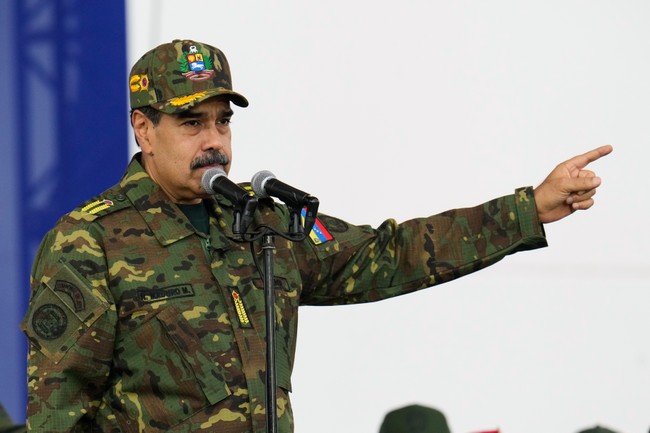
President Trump said during a recent radio interview that the U.S. “knocked out” a “big” facility in Venezuela, as the administration continues to turn up the pressure against President Nicolás Maduro.
Asked about Venezuela during a Friday appearance on the “Cats & Cosby” show on New York’s WABC radio, Trump lauded the U.S. military’s attacks against purported drug-smuggling vessels in the region and added that U.S. forces hit a facility two days earlier.
The president laid out the logic plainly in the interview: when you remove a drug-smuggling node, you save American lives. He tied interdiction directly to lives saved, insisting that every boat taken out avoided tens of thousands of casualties in aggregate. That argument is aimed at an American audience tired of the drug epidemic and eager for concrete action that delivers results rather than empty talk.
[Every time I knock out a boat, we save] 25,000 American lives. It’s very simple. And what’s happening is, they’re having a hard time employment wise. They can’t, they can’t get anybody.
And… I don’t know if either of you read, or you saw, they have a big plant or a big facility where they send, you know, where the ships come from? Two nights ago, we knocked that out. So we hit very hard.
But drugs are down over 97%. Can you believe it?
No official confirmation has been released from the Pentagon or U.S. Southern Command about the alleged land strike, and that silence feeds both skepticism and speculation. Some senior officials reportedly told a major newspaper that a facility had been eliminated but declined to provide public details, reflecting the friction between political messages and military communications. The absence of a clear official statement leaves independent verification difficult and opponents quick to question the claim.
Venezuela’s government has not offered a public response to the allegation, which is consistent with the regime’s tendency to control or suppress reporting that undermines its narrative. A few local reporters have circulated accounts of an explosion in Maracaibo, Venezuela’s second-largest city, but those pieces remain unconfirmed and are clouded by limited access. In this kind of contest, information is often weaponized, and reliable evidence can be scarce.
The broader strategy from the Republican perspective is straightforward: pressure the Maduro regime economically and operationally until its capacity to export drugs and chaos is meaningfully reduced. Strikes at sea, seizures of tankers, and hints at taking out land facilities are all part of a playbook that prioritizes decisive action. For supporters, this is about enforcing consequences and protecting Americans; for critics, it raises questions about escalation and oversight.
Whatever the precise facts about the claimed land strike, the episode underscores how the Trump administration is comfortable coupling public boasts with covert or unannounced actions. That combination is meant to deter adversaries while satisfying a domestic political demand for toughness. As information emerges, debate will follow over the legality, prudence, and effectiveness of using force in this way, especially when official confirmations are limited.
Here’s the president earlier this month explaining why he’s going after Maduro and why he considers the regime such a threat to the United States:


Add comment