
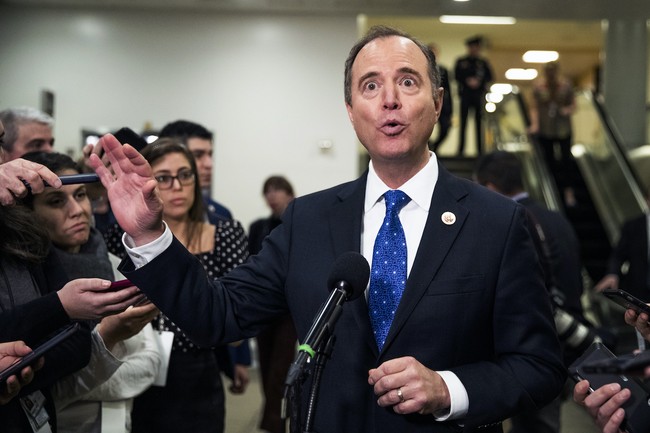
The Senate confirmation hearing for Attorney General nominee Todd Blanche turned into another episode of partisan theater, with Sen. Adam Schiff taking center stage and clashing with Blanche over matters including the handling of Volume Two of Special Counsel Jack Smith’s report and questions about recusal and ethics. Blanche pushed back hard, insisting he was recused from the classified documents probe and that Schiff’s accusations were factually wrong. The exchange highlighted how Democrats still try to weaponize hearings, while Blanche defended his record and role during a tense, often theatrical grilling. Below are the facts and direct exchanges from that hearing presented plainly.
The hearing opened with Democratic senators piling on, with some questions described as “extraordinarily obnoxious” coming from Sen. Sheldon Whitehouse and others. That set the tone for what became a broader attack on Blanche’s ties and decisions as acting attorney general since April. The hearing felt less like a search for testimony and more like a performance from those determined to make a political point.
Schiff focused much of his questioning on Volume Two of Jack Smith’s final report, which concerns the classified documents investigation. He pressed Blanche as if the acting attorney general had controlled the decision not to release that volume, and framed his questions around a supposed conflict of interest. Blanche replied that those decisions happened before he held the acting AG role and emphasized that he was recused from the matter.
At one point, Blanche pointed out the obvious timeline error in Schiff’s line of attack, calling out the senator for claiming responsibility for actions that occurred prior to Blanche’s tenure. That forced the hearing back to the factual record: Blanche was not acting AG when the department decided against releasing the report, and he was not in the position when the court issued its blocking rulings. The point matters because accusations of ethical breach hinge on whether he actually had control over those choices.
https://x.com/townhallcom/status/2077452711872667799
SCHIFF: You’ve also refused to release Volume II of the Special Counsel’s report. That was an investigation into the Mar-a-Lago documents case. How is that not an abundant conflict of interest? Refusing to release to the public an investigative report of an investigation into your client?
BLANCHE: I am not a judge, a federal judge —
SCHIFF (interrupting): No, no, no, no, no. The department’s position under you, Mr. Blanche, the department’s position under you, Mr. Blanche, was to not release the report. But if you went into court asking them to release it, it would be released by now. So how is that not a patent conflict of interest?
Blanche’s retort was blunt and procedural: he emphasized his recusal and denied any role in decisions about the report. He told Schiff, “What you’re saying happens to not be true. I did not do that. What you’re talking about happened before.” That line underscored the hearing’s tension between headline-grabbing accusations and the actual record of who controlled what and when.
Schiff then tried another tack by asking whether Blanche supported releasing Volume Two, but Blanche repeated he was recused and had nothing to do with the case. That left Schiff’s line of attack exposed as both premature and inaccurate, which is a recurring problem when committee questioning prioritizes spectacle over facts. The exchange showed how easy it is for political theater to derail a hearing when timelines and duties are overlooked.
Beyond the report debate, the hearing touched on other hot-button items: the dismissal of certain prosecutors, pardons related to January 6, and the overall tenor of the Justice Department under Trump. Democrats framed these topics as signs of impropriety, while Blanche framed his actions as part of a legitimate change in leadership priorities and lawful exercise of authority. The two sides talked past each other at times, which is typical when ideology matters more than the judicial record.
There were also mentions of Special Counsel Jack Smith himself, with critics pointing to alleged missteps related to handling classified material and other controversies that have followed his probe. That context matters because it affects how people view the report’s credibility and the broader investigations tied to it. In the end, Blanche’s key defense centered on recusal and chronology, pushing back against what he called outright falsehoods in the hearing room.
The back-and-forth concluded with Schiff’s attempt to embarrass Blanche doing more to reveal the senator’s own missteps in accuracy than any disqualifying conduct by the nominee. Blanche stood firm on his recusal status and reminded members of the committee that fact-checking matters, especially in a hearing built to evaluate competence and integrity. The outcome left the central questions unresolved for some, but it clarified who was actually involved in the contested decisions and when they occurred.
After the packed session and sharp exchanges, the public and lawmakers were left picking through what was performance and what was substance, especially around the release of the special counsel materials. Both sides will keep spinning their narratives, but the hearing record shows Blanche repeatedly insisting the accusations did not match the timeline or his role. That reality will matter as the confirmation process continues and as voters and officials parse who was responsible for the disputed choices.


Schiff your the biggest f-in liar in our government nothing you say ever is the truth we are still waiting for the proof you have on Trump’s Russia deals. Soon enough you’ll be in federal prison and Bubba and Tyrone are going to show you the way to Russia on your knees. Can’t wait to hear you squealing like the pig you’re. It’s not even started yet.
To anyone with a brain, these Jackasses just proved why they have a jackass for a party symbol!?! Who in their right mind would vote for these morons??