
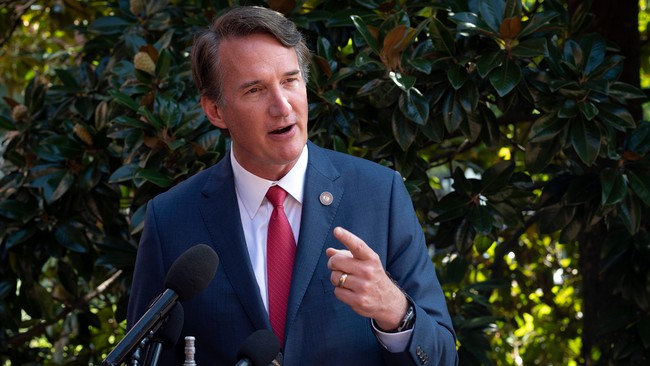
Quick summary: Governor Glenn Youngkin pushed back hard after Governor-elect Abigail Spanberger urged the University of Virginia to pause its presidential search until she appoints new board members; Youngkin called her move inappropriate, defended the university’s process, and reminded everyone who currently holds the governor’s office ahead of the January 17, 2026 inauguration.
The Virginia governor’s office and the governor-elect clashed publicly this week over the University of Virginia’s search for a new president. The dispute centers on a letter the governor-elect sent asking the Board of Visitors to delay choosing finalists until after she assumes office and can make appointments to the board. That request set off a sharp response from Governor Youngkin, who said the move was an overreach and a premature attempt to seize influence over a public university.
The context matters: UVA’s president resigned earlier this year amid pressure after the university resisted a DOJ Civil Rights Division investigation into the use of race in admissions and hiring. That history makes any talk of delaying a search feel like a step back toward the practices that drew federal scrutiny. Youngkin framed the governor-elect’s letter as an effort to insert partisan control into a process that had been following established standards.
Spanberger, a UVA graduate, wrote to the Board of Visitors urging them to wait until the board is “at full complement and in statutory compliance,” arguing she will make appointments after her inauguration and make university leadership stability a priority. The plea read as if she expected the university to pause work so she could place allies onto the board and influence the final decision. To many conservatives, that looked like political meddling at the expense of institutional integrity.
I urge you to refrain from rushing this search process and from selecting the finalists for the presidency or a president until the Board is at full complement and in statutory compliance, meaning that I have appointed and the General Assembly has confirmed new Board members. As it will be a priority of my administration to stabilize and normalize the leadership of our public colleges and universities, I will make appointments soon after my inauguration.
Youngkin responded with a formal letter that reprimanded the governor-elect and defended the board’s work, calling some of her claims false and the tone harmful. He insisted the university’s search “followed national best practices and been a model of transparency,” and warned that disparaging board volunteers could discourage public service. In his public remarks, Youngkin said he was “shocked” by the intervention and described it as an attempt to “intimidate and bully an agency.”
In his letter, Youngkin accused Spanberger of sharing false claims and hyperbole, which he described as not only harmful, but dangerous. He stated that, to his understanding, UVA’s search for a president has “followed national best practices and been a model of transparency.”
“It’s dangerous to wrongfully disparage committed individuals who volunteer to serve on university boards and the serious work they do,” he wrote. “Further, the Governor of the Commonwealth should speak thoughtfully and honor the service of those individuals.”
According to Youngkin, Spanberger’s actions “may have inflicted significant damage on the university [she] profess[es] to love.”
Youngkin did not stop at a written rebuke; he made a pointed public statement asserting authority over state agencies during his remaining time in office. He declared plainly, “There is one governor right now,” and added, “And I happen to be that governor.” That line left no doubt which office he believes carries the current responsibility for state operations through the transition period.
Conservative observers see two problems with the governor-elect’s move: the presumption that a transition gives the incoming official a license to halt ongoing processes, and the risk that delaying a search will open the door to politicized appointments. If the Board pauses and new members arrive later, priorities could shift and the selection process could tilt toward ideological goals rather than institutional needs.
Supporters of Spanberger might argue that she wants to ensure the board is at full capacity before a permanent hire, but critics point to timing and motive. Given the earlier federal inquiry and the resignation that followed, any sign of reversing course toward previous DEI practices is controversial. Youngkin’s pushback reflects a broader conservative insistence that public institutions be insulated from partisan shakeups, especially when recent controversies involved federal civil-rights scrutiny.
Inauguration Day for the governor-elect will be Saturday, January 17, 2026, and this dispute will likely simmer until then. For now, Youngkin’s public admonishment and insistence on the continuity of current governance set the tone: he intends to defend institutions and personnel who served through the search, while warning that premature interference from an incoming administration crosses a line. The fight over timing and influence at UVA is a small front in a larger debate about how transitions should be handled in state government.


Add comment