
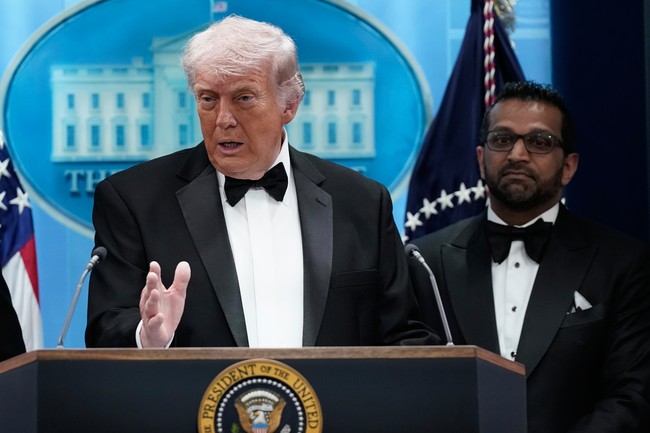
The White House Correspondents’ Association dinner is meant to honor the First Amendment and the work of reporters, but this year’s rescheduled event has become a flashpoint. With President Donald Trump planning to attend, questions about tone and purpose have turned the dinner into a debate over whether to defend press freedom or stage a political confrontation. The conversation centers on subpoenas, media bias, and how journalists can rebuild trust while holding power to account. This piece argues the WHCA should prioritize principles over performance and defend the First Amendment in a way that broadens public confidence.
Hundreds of former journalists urged the WHCA to use the dinner to confront the president and “forcefully stand up” for reporters targeted by the administration. Those concerns stem from recent actions like subpoenas and regulatory pressure that touch on press protections and merit scrutiny. A strong defense of legal safeguards for sources and against overbroad government demands is a legitimate and necessary part of defending the free press. Conservatives agree that law and liberty must be protected, and that includes ensuring journalists can do their jobs without undue government intimidation.
That said, the dinner should not become a staged political theater aimed at settling scores with one man or one administration. When the event morphs into a one-sided spectacle, it feeds a common conservative criticism: that large swaths of the mainstream media operate with an implicit bias and present themselves as neutral while leaning politically. That dynamic damages public trust and plays into narratives that de-legitimize reporting by framing it as advocacy rather than information.
The subpoenas and licensing disputes deserve careful attention and debate on their legal merits, but selective outrage clouds the issue. Media outlets that shift between reporting and activism weaken their claim to be impartial watchdogs of power. For the press to effectively defend its role, it must model the standards it expects from others: consistent fairness, clear separation of news and opinion, and rigorous fact-checking without partisan tilt.
https://x.com/foxnewspolitics/status/2080300703562801617
Polling shows public confidence in traditional news sources has been slipping for years, long before the current administration. Newer outlets and independent voices have gained audiences by being upfront about their perspective and by focusing on accuracy within that frame. That transparency allows citizens to evaluate sources openly instead of assuming hidden agendas. Conservative readers often prefer clear, accountable outlets that do not present partisan framing as neutral truth.
Journalists who want to reclaim credibility should emphasize practices that encourage trust: clear sourcing, equal scrutiny across the political spectrum, and acknowledging errors promptly and visibly. When reporting consistently skews against a political figure or movement, reasonable observers conclude bias is at work. Repairing that credibility gap requires structural discipline as much as rhetorical defenses of the First Amendment.
A dinner that centers the First Amendment could spotlight concrete threats and constructive reforms instead of staging a public showdown. Topics like protecting confidential sources, opposing vague subpoenas, and preserving robust whistleblower protections are concrete ways to defend press freedom. The event could also celebrate journalists working in dangerous conditions abroad and those adapting to digital-era challenges without sacrificing standards. Tackling these issues offers tangible benefits to the public and demonstrates a commitment to principles over personalities.
When press freedom is framed primarily as opposition to a single president, it risks confirming the worst suspicions of many Americans. It looks less like a defense of a constitutional right and more like partisan theater. The First Amendment is meant to protect all voices, and defending it should include recognizing missteps inside the industry as well as resisting governmental overreach. That balanced posture does more to strengthen the institution than performative grandstanding.
I asked the WHCA about this letter:
“The White House Correspondents’ Dinner exists because the First Amendment matters most when it’s under pressure. As we continue to celebrate America’s 250th birthday, our choice to gather as journalists, newsmakers and the president in the same room is a reminder of what a free press means to this country — and why it must endure. Not for the media or the president, but for the people who depend on it.”
Conservatives and others concerned about media standards should welcome a WHCA that uses the dinner to defend constitutional protections while demonstrating high journalistic standards. That approach would push back on government encroachments and address legitimate public doubts about media fairness. Media institutions that insist on transparency and equal standards will find more lasting influence than those that treat every leadership change as existential drama.
The WHCA has an opportunity to make the dinner a genuine celebration of a free press that serves everyone, not a platform for a political agenda. Choosing principles over performance means defending rights, admitting industry faults, and committing to practices that earn public trust. That is how the press can remain indispensable to a free society and how the First Amendment can be upheld for all Americans.


Add comment