
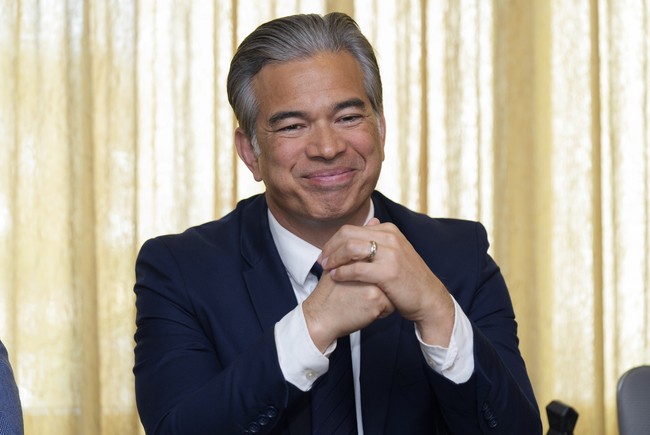
The California and Nevada attorneys general who sued to block Paramount’s acquisition of Warner Bros. Discovery are facing fresh scrutiny over financial and political ties to Netflix and its backers, raising questions about motivations behind a lawsuit that federal and British regulators already cleared.
Two Democratic state attorneys general lead a multistate challenge to the deal, but recent disclosures have created the appearance of conflicts that deserve scrutiny. In California, records show a $1 million donation from Patty Quillin, connected to Netflix co-founder Reed Hastings’ family, flowed to a group that later supported the California attorney general’s campaign. That sequence has prompted Republican critics to demand an investigation into whether political favors influenced a legal strategy advertised as antitrust enforcement.
“Rob Bonta has turned his taxpayer-funded office into a favor factory for his political bosses and donors. He’s pursuing politically-motivated litigation against a competitor for a company that’s bankrolled his PAC.”
The California attorney general’s office has defended its actions as the result of a standard antitrust review and says the lawsuit was based on analysis of market effects involving both Paramount and other possible buyers. Still, the office declined to publicly confirm whether communications took place between the attorney general and Netflix executives or donors, or whether recusal was considered. That silence only deepens skepticism given the Wall of regulators who reached a different conclusion.
At the federal level, the Department of Justice spent months reviewing millions of documents and concluded the Paramount purchase was unlikely to harm competition and could bolster a stronger rival for the streaming marketplace. British regulators reached a similar decision, leaving the state lawsuit as the main remaining barrier to the deal. When state legal action contradicts extensive federal work, voters have a right to ask why.
Meanwhile, in Nevada the attorney general faces an ethics review over travel paid for by the Attorney General Alliance, an organization that lists Netflix among its corporate sponsors. The Nevada Commission on Ethics advanced complaints after finding enough evidence to continue a probe into whether the travel and use of government social media crossed ethical lines. The commission has not ruled that any law was broken, but the matter is unsettled while the high-stakes lawsuit proceeds.
A separate wrinkle in Nevada involves campaign donations from a Netflix board member that arrived shortly before the lawsuit was filed. Those contributions are legal on their face, but stacked together with paid travel and corporate sponsorships they feed a narrative that the litigation benefits a single dominant market player. Perception matters in public trust, and stacked coincidences are already shaping the public’s view of this case.
“The lawsuit against Paramount resulted from clear cut antitrust analysis, based on the facts and the law. In February 2026, our office announced an investigation into the purchase of Warner Bros. by either Netflix or Paramount.”
That statement from the California office insists on a fact-based approach, but elected officials must do more than say their work was objective. When a state official’s campaign or allied political groups receive large sums tied to entities with a direct interest in a pending case, transparency and, where warranted, recusal are appropriate safeguards. Otherwise enforcement looks selective and political rather than principled.
Political pressure is coming from multiple directions. Some prominent Democrats, including state executives and party figures, have urged settlement talks, warning that prolonged litigation could cost jobs or push industry operations out of their states. Hollywood executives have reportedly pressed the California attorney general to negotiate, while the company on the other side warns it may relocate production and other economic activity if the battle continues.
Republican critics argue this pattern looks less like independent antitrust enforcement and more like legal protection for an incumbent market leader under the guise of public interest. They point to the combination of campaign donations, sponsorship ties, and advancing ethics investigations as the kind of layering that undermines trust in the institutions supposed to police competition fairly. The question for voters is whether these are unfortunate coincidences or a predictable outcome when political funding and regulatory power overlap.
Neither attorney general has been proven to have acted as an agent for corporate interests, and both offices dispute any wrongdoing. Yet the federal government and Britain reached the opposite conclusion about competitive harm, and that contrast fuels criticism. At minimum, the situation calls for open answers about contacts, contributions, and the decision-making steps that led to a lawsuit that stands alone against prior regulatory findings.
State attorneys general have broad authority to enforce antitrust laws, but that authority depends on public confidence. When insiders or donors with clear stakes show up on both sides of a legal fight, trust erodes fast. Policymakers and regulators need to act in ways that keep litigation clean and clearly in the public interest, or risk turning enforcement into a tool of politics and private gain.


Home-based job that pays more than 12,000 Dollar per month by doing simple tasks on a laptop or mobile device part-time. Last month, I earned 24,863 Dollar from this job by working 4 hours per day online. Very simple jobs to do, and the earnings are insane. Everyone can now make more money online by joining the website listed below…..
𝒋𝒖𝒔𝒕 𝒖𝒔𝒊𝒏𝒈 𝒕𝒉𝒊𝒔 𝒔𝒊𝒕𝒆.. Www.PayAtHome1.Com