
The arrest of Nicolás Maduro has exposed how deeply socialism wrecked Venezuela and opened a real debate about how fast recovery could happen if a pro-market government takes charge. This piece looks at the state of Venezuela’s oil industry, the scale of investment and time experts say is needed, and the wider geopolitical ripple effects for Cuba and the hemisphere.
Venezuelans are visibly celebrating the prospect of change after decades of economic collapse, and those reactions matter. Observers on the left in the United States are defending Maduro, while many Venezuelans are dancing in the streets, underscoring a stark contrast in perspective. The core issue now is how to turn decades of state control and mismanagement into a functioning market that delivers jobs and services.
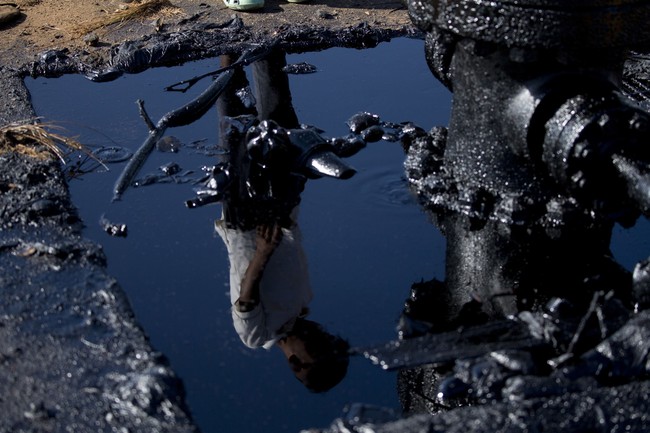
One striking estimate comes from Wall Street commentator Charles Payne, who discussed the problem on national television and focused on oil as the linchpin of any recovery. Payne argued the oil patch was decimated under Hugo Chávez and Nicolás Maduro, and he suggested it will take both large sums and time to restore capacity. Restoring an industry that once made Venezuela prosperous will not be a quick fix; it will require restoring expertise, infrastructure, and investor confidence.
Payne summed up the scale bluntly, saying the people of Venezuela need this more than anything and pointing out how socialism destroyed the country’s advantages. He estimated a recovery could demand roughly $100 billion and perhaps ten years to get the oil sector “where it needs to be.” He contrasted that measured view with President Trump’s optimism that infrastructure could start “making money” once repairs begin, while stressing that untangling decades of mismanagement is a heavy lift.
Payne explained:
The people of Venezuela need this more than anything else. This is a country that’s been stuck. Socialism wrecked this country… Because this – they have all the oil reserves, but they ruined their industry. In fact, it’s gonna [to] take maybe $100 billion, maybe ten years to get it back where it needs to be.
He added:
But, of course, they need to do it. You see a lot of protests anywhere in the world about this because these are some folks who are suffering. On our side of the ledger it’s phenomenal, refine heavy crude that’s what they pump out of Venezuela. Of course, on the narco-terrorism side already seen overdose deaths coming down. I think you will see more of that.
Those figures are realistic when you factor in the history of nationalization and subsequent mismanagement. Nationalization in the 1970s led to a state-owned company that later became politicized, and purges of skilled workers in the early 2000s hollowed out institutional knowledge. The seizure of assets and expulsions of experienced engineers left PDVSA with loyalty over competence, and reversing that trend is costly and slow work.
If a pro-market government replaces the current regime, foreign energy companies and private investors would likely move in fast to repair wells, refineries, and export systems. Investment would create jobs and rebuild related infrastructure, but companies demand rule of law, secure property rights, and clear contracts—none of which come overnight after authoritarian rule. Rebuilding trust in institutions and courts is as important as rebuilding pipelines.
There’s a geopolitical component too: Venezuela’s oil ties have been central to support networks in the region, particularly for Cuba. If Venezuelan production collapses or shifts to market-driven trade, allied regimes that depended on cheap energy would suddenly face shortages and political pressure. As President Trump stated about Cuba, “I think it’s just going to fall. I don’t think we need any action. Looks like it’s going down. It’s going down for the count.”
Repairing the economy also requires addressing corruption and narcotrafficking networks that flourished under state control. Those illicit systems co-opted parts of the economy and undermined basic governance, and a successful recovery must include law enforcement and anti-corruption measures that are consistent and credible. Otherwise, new investment will be limited by persistent risk.
Practically speaking, phased priorities would likely include shoring up power and water infrastructure, rehiring and training technical staff, and offering transparent concessions to experienced operators. A focused stabilization plan for the oil sector paired with incentives for private investment could produce visible gains in a few years, while full systemic recovery would likely follow over a decade if reforms hold. The urgency is political too: citizens expect visible results, and sustained international support would help bridge the transition.
Ultimately, Venezuela’s path back is a test case for how quickly a country can bounce from decades of socialism when market incentives, property rights, and foreign capital are restored. The clock starts when meaningful reforms begin, and the world will be watching whether the promised turnaround matches the scale of suffering that preceded it.


Add comment