
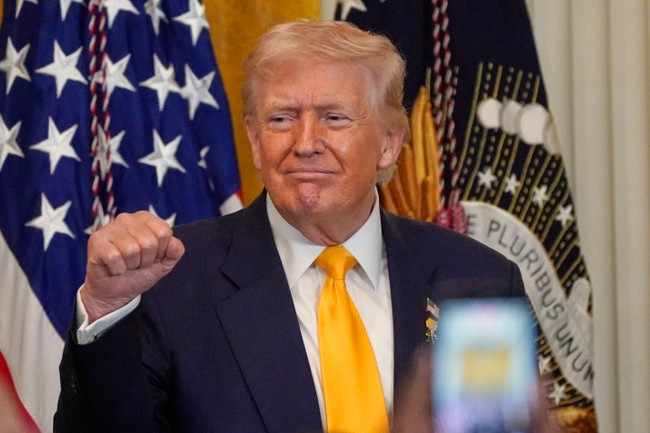
I’ll walk through what happened: false rumors about President Trump’s health spread on Easter weekend, eyewitnesss and reporters pushed back, official sources denied the claims, and Trump himself posted about a major military action that made the rumors look ridiculous.
It was Easter weekend, and most Americans were with family, but a chorus on the Left went straight to rumor. They seized on an early schedule change and spun it into a panicked story that President Trump was ill or at Walter Reed. Those claims traveled fast on social platforms, despite lacking evidence.
Trump called a lid at 11:08 AM on Saturday and didn’t go to Mar-a-Lago; his calendar listed “executive time,” which in the modern White House can mean a dozen things. Given the unfolding tensions with Iran, it made sense that his focus might be internal planning rather than public events. Instead of waiting for confirmation, social feeds filled with speculation that he had been rushed to a hospital.
The rumor mill even reused old footage and presented it as new, claiming a clip showed emergency vehicles responding to an event at the White House. In reality, that video dated back to an unrelated incident when Trump was released after being shot in Butler, Pennsylvania. Repackaging old clips to create a false narrative is a tactic that has become all too familiar.
That lack of sourcing stood out to professionals who actually cover the beat. D.C. photographer Andrew Leyden, a regular around the White House, pointed out there were no signs Trump was at Walter Reed. Observers who are on the ground and familiar with routine White House movement noted nothing unusual that would back the hospitalization claims.
Local reporting mattered. ABC News White House correspondent Selina Wang reported that a Marine was stationed at the door to the West Wing, a signal that normal operations were underway and that the president was present in the building. Photographs and on-the-ground detail undercut the rumor narrative and forced the chatter to shift toward denials.
Assistant to the President and White House Director of Communications Steven Cheung publicly dismissed the story, saying he was working despite the holiday. That kind of straight response from a senior aide matters because it comes from someone inside the operation and on duty. When staff are visibly at work and responding, it’s a strong counter to anonymous internet claims.
There has never been a President who has worked harder for the American people than President Trump. On this Easter weekend, he has been working nonstop in the White House and Oval Office.
God Bless him.
The White House Rapid Response account on X confronted one social user directly, pushing back against the rumor spreaders. When an administration is targeted by coordinated falsehoods, calling out the falsehoods publicly helps set the record straight and signals that aides are monitoring the narrative. That move put pressure on platforms and accounts amplifying unverified content.
Then President Trump posted on Truth Social, making clear what he had been focused on: a major strike against Iranian military leaders described as a “massive strike” that removed figures who “led them poorly and unwisely.” His post framed the action as a decisive response in a conflict that had been tightly watched by Washington and allied capitals.
He had warned there would be consequences if Iran failed to open the Strait or come to terms within a 48-hour window, and his statement signaled those consequences were underway. The timing made it obvious the president’s executive time was not a health emergency but active crisis management and military direction.
That combination of on-the-ground reporting, official statements, and the president’s own social media posts shut down the fevered speculation. Instead of a medical scare, the public saw a president engaged in a foreign policy and security operation, taking responsibility in real time. It is a useful reminder that in the age of instant rumor, verification still matters.
People will rush to fill silence with stories, especially when dramatic headlines get clicks and shares. But this episode showed how quickly facts can be reestablished when reliable witnesses, staff statements, and direct communication from the commander in chief are put together. For anyone paying attention, the truth moved faster than the whisper campaign.
Add comment