
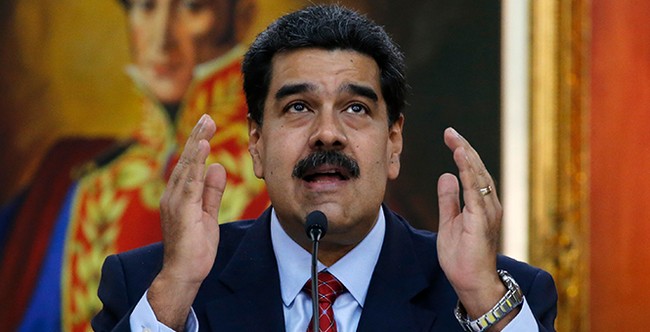
This article explains President Trump’s recent order for “a total and complete blockade” of sanctioned Venezuelan oil tankers, the context behind the seizure of a Venezuelan tanker, and the administration’s broader pressure campaign aimed at crippling Nicolás Maduro’s regime and cutting off revenue linked to drugs and hostage networks.
President Trump escalated pressure on Venezuela with blunt, decisive language that matches a tougher posture on national security and border protection. The United States recently seized a large Venezuelan oil tanker on December 10, and the president followed by ordering “a total and complete blockade” of sanctioned tankers entering or leaving Venezuela. From a Republican standpoint, this is a clear move to protect American lives and sovereignty by choking off funding streams tied to the Maduro regime.
Critics in Havana and Caracas cried foul and called the action “piracy,” but the Justice Department pointed to evidence that the seized tanker was transporting oil to Iran, which changes the legal frame entirely. That kind of state-backed evasion of sanctions has been a recurring problem, and the seizure demonstrates willingness to enforce laws with real consequences. Hard enforcement sends a message that the United States will not tolerate schemes that bankroll drug trafficking or hostile actors.
Trump used his platform to make the stakes plain: the blockade will remain in effect until “the Oil, Land, and other Assets that they previously stole from us” are returned. That line ties economic coercion directly to restitution, framing the move as both punitive and corrective. This administration sees sanctions and interdiction as tools to reverse the damage done by corrupt regimes and their criminal networks.
Senior officials have amplified the push. Alongside the president, Secretary of State Marco Rubio and Defense Secretary Pete Hegseth have advocated an intensified campaign to cut off Maduro’s revenue and isolate his regime. The administration has rebuilt a robust maritime presence in the Caribbean to disrupt trafficking routes, enforce sanctions, and protect American national security interests. Republicans view this as restoring deterrence and showing that the U.S. will act when its borders and citizens are threatened.
The administration’s messaging has been consistent: Maduro’s government uses income from oilfields to fund “Drug Terrorism, Human Trafficking, Murder, and Kidnapping,” and those activities justify aggressive action. The president formally designated the regime a “FOREIGN TERRORIST ORGANIZATION,” tying economic measures to a counterterror framework and enabling a broader set of legal responses. That designation elevates the threat picture and opens more avenues for targeting assets and networks tied to the regime.
The tanker seizure was singled out by officials as one of the most visible steps in a months-long ramp-up of pressure. Since early fall, U.S. naval and Coast Guard deployments in the region have increased markedly to create operational capacity for interdiction and sanctions enforcement. Republicans argue that presence and action deter criminal smuggling and show allies and adversaries alike that Washington is serious about securing the hemisphere.
Economic choke points are the strategic lever here: stopping sanctioned tankers interrupts cash flows that Maduro allegedly uses to sustain his grip on power and to traffic lethal drugs northward. Domination of the maritime domain around Venezuela isn’t theater; it’s a practical measure aimed at dismantling the logistical pathways that enable illicit trade. The end goal, from this angle, is denying resources and creating leverage for political change.
Sanction enforcement isn’t purely military. It is a fusion of legal tools, interdiction, and diplomatic isolation designed to make it impossible for the regime to act with impunity. The administration insists it will hold those who profit from criminal enterprises accountable and will use every lawful instrument to do so. Republicans frame this as necessary leadership: defend the homeland and restore the rule of law abroad.
Critics will call hard measures risky, but supporters argue the alternative—allowing illicit revenues to flow unchecked—would cost more lives and undermine regional stability. President Trump’s language about surrounding Venezuela with the “largest Armada ever assembled in the History of South America” was meant to convey resolve and warn that escalation will continue until objectives are met. In this view, decisive action now prevents longer, costlier conflicts later.
Sen. Rick Scott publicly endorsed the administration’s tougher stance, underscoring GOP unity behind the strategy to dismantle Maduro’s financial networks. That political backing matters because sustained pressure requires both presidential direction and congressional support for tools that choke illicit finance. From a Republican point of view, this combination of force, law enforcement, and targeted sanctions is the correct path to secure the border and protect American communities from the flow of deadly drugs.
Trump framed the blockade as a remedy for theft and a response to transgressions that have led to drugs and violence on American soil. He said, “Venezuela is completely surrounded by the largest Armada ever assembled in the History of South America. It will only get bigger, and the shock to them will be like nothing they have ever seen before.” That directness fits the broader GOP argument that confronting threats head-on keeps Americans safe.
The administration’s actions will be argued over in policy circles, but Republicans emphasize that enforcement, deterrence, and accountability are non-negotiable when national security and public health are at stake. The goal is to force a change in behavior by cutting off the funds that enable criminal and terror-linked activity, and to restore consequences for regimes that traffic in violence and theft.
Add comment