
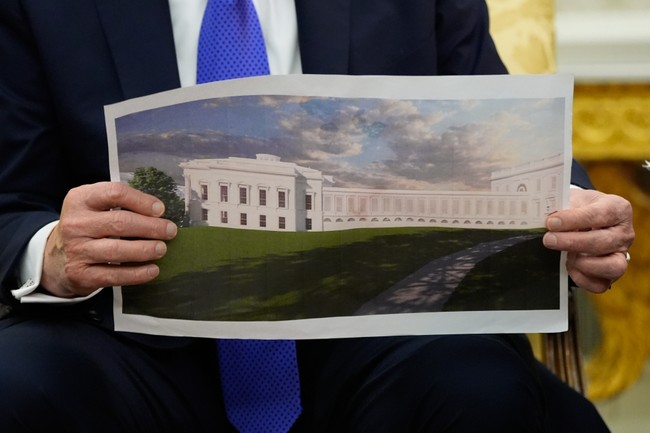
The D.C. federal court refused to freeze work on President Trump’s privately funded White House ballroom project after preservationists asked for an emergency halt, and the judge said limited below-ground activity is unlikely to cause irreparable harm while the case moves forward; the administration must still update agencies and may face more litigation as judges weigh a longer-term injunction.
I wrote this from the perspective that a court deciding not to stop a president’s project deserves straightforward coverage. The fight over the ballroom is legal, political, and cultural, and it highlights how disputes over presidential renovations have become a flashpoint. The National Trust for Historic Preservation sued, arguing the administration began work without required reviews, and the case now heads into further briefing. The courtroom exchange and public reaction show the tensions between preservation rules and a president who says he’s modernizing a historic space.
A federal judge on Tuesday turned down preservationists’ request to halt President Donald Trump’s $300 million White House ballroom project, concluding that allowing below-ground construction to continue in the coming weeks was unlikely to produce irreparable harm to those opposed to the plan.
U.S. District Judge Richard Leon denied the National Trust for Historic Preservation’s request for a temporary restraining order, but said he would hear arguments early next year about whether to issue a longer-term preliminary injunction against the project.
U.S. District Judge Richard Leon, appointed by President George W. Bush, declined to issue an immediate restraining order. He indicated he will hear more arguments about a possible preliminary injunction next year, so this decision is a temporary win for the administration. That means crews can proceed with below-grade work while agencies and the court sort out timing and compliance questions. The judge also set a firm expectation that the administration follow through with promised consultations.
Attorney General Pam Bondi has framed the decision as a defense of the president’s prerogative to proceed with renovations, and the Justice Department told the court it would meet with the National Capital Planning Commission and the Commission of Fine Arts within a short window. The administration says plans were not yet finalized when work began and that private donors will fund the ballroom, which is a key political detail. Opponents argue the procedure matters because federal processes and congressional notice exist to protect historic resources and public interest. The court’s calendar now forces both sides to prove who’s right under the law.
We will continue defending the President’s project in court in the coming weeks.
Preservationists contend the administration cut corners by breaking ground before formal filings and before consulting the relevant commissions, and they pressed the judge for emergency relief. Their lawyers argued the work could threaten historic fabric or set a precedent for skirting review processes. The judge weighed whether any immediate construction would cause irreparable harm and concluded it was unlikely, at least in the narrow time frame before a fuller hearing. That narrow framing matters because the legal standard for emergency relief is strict.
The public debate has predictably split along partisan lines, with critics calling the ballroom an act of vanity and defenders pointing out private funding and the president’s authority over the executive residence. Some on the left have attacked the project’s cost and optics, even as they tolerate or ignore larger taxpayer-funded projects in states and cities they govern. State-level scandals over fraud and budget overruns have been highlighted by critics of the preservation lawsuit to underscore perceived hypocrisy. Political messaging from both camps is already shaping how the courtroom fight will be perceived by voters.
Courtroom quips during the hearing underscored the contentious tone: the National Trust’s attorney mocked the administration’s pledge to meet agencies in “two weeks,” while the judge promised to hold the government to its timetable. That exchange captured the skepticism many feel about promises to follow bureaucratic processes after construction has started. The judge’s insistence on a deadline gives the plaintiffs a concrete timeline to monitor, which could be decisive if meetings don’t happen as represented. For now, the project moves forward but under scrutiny.
There’s more litigation ahead, including arguments over whether a preliminary injunction should halt further work. Both sides will marshal expert testimony, historic-preservation standards, and administrative law claims in the months to come. The administration says the ballroom will be privately financed and seeks to proceed without delay; opponents want assurances that legal and preservation norms were respected. The court will have to balance those competing interests on legal grounds rather than political ones, but the outcome will carry political consequences either way.
For one brief moment the judge declined to use emergency power to stop a president’s project, and that alone will be cited by advocates on both sides. The litigation is now structured: short-term construction allowed with close judicial oversight, followed by a full contested hearing on whether longer-term relief is justified. Whatever the court decides next, the dispute over the White House ballroom will keep the intersection of presidential authority, private funding, and historic preservation in the headlines for months to come.



Add comment