
Checklist: summarize the recent U.S. strikes in northwest Nigeria; report official statements and eyewitness accounts; describe the Lakurawa threat and local impact; outline likely follow-on actions signaled by U.S. officials; preserve quoted material exactly as presented. This article examines those elements and the signals pointing to additional operations.
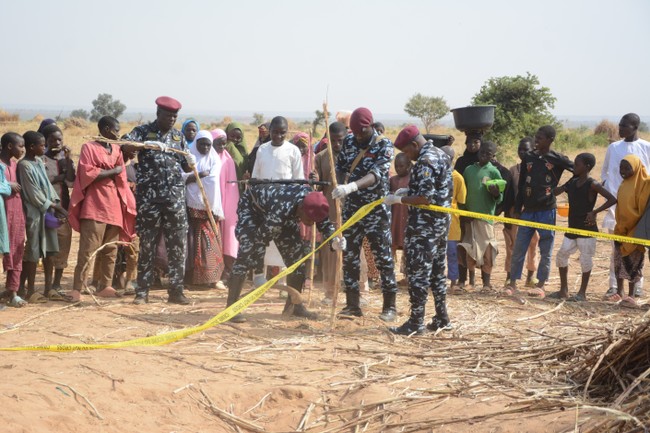
For years, armed jihadists in camouflage and turbans terrorized border villages around Sokoto, raiding livestock, banning music, and terrorizing Christians and moderate Muslims who live there. On Christmas Day, massive explosions hit remote Lakurawa strongholds and sent militants fleeing toward Niger, according to eyewitness reports. Civilian homes miles away trembled from the blasts as the militants bolted in panic, packed three to a motorbike and screaming frantic instructions to one another. The sudden shock to the network exposed both the militants’ reach and their vulnerability when faced with precision strikes.
The operation demonstrated a stark, decisive posture from the U.S. side aimed at disrupting ISIS affiliates in the Sahel. Secretary of War Pete Hegseth publicly thanked Nigerian partners and hinted at further steps to follow. In an exclusive interview, Ricky Buria, his chief of staff, explained the administration’s mindset: “When President Trump says stop attacking Christians, he means it,” said Buria. That line framed the action as part of a broader mission to defend religious minorities targeted by jihadists.
President Trump described the operation as “a powerful and deadly strike against ISIS Terrorist Scum in Northwest Nigeria, who have been accused of targeting and killing primarily innocent Christians.” He added a pointed holiday flourish: “Merry Christmas to all, including the dead terrorists.” Tomahawk cruise missiles were reportedly launched from a U.S. Navy vessel in the Gulf of Guinea, striking multiple encampments tied to the Lakurawa network. U.S. Africa Command, which oversaw the strikes, said the operation was executed at the direction of U.S. leadership and in coordination with Nigerian authorities.
AFRICOM’s initial assessment stated that multiple ISIS terrorists were killed in those camps and emphasized joint intelligence-sharing with Nigerian partners. Nigerian officials described the mission as a coordinated effort targeting militants rather than a unilateral action. Voices within Nigeria, including some religious leaders, publicly welcomed the intervention and argued that U.S. support materially improves local chances against the jihadists. Those statements underscored the regional partners’ reliance on outside capabilities to blunt extremist control.
The Lakurawa group is an ISIS offshoot operating across the Sahel, highly mobile and often operating on motorbikes to terrorize remote communities. They impose forced taxes, carry out cattle raids, beat or maim those who refuse, and forbid activities they deem immoral such as playing music on phones. The militants’ recruitment of local youth as informants deepens the social fracture and spreads fear inside villages that already lack sufficient state protection. With local security forces stretched thin and resources limited, militants exploited gaps to entrench their control.
U.S. officials framed the strikes as part of a strategy to reduce violence against targeted communities, saying they receive continuous operational updates from AFRICOM commanders. “We get continuous updates from our AFRICOM commander, so we know how to best employ our forces to reduce the violence against Christians,” Buria said. He added, “You can rest assured the admin, AFRICOM commander, is doing everything possible.” That language and other public remarks by senior officials signal an intent to sustain pressure on the militants rather than treat the strikes as one-off events.
Analysts warn that militants who scattered after the blasts will likely attempt to regroup, reconstitute safe havens, and reassert control unless followed by sustained action. The Christmas Day strikes may have disrupted immediate plans, but the underlying conditions that allow ISIS affiliates to thrive — weak governance, porous borders, and local grievances — remain. U.S. messaging about follow-on actions aims to deter quick reassembly of these groups and reassure vulnerable communities that the strikes are not isolated. Officials’ repeated assurances of “more to come” create expectations that further operations will target command nodes, logistics, and recruitment pipelines.
Beyond the immediate tactical gains, policymakers argue this approach carries broader strategic implications for migration, regional stability, and global security. Unchecked ISIS affiliates can fuel displacement, inspire attacks abroad, and create transnational networks that threaten allied interests. The recent operation marks a clear statement of intent from U.S. leadership to confront those threats proactively and in partnership with regional authorities. Whether that intent turns into a sustained campaign will determine if the militants are degraded permanently or merely displaced to new areas.

Add comment