
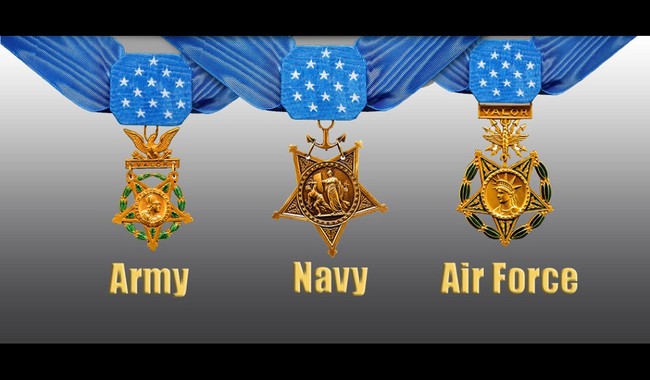
President Trump presented two long-overdue Medals of Honor: one posthumous award to Army Staff Sergeant Michael Ollis for his selfless actions in Afghanistan, and one to Navy aviator Elmer Royce Williams for a Cold War-era dogfight that remained secret for decades.
On a somber day, the Medal of Honor went posthumously to Staff Sergeant Michael Ollis, a soldier whose record showed exceptional training and courage. He completed Airborne, Air Assault, and Ranger Schools and was on his second tour in Afghanistan when the attack at Forward Operating Base Ghazni unfolded on August 28, 2013. Ollis moved quickly to get his men into cover, then advanced toward the breach to confront the enemy, embodying the warrior ethos every commander wants on the ground.
The counterattack saw Ollis link up with Polish Second Lieutenant Karol Cierpica and other defenders, pressing the fight under heavy fire to push Taliban fighters off key positions. They operated without body armor and with only rifles, engaging amid indirect fire, rockets, and small arms. During a container-field confrontation, Ollis neutralized a suicide attacker and shielded Cierpica, but the attacker detonated, killing Ollis while saving others.
Ollis was 24 when he died and had already earned a Silver Star later upgraded to a Distinguished Service Cross before this final recognition. Cierpica survived, later naming his son Michael, and keeps a teddy bear made from Ollis’s uniform as a private testament to that sacrifice. Political obstacles and bureaucratic deadlines once threatened his recognition, but persistence from supporters ensured the story did not end without proper honor.
The other ceremony honored Elmer Royce Williams, a Navy aviator whose November 1952 engagement with Soviet MiG-15s was hidden for decades. Williams enlisted after Pearl Harbor, trained as an aviation cadet, and went on to fly the Navy’s first carrier jet fighters, eventually serving more than 30 years. In the brutal weather over the Sea of Japan, he and his wingman faced seven MiGs sent from Vladivostok, an encounter the Navy and intelligence community quietly suppressed to avoid provoking a wider Cold War crisis.
Williams found himself alone after his flight leader and another pilot peeled off, and he engaged the MiGs with discipline and limited ammunition. He recalled, “While I was doing that,” Williams said, “the four that had turned to the right came at us in a finger-four formation and started firing. All of them were shooting.” He fired with restraint, put his pipper on target, and, using measured bursts, scored hits that sent enemy fighters down.
By the end of the fight Williams had expended his ammunition and had his plane riddled with hundreds of strikes, yet he survived. He shot down four, possibly five, MiG-15s in a single sortie—a remarkable achievement and a naval air combat record that stood alone in that theater. He returned to the carrier at high speed, grabbed the number three wire, and saved both himself and a critical piece of frontline capability.
The aftermath went beyond the damage to aircraft: senior leaders and intelligence officials moved fast to keep the encounter secret, fearing escalation. Williams was summoned and warned not to speak about the event, and the NSA’s covert eavesdropping methods were protected by silence. That cloak-and-dagger posture meant that for decades only a handful of officials knew the truth of a rare U.S.-Soviet aerial clash.
For years Williams’s record carried a Silver Star; recognition came incrementally as historical archives opened and policymakers reassessed long-buried incidents. In 2022 his award was upgraded to a Navy Cross, and subsequent legislative actions allowed for further honors to finally be bestowed. This belated justice underscored how national security decisions can delay rightful recognition for the men who stepped between danger and their fellow Americans.
Both stories reflect a broader truth about service: valor can be messy, politically inconvenient, or classified, yet it still demands acknowledgement. Michael Ollis gave his life shielding comrades during a chaotic assault, while Elmer Royce Williams faced down superior numbers and Soviet pilots when confrontation might have sparked something far worse. The recent awards correct historical oversights and remind the country that honoring sacrifice should be swift and unwavering.
These Medals of Honor are overdue but meaningful, marking two very different kinds of heroism across generations and conflicts. They highlight American grit on the ground and in the air, and they force a sober look at how recognition is sometimes delayed by political caution or bureaucratic inertia. For the families and comrades of Ollis and Williams, the medals matter as a final measure of the nation’s thanks.

Add comment