
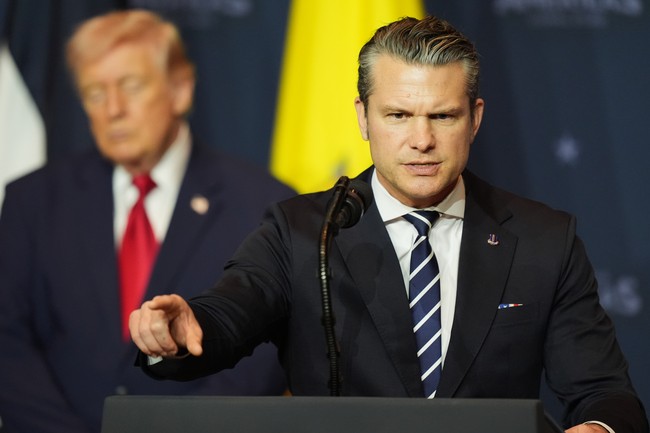
President Trump, Special Envoy Steve Witkoff, and War Secretary Pete Hegseth spoke candidly on Air Force One about the Iran campaign, dignified transfers at Dover Air Force Base, and diplomacy and leverage with Russia and Tehran; this article lays out the key remarks, emotional moments with Gold Star families, and the administration’s posture toward further negotiations and military pressure. The discussion mixed operational updates, blunt political messaging, and pointed criticism of Iran’s human-rights record while emphasizing mounting U.S. leverage and resolve.
The day began with solemn duty: after attending the Shield of the Americas event in Miami, President Trump attended a dignified transfer at Dover AFB to honor American service members killed in the confrontation with Iran. He described meetings with grieving families on the tarmac and reflected on the pride those parents felt for their children. The president’s tone combined grief and resolve, underscoring the human cost that anchors the administration’s decisions.
On Air Force One, reporters pressed the president and his team on operational details and strategy in the Gulf. Trump reiterated that the United States is applying increasing pressure and that the campaign continues to degrade Iran’s ability to strike or support proxies. Those comments framed the administration’s messaging: decisive action coupled with a readiness to negotiate only from strength.
Special Envoy Steve Witkoff joined the gaggle to remind the media about past diplomatic failures and the limits of previous deals. He pointed out how earlier negotiations left Iran with advantages and implied that those mistakes would not be repeated. His message was clear: leverage is the currency of any meaningful agreement, and right now the U.S. holds it.
Trump also addressed allegations about Russian assistance to Iran and said he had communicated stern warnings where appropriate. He pushed back on any notion the U.S. wants to settle for less than a favorable outcome and emphasized that the current posture forces Iran into a weaker position. That blunt approach signals a preference for outcomes that preserve American deterrence and regional stability.
The president spoke emotionally about meeting Gold Star parents, giving a raw picture of the human dimension behind policy choices. He described how the bereaved called their loved ones “my boy” and noted the pride those families showed, even in grief. That moment was used to justify the administration’s tough stance by reminding listeners what’s at stake.
“I’ve very proud of the people. The parents were so proud of their boy, as they called him, ‘my boy.’ In one case. a young lady…Many of them are miliary parents, as you know, but it’s always a very sad thing,” he said.
When pressed about Iranian claims that U.S. strikes hit infrastructure, including a desalination plant, Trump dismissed the moral equivalency and pivoted to Iran’s own abuses. He condemned the regime’s brutality and framed America’s actions as targeted responses to state-sponsored aggression. That moral framing appealed to voters who view the U.S. as a force for order against barbarism.
Witkoff was asked whether the U.S. still entertains a nuclear deal with Tehran and pointed to the disastrous outcomes of prior rounds of negotiations. He argued the president has maximized leverage and that any talks now would occur with America in a dominant position. The envoy’s comments reinforced the notion that diplomacy without coercive power is futile.
Reporters pushed Witkoff about whether Moscow is conveying targeting data or other assistance to Iran, and he said he had “strongly” communicated U.S. concerns to the Russians. When asked if he believed such assistance was happening, he replied, “I hope they’re not,” a cautious line that leaves room for continued pressure on third-party enablers. That cautious diplomacy goes hand in hand with tactical military pressure.
Pete Hegseth described how U.S. capabilities accumulate leverage over time, saying that the more the U.S. can strike and the less Iran can defend, “we’re pressing the offensive every single day, creating all the leverage the president needs for the outcome he wants.” His language delivered a clear operational narrative: sustained pressure shrinks Tehran’s options and strengthens bargaining positions. That framing fits a Republican approach favoring decisive use of force to shape diplomatic outcomes.
The president characterized Iranian leader statements of regret to neighboring Gulf states as tantamount to surrender, insisting the regime is being “decimated” and pushed into concessions. He doubled down on calls for unconditional Iranian surrender and continued pressure until Tehran capitulates to demands that ensure regional security. That uncompromising posture remains central to how this administration communicates strategy to its supporters and the public.

Add comment