
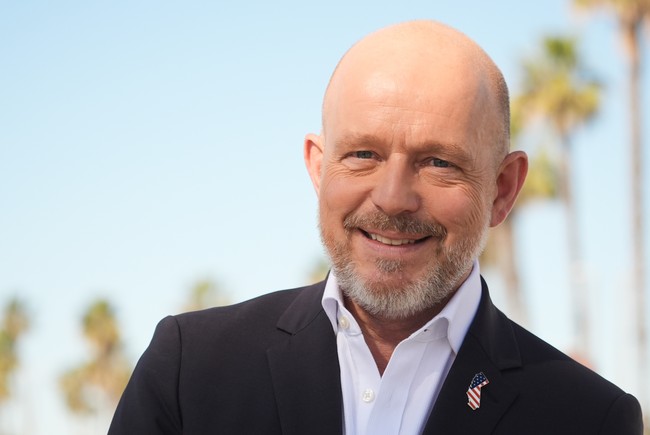
Steve Hilton, a Republican running for California governor, is campaigning on the state’s failures under long-term Democratic control and pushing voters to focus on local issues rather than national personalities. He argues that problems like high taxes and homelessness stem from 16 years of one-party rule and stresses the need to unite behind the leading Republican to ensure at least one conservative advances. Recent polling shows Hilton near the top of the crowded jungle primary, and he notes that the contest should center on California’s future, not Donald Trump. His interviews with national outlets underline that strategy and highlight the GOP’s challenge of breaking through wealthy donor networks backing Democrats.
Hilton has been active across California ahead of the June 2 primary, pressing voters on the ground and in media appearances. He frames the choice plainly: continue with the same leadership that produced the state’s current crises or choose a new direction. That pitch plays into voter frustration over rising costs, public safety, and homelessness, giving his campaign a coherent narrative to present to undecided voters. He also points to polling that places him among the top contenders in the wide-open field.
One persistent theme of Hilton’s message is resisting the urge to nationalize the race. He warns that turning the contest into a referendum on national figures would benefit the Democrats, who can marshal powerful financial backers and deep institutional relationships. In his conversations he repeatedly insists this race must be about California policy choices and the immediate consequences for residents’ daily lives. That keeps the focus where he believes it will resonate most with swing voters.
When asked whether two Republicans could realistically finish in the top two of the jungle primary, Hilton answered in blunt terms about the opposition’s advantages. He said, “I’ve never thought that’s a realistic possibility,” and emphasized the financial muscle arrayed on the other side. He pointed to “the massive financial power of the government unions and their corrupt relationship with the Democrat politicians” and singled out billionaire funders willing to spend whatever it takes. The implication is that resource disparities will shape which candidates make it to the general election.
“I’ve never thought that’s a realistic possibility,” he told Stirewalt. “You’ve got the massive financial power of the government unions and their corrupt relationship with the Democrat politicians. You’ve got the billionaire Tom Steyer. They will spend whatever it takes to make sure that there’s a Democrat in the top two.”
Hilton makes the strategic point that the worst primary outcome would be if no Republican reaches November’s ballot, which would leave Californians without a conservative option in the general. That scenario, he argues, is what Republicans should fear and avoid by consolidating support. He urges unity behind the leading Republican candidate to prevent vote-splitting that benefits well-funded Democrats. The appeal is both tactical and existential for the GOP’s state ambitions.
“That actually is the scenario I think we really need to be worried about and that we need to unite behind the leading Republican.”
He also confronted public opinion numbers that show low approval for national leaders among California adults, but he rebuffed the idea that national figures should drive the state contest. Hilton reminded interviewers that Donald Trump is not on the California ballot, and that voters must judge the gubernatorial candidates on state performance. He pressed the case that blaming Republicans for California’s problems ignores the reality of long-term Democratic governance. That distinction underpins his campaign’s messaging strategy.
In subsequent interviews Hilton returned to the same refrain: the state’s failures are rooted in local policy choices, not national politics. He said, “This election is going to be about the future of California and the fact that we’re desperate for change in California.” He planned to carry that message into debates and further media appearances, laying out specific critiques of current leadership and offering an alternative path. The aim is to make the campaign a referendum on state policy rather than a proxy fight for national battles.
Hilton has been candid about the uphill fight against wealthy donors and institutional spending, and he uses that to explain why conservative voters must be strategic in the primary. He warns that if Democrats successfully nationalize the race, the structural headwinds will intensify, diminishing GOP chances. Staying focused on state-level failures and offering concrete alternatives, he says, is the only realistic route to change. For his part, Hilton insists he is offering that new direction and will argue it forcefully in the coming debates.
“That’s entirely due to Democrat policies after 16 years of one-party rule. That’s the argument that I’ll be making in the debate on Wednesday and then into the general election.
“Why would you expect a different result if you keep voting the same way? The answer for California is not another Democrat. It’s a completely new direction and that’s what I’m offering.”



Add comment