
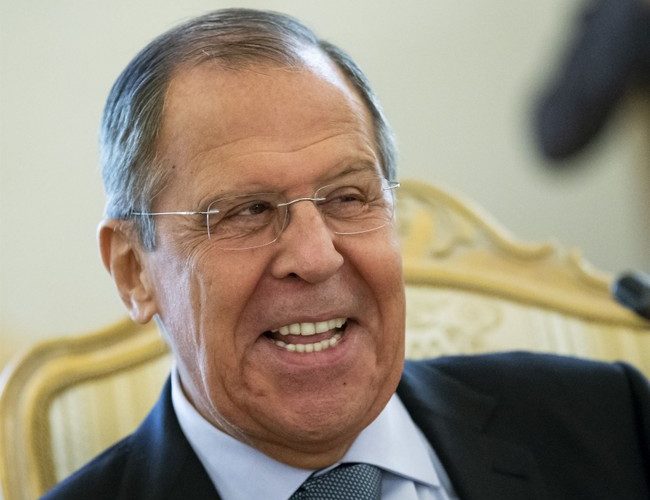
This piece examines rumors that Russian Foreign Minister Sergey Lavrov has been sidelined after a failed diplomatic push tied to a cancelled summit between President Trump and Vladimir Putin, tracing the lead-up, key exchanges, and subsequent signals from Moscow that suggest Lavrov’s standing may be weakened.
Foreign Policy Observers Are Playing ‘Where’s Waldo’ With Russia’s Foreign Minister Sergey Lavrov
There was once a breed of Soviet specialists whose job it seemed was to watch footage and parse dense Russian memos to tell you who in the Kremlin was rising or falling. Those analysts are mostly retired now, and their absence is showing as observers attempt the same sleuthing with senior Russian officials today. The result is a rumor-driven game of detection around Sergey Lavrov’s public profile and official duties.
The current chatter is that Lavrov, long Putin’s diplomatic lieutenant since his UN days and his 2004 appointment as foreign minister, has been cast into a less prominent role. No one is saying definitively that he is permanently removed, but in Putin’s Russia any setback for a senior official is risky and can be consequential. Analysts are watching absences and personnel moves for signals that the Kremlin has shifted its preferences.
Tensions flared after a sequence of events this fall that began with hope of a Trump–Putin meeting and ended with its cancellation. Early public signs hinted at rapprochement, then were complicated by noise about weapons transfers to Ukraine and hardline responses from Kremlin figures. A phone call between President Trump and Putin produced a plan for a Budapest summit to pursue an end to the Ukraine war, and the groundwork for that meeting was reportedly assigned to Secretary of State Marco Rubio.
That plan unraveled quickly. A meeting between Trump and Ukraine’s president produced difficult optics and internal pressure, and on October 21 the summit was announced as cancelled. Washington took actions that followed, and Russian reactions included anger and bluster from elements inside the Kremlin. Within that sequence, a key diplomatic exchange went badly: a call between Rubio and Lavrov that allegedly convinced the White House Russia had no real intent to negotiate.
The Kremlin is looking for someone to blame after the collapse of the planned Putin–Trump talks in Budapest.
According to Russian insiders, responsibility has been pinned on the Foreign Ministry. Its memo — filled with unrealistic, almost ultimatum-like demands — reportedly angered Trump and led to the meeting’s cancellation.
Foreign Minister Sergey Lavrov has become the main scapegoat. Western media have already named him a key reason for the cooling of U.S.–Russia relations.
Ironically, Lavrov tried to impress Putin by taking a hard line with U.S. Secretary of State Marco Rubio — but overplayed his hand. He came unprepared, refused to discuss compromise, and rigidly repeated the Kremlin’s instructions on Ukraine.
Washington took the tone as confrontational and shut the door. The Trump administration made it clear: they won’t negotiate under threats.
Now, through leaks to Kommersant, Russia’s Foreign Ministry is trying to deflect blame, claiming Lavrov only followed prior agreements reached in Alaska. But sources say Putin was furious — Lavrov narrowly avoided being accused of sabotage for derailing a critical summit. Kremlin emissary Kirill Dmitriev has since flown to Washington to calm tensions.
Lavrov’s position is now visibly weakened. Like Shoigu before him, he’s turning from a power player into a scapegoat.
Adding insult to injury, a harsh piece in the Financial Times reportedly hit the Russian foreign minister “where it hurts most.”
A subsequent account attributed the cancelled summit to a Russian memo that offered hardline, near-ultimatum demands on Ukraine and to a tense call between the two countries’ top diplomats that followed. Those accounts described Lavrov as exhausted or disengaged, allegedly unwilling to meet the United States halfway. Such portrayals, true or not, matter inside Moscow because Putin expects results and ruthlessly recalibrates loyalties when outcomes fall short.
The US cancelled President Donald Trump’s planned Budapest summit with Vladimir Putin after a Russian memo to Washington holding firm to hardline demands on Ukraine was swiftly followed by a tense call between the two countries’ top diplomats, said people familiar with the matter.
and
“Lavrov is clearly tired and seems to think he has better things to do than meet or engage with the United States, whatever President Putin may want,” the person familiar with the matter said.
It is not hard to picture where things went wrong: a rigid approach to negotiation that tried to dominate rather than engage, and an apparent misread of American intent. Lavrov has been defending two decades of diplomatic gains that evaporated after the full-scale invasion of Ukraine, so a hard line makes sense from his view. That posture, though, may have been costly when the Kremlin needed a face-saving, forward-looking plan instead.
The aftermath produced more signs that Lavrov’s perch might be shakier than usual. Moscow appointed a junior official to lead the delegation to an upcoming global summit, a role Lavrov typically performed, and he was absent from a Russian Security Council meeting where major strategic options were discussed. Those absences and reassignments feed the rumor mill and raise questions about whether this is a temporary quarrel or a real downgrading of his role.
For now, certainty is elusive. Lavrov’s last widely noted public appearance was a meeting with North Korea’s foreign minister on October 28, but he has not been publicly prominent since. The Kremlin’s assurances that everything is normal have not been backed by the usual visibility for its longest-serving diplomat, and that gap is exactly what foreign observers are now trying to interpret.

Add comment