
I’ll explain how cooperation with ICE at local jails became a flashpoint in Minnesota, recount a tense CNN exchange that exposed inconsistencies, note the political blame and operational consequences, and report recent federal comments on shifting enforcement dynamics.
Federal immigration enforcement in Minnesota has been complicated by local decisions not to honor ICE detainers, and that choice is central to why operations there become risky and politically charged. When jails decline to hold people for ICE, agents must go into communities to make arrests, which raises the chance of confrontations with activists and creates added safety concerns for officers and the public. That increased risk has forced ICE to deploy more personnel and plan for secure operations, which in turn intensifies the political drama around enforcement actions.
Local leaders in Minnesota, including Governor Tim Walz and Minneapolis Mayor Jacob Frey, have framed their approaches as protecting communities and civil liberties, but critics say that rhetoric has encouraged resistance to federal enforcement. The practical result is that arrests are harder, more visible, and more likely to trigger protests that complicate law enforcement work. From a law-and-order point of view, that creates inefficiency and danger that could be avoided with clearer cooperation between local jails and federal authorities.
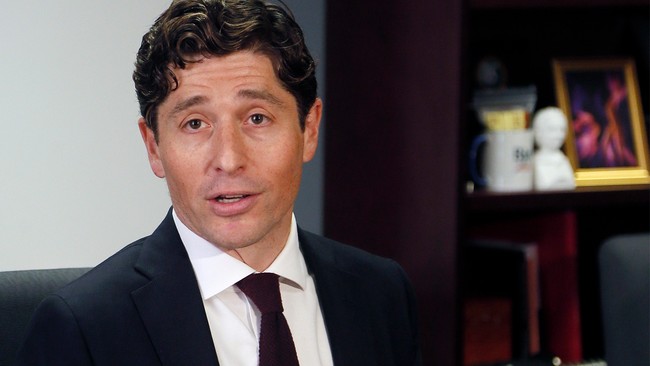
The moment that drew wider attention came during an interview on CNN’s “The Arena with Kasie Hunt,” when a pointed historical comparison left Mayor Frey stumbling. Hunt reminded viewers that local cooperation with ICE is not unprecedented and that under previous Democratic administrations jails sometimes worked directly with federal agents. She said, “The Hennepin County Jail actually had a policy where they let an ICE agent keep an office there and allowed them to talk to immigrants,” which undercuts the claim that current collaboration is uniquely partisan.
Hunt pressed the issue further, asking if following an ICE detainer and handing over someone who has committed a crime is good policy for a jail to follow. Frey tried to sidestep the question with an operational caveat, saying, “And while I don’t have full expertise in how the operations at the jail are conducted, again, that’s not our jurisdiction. What I would say there are mechanisms for doing this lawfully.” That answer did not land smoothly and left room for criticism that his administration helped create strained relations with federal agents.
When public officials discourage cooperation, the conversation shifts from law enforcement logistics to partisan theater, and that benefits no one except activists who want maximum visibility. Enforcement becomes a nightly spectacle instead of a standard policing function, and officers get pulled into public fights rather than focusing strictly on custody and criminal processing. For communities that want safer streets, the lack of routine handoffs between jails and ICE is an avoidable problem.
On the federal side, officials have been monitoring how cooperation patterns affect resource allocation. Border Czar Tom Homan noted that when more officers can take custody of criminal aliens directly from jails, fewer need to be deployed on street operations. Officials described a change in posture tied to improved local collaboration, even using the phrase “unprecedented cooperation” to indicate a measurable shift. That kind of coordination reduces the need for mass deployments and the security footprint around targeted arrests.
“More officers taking custody of criminal aliens directly from the jails, means less officers on the street doing criminal operations,” Homan said. “This is smart law enforcement, not less law enforcement.”
There are practical examples elsewhere of smoother outcomes when local systems and the federal government work together, and those cases tend to have fewer drawn-out confrontations. States or counties that follow clear procedures for detainers and custody transfers avoid the public standoffs that have plagued Minnesota. That straightforward fact is useful for anyone interested in cutting down on chaos and improving officer safety.
In Minneapolis recently, local police have also started to respond to obstructive protests and blockades that activists set up during enforcement actions, removing checkpoints and restoring access when necessary. Those moves signal that some local agencies are prioritizing public order and are less willing to tolerate disruptive tactics. The result is a quieter operational environment that allows law enforcement to do its jobs without becoming the story itself.
Politically, the episode makes for uncomfortable optics for Democrats who previously supported forms of collaboration with ICE but now criticize similar cooperation under a different administration. That inconsistency is an easy target for opponents who argue that policy should be about public safety rather than partisan advantage. The back-and-forth has consequences beyond headlines: it affects how agencies deploy resources and how safe neighborhoods remain during high-profile operations.
The larger point is practical: consistent procedures for dealing with custody and detainers reduce risk, save manpower, and limit public spectacle. When local and federal authorities coordinate as routine partners rather than adversaries, enforcement becomes a technical matter rather than a political showdown. That shift matters for officers, for residents, and for policymakers who want orderly, predictable outcomes rather than recurring crises.


Add comment