
I’ll explain why strict rent controls and talk of seizing housing will worsen New York City’s rental market, show real-world examples of neglected apartments driven by price caps, lay out the predictable economic consequences of making ownership unprofitable, and argue for letting market incentives encourage upkeep and new supply under a different approach.
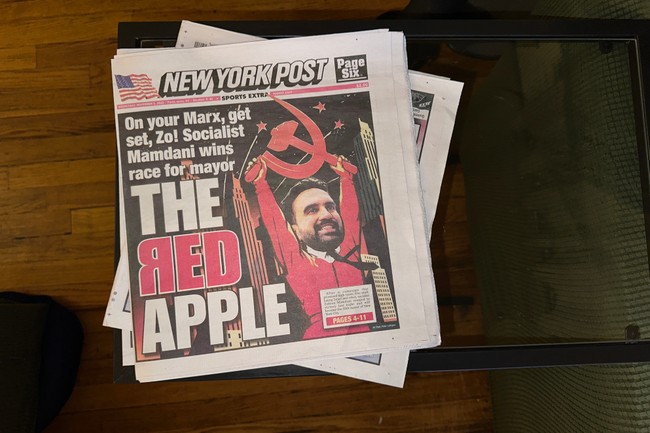
New York just elected a mayor who openly embraces Democratic Socialism, and his housing ideas are already alarming to anyone who cares about safe, habitable units. When the city sets rent limits below the cost of maintenance, buildings stop being viable investments. The consequence is not theory; it’s empty, decaying units and neighborhoods sliding toward disrepair.
Look at properties where market-rate one-bedroom units rent for thousands while a few rent-stabilized apartments within the same structure take in a fraction of that income. Landlords can face a stark arithmetic: spend tens of thousands on repairs with no realistic chance to recover the cost, or leave the unit fallow and let it deteriorate. That choice is made clearer when entire buildings have to balance expensive maintenance, capital fixes, and legal costs against capped income streams.
Where there’s a renter, there’s a landlord who stands to profit—though that profit is by no means guaranteed. To profit, the landlord must make sound decisions as to maintenance, capital investment, and marketing. These costs must be paid; only after they’re met can the owner potentially make a profit. The legal environment also has to permit some return on investment.
But in New York City, that’s not always how it works. Take 429 East 6th Street as an example. A mere five-minute walk from Tompkins Square, the building is a convenient home for students and young professionals.
One-bedroom units in the building average $3,500— except two of them, subject to the city’s rent-stabilization laws, which hold rents below $900 per month.
As a result, both units have been allowed to fall into disrepair, because the cost of restoring them to habitability is greater than what they’d generate in rent. “We’re talking a minimum of $100,000 for [the studio we first visited], which requires a complete remodeling,” Michael Johnson, a vice president at the New York Apartment Association, explained.
The math is viciously simple: if maintenance and capital work cost more than the capped income, owners will avoid those expenses. That results in apartments that are unsafe, unsanitary, or simply unavailable on the market. Any plan that ignores this incentive structure is promising failure, not fixes.
Now add talk of municipal seizure to the mix, and the picture gets worse. When a political movement favors taking private property rather than reforming the market, it invites the same problems public housing systems already show. Those projects often suffer from chronic underfunding, slow maintenance cycles, and a lack of accountability that comes with removing owners who must answer to costs and tenants.
Seizure replaces private incentives with public responsibility, but the history of large-scale public housing suggests that responsibility rarely meets the needs. Buildings need continual investment and responsiveness to tenants, and municipal ownership usually lacks the nimbleness and funding streams private owners have when returns are permitted. The result is predictably more units in poor condition and fewer units available overall.
If the goal is more affordable, comfortable housing, the policies being championed will backfire. Eliminating or reforming rent controls so they do not create chronic underinvestment can encourage landlords to rehabilitate and properly maintain units. Where returns are possible, capital flows toward renovation and new construction instead of toward expensive avoidance strategies or abandonment.
Real reform doesn’t mean abandoning renters; it means aligning incentives so both tenants and property owners benefit. That can include targeted subsidies, tax credits for renovation, streamlined permitting for new construction, and protections that help tenants without making buildings impossible to operate. Policies built on economic reality will produce usable housing, not ideological theater.
The incoming administration can still choose a path that supports both safe housing and a functioning market, but that requires rejecting seizure rhetoric and understanding the costs of price ceilings. If the city wants more and better housing, it must stop punishing the very people who provide and maintain it. Otherwise, empty units and crumbling buildings will become the lasting legacy, and the city will pay in quality of life and lost housing stock.



Add comment