
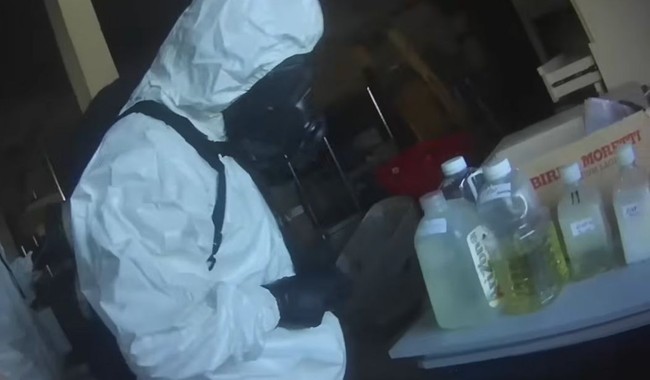
The story: federal investigators say an illegal Chinese-linked biolab was operating out of a Las Vegas home that doubled as an Airbnb, several visitors fell ill—two were described as “deathly ill”—and a property manager with ties to the site has been hit with federal gun charges while the primary suspect remains tied to multiple properties and international connections.
Federal agents reportedly found lab equipment and medical waste inside a Las Vegas garage that had been used for short-term rentals, and people who entered that space later became sick. Tipsters who worked on the property described a foul, hospital-like smell and multiple refrigerators in the garage, which raised immediate red flags for public health officials. The presence of what investigators believe matches equipment from another illegal lab in Reedley prompted the FBI and local health authorities to link the properties.
The property manager, identified in public filings as Ori Solomon, faces federal firearm charges tied to his immigration status, according to court documents. Agents reportedly observed ammunition and a handgun during an initial search, then later recovered six firearms after obtaining an additional warrant based in part on a recorded call. Prosecutors say Solomon was on a Non-Immigrant Visa (E-2) that precludes firearm possession under federal law.
Documents also suggest extensive communications between Solomon and the detained suspect, Jia Bei Zhu. Authorities noted hundreds of contacts in a single month, with instructions to manage properties and move money while Zhu awaited trial. That pattern of remote coordination fits a wider picture investigators are piecing together about how assets and operations were being handled across state lines and internationally.
Public filings and earlier hearings allege Zhu owns multiple homes and condos, including properties in Nevada and California, held through a corporate entity. Investigators contend those holdings need careful forensic searches to determine whether additional lab equipment or biological samples were moved between sites. The scale implied by multiple addresses makes this more than a single illegal setup; it suggests a network of assets supporting suspect activity.
Tipsters who entered the Las Vegas home described a locked garage, three refrigerators, and an odor they called “like a hospital – not like a clean hospital but more of a foul, stale, stagnant air smell.” Several days after being inside that garage, two people reportedly became “deathly ill” and could not get out of bed, per the documents. Other witnesses mentioned many dead crickets and multiple individuals feeling sick after exposure.
Another person inside the home reported the garage was always locked, documents said. A person also reported to investigators that the garage contained three refrigerators and that the room smelled “like a hospital – not like a clean hospital but more of a foul, stale, stagnant air smell.”
Several days after entering the garage, two people became “deathly ill,” and they “could not get out of bed,” documents said. A tipster also told police the house contained “many dead crickets” and several people had gotten sick.
Investigators note Zhu remained in contact with an associate who fled to China with a child, and that individual was allegedly communicating thousands of times in a month. Authorities believe that person had access to video surveillance at the property, raising concerns about deliberate attempts to monitor or control activity around the sites. Those international ties complicate both custody and the flow of information for investigators.
Federal officers seized hundreds or even thousands of samples reportedly linked to the Reedley site, and agents have been expanding inquiries to other properties tied to the same people. The connection between alleged CCP-linked actors and domestic facilities puts pressure on public health and law enforcement to get ahead of potential biological risks. Proper forensic work and secure handling of any materials are essential to prevent further exposures.
Legal moves against the property manager and others aim to disrupt whatever network may have been in place, but the story raises bigger questions about how foreign-affiliated labs and equipment can operate inside American neighborhoods. The combination of immigration-based firearm charges, alleged business fronts, and apparent medical waste at rental properties paints a picture that investigators and lawmakers will not ignore. The next steps will be thorough searches, interagency coordination, and oversight to make sure dangerous materials are contained and accountability is established.

Add comment