
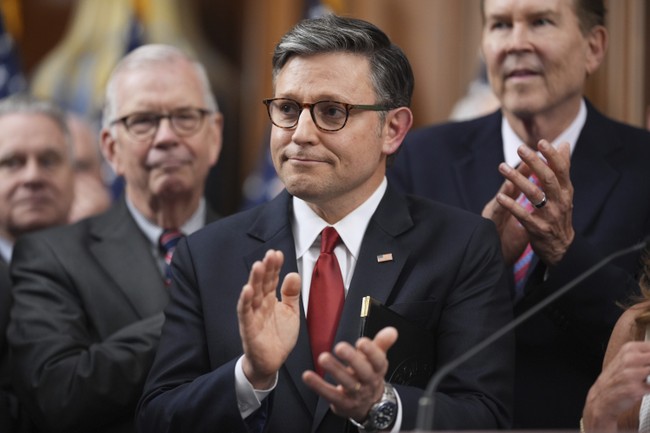
The House debated a bipartisan war powers resolution over U.S. actions near Venezuela, the vote ended tied at 215-215 after a delayed, chaotic floor session that hinged on Rep. Wesley Hunt arriving late and casting the deciding vote, and the episode unfolded amid other contentious hearings and sharp exchanges about presidential authority and national security.
More High Drama on House Floor Includes Kerfuffle During Venezuela War Powers Vote
On Thursday the House took up a bipartisan war powers resolution introduced by Reps. Jim McGovern and Thomas Massie, and the process turned into a long, noisy afternoon before concluding with a deadlocked vote of 215-215. The measure sought to limit certain military actions related to Venezuela and draw lines around the commander in chief’s authority, prompting fierce disagreement across the chamber.
Early confusion centered on a missing Republican vote, with Rep. Wesley Hunt absent as the vote progressed and leadership scrambling to complete business. That absence created a tense pause in proceedings that allowed members on both sides to trade procedural challenges and shouted calls on the floor as time ticked down.
When the voting clock hit zero, the chamber erupted into disorder and lawmakers used the moment to press their positions loudly, making it harder for leadership to restore calm.
Predictably, many Democrats pushed to restrain military actions they saw as risky, while Republicans argued the president needs room to counter threats and disrupt trafficking operations.
Punchbowl News’ Jake Sherman captured the chaos on the floor, noting it “rose into a cacophony on the other side of the aisle : ‘Democrats are now yelling ‘order’ at Mike Johnson, who is in the middle aisle talking to Pat Ryan.'” That description reflected a chamber where decorum frayed as the clock wound down and tempers flared.
About ten minutes after the initial confusion, Rep. Wesley Hunt returned to the chamber and recorded his vote, a development that immediately resolved the standoff.
Official floor updates reported, “WESLEY HUNT has just entered the chamber. He voted no. The war power resolution is going to be defeated.” That entry tipped the balance and left the resolution short of the majority it needed to pass.
Only two Republicans ultimately supported the resolution, and the final tally reflected the narrow margin of disagreement within the GOP on this question of military oversight. The vote outcome underscored how a single member’s presence or absence can determine the fate of a measure in a closely divided House.
Speaker Mike Johnson explained the Republican stance in plain terms, arguing the United States must preserve executive flexibility: “We are the last great superpower, and we have to allow the president the authority to use what is his under the Constitution. I don’t think we need to get in the way of that.” That position framed the debate as a clash between constitutional prerogative and congressional checks.
The White House also weighed in before the vote, asserting that members who would limit the commander in chief were overreaching. The administration warned against moves that would “usurp the authority of the commander in chief to take vital actions to strengthen our national security and stop drugs and criminals from entering our homeland.” That language emphasized the national security stakes cited by opponents of the resolution.
The debate over Venezuela was not the only flashpoint in the chamber that day, as hearings in another room produced heated exchanges and dramatic testimony. Lawmakers on both sides kept up a steady drumbeat of accusations and counteraccusations, which contributed to an overall atmosphere of high drama in the Capitol.
Witness testimony before certain committees and public appearances by high-profile figures fueled partisan sparring and led to several notable moments during the day’s proceedings. Those confrontations made clear that the House was operating under pressure on multiple fronts, with significant political and policy implications.
In the aftermath of the tied vote, the Senate’s related actions and prior votes were referenced frequently as members tried to shape the narrative and justify their positions. Past efforts in the upper chamber to constrain executive military authority had already set a backdrop for this House debate, and lawmakers used those examples to bolster their arguments.
The floor kerfuffle over the Venezuela resolution illustrates how narrow margins and procedural timing can change outcomes in Congress, and how questions about presidential war powers remain deeply divisive.

Add comment