
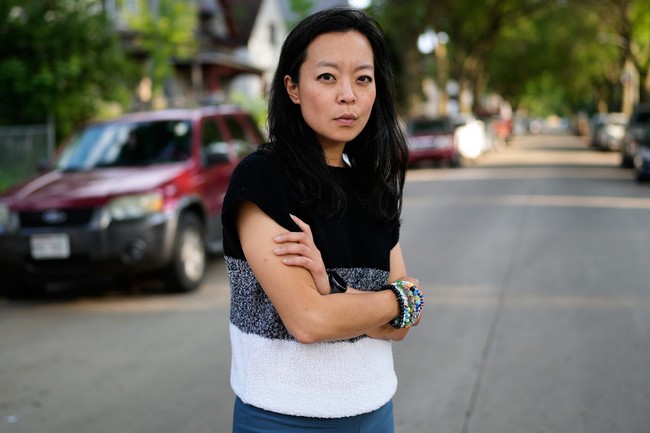
The Wisconsin governor race is heating up after socialist candidate Francesca Hong’s past social media posts resurfaced and she has since tried to explain them away on national TV and in interviews, creating a classic political flip-flop that Republicans are seizing on as proof she is out of touch with mainstream voters.
Democratic politics in Wisconsin are facing scrutiny as Francesca Hong, who identifies with socialist ideas, nears her party’s nomination for governor. Her old posts have been dug up and highlighted, including a widely reported 2020 message where she urged supporters to “Cancel Thanksgiving.” That single line has become a focal point for critics who say it reveals a tone-deaf approach to traditions many Wisconsinites hold dear. Voters are reacting to a pattern of comments that, taken together, suggest a disconnect from common-sense concerns.
One of the more inflammatory lines attributed to her went further, saying we should “stop celebrating colonialism and the original superspreader event that killed Indegenous folx and women so be it.” Critics note the spelling choice “folx” and argue it signals a performative virtue posture meant to signal allegiance to a particular cultural crowd. Those who care about family traditions and national history saw that phrasing as needlessly provocative and dismissive of millions of Americans’ values. For many swing voters, that kind of rhetoric is a liability, not a strength.
Faced with questions on national outlets, Hong has attempted to frame her past remarks as part of an evolution in her thinking, telling a CNN correspondent that people can “evolve.” That answer was short on detail, and she avoided a clear statement on whether she still believes Thanksgiving should be canceled. The word “evolve” has become a defensive shorthand for candidates who want to avoid owning prior controversial positions. Voters want specifics, not soft pivots that sound engineered to dodge accountability.
https://x.com/DSA_Watch/status/2083252308163678556
Her interview strategy shifted again in a later conversation with Politico, where she seemed to soften or even invert her earlier stance, suggesting a newfound appreciation for the holiday. That sudden change looks like a political maneuver designed to neutralize criticism rather than an honest arc of reflection. It’s the kind of flip-flop that plays poorly with people who watch for consistency, especially when a pattern of extreme-sounding comments is on the record. Opponents argue that such pivots show opportunism, not genuine growth.
Republican commentators and conservative voters point to this back-and-forth as emblematic of a broader problem with radical candidates trying to make mainstream runs. When someone has a record of calling to defund the police or dismissing common holidays and cultural touchstones, a quick PR pivot doesn’t erase those statements. Electorates remember what a candidate said, not just what they say now when under pressure from the media. That memory matters most in swing states like Wisconsin.
Beyond the Thanksgiving flap, other items in Hong’s past posts have raised eyebrows, from complaining about being “attacked” by Christmas trees when a remote call background changed, to calling Valentine’s Day a moment when “capitalism tells you how to show love.” Critics say these examples underscore a cultural disconnect and an inability to relate to ordinary family life. Opponents insist those comments are not minor quirks but indicators of a worldview at odds with mainstream Wisconsin priorities like public safety, economic stability, and support for small businesses.
Political operatives on both sides recognized the risk: primary voters in other races have punished candidates for similar missteps. Republicans argue that Democrats should have learned from the near-miss of Abdul El-Sayed in Michigan and counseled Hong to get ahead of the narrative, yet here she is, still performing damage control. Conservative strategists see a clear elective advantage in holding her to her past statements and forcing repeated explanations under scrutiny.
For many voters, the takeaway is straightforward: politicians who use edgy or alienating language to signal to a specific faction risk alienating the broader electorate. Francesca Hong’s series of posts and subsequent on-air pivots give conservatives a steady line of attack that reframes the race as a choice between mainstream values and radical experiment. In a battleground state where margins are tight, those debates could be decisive.



Add comment