
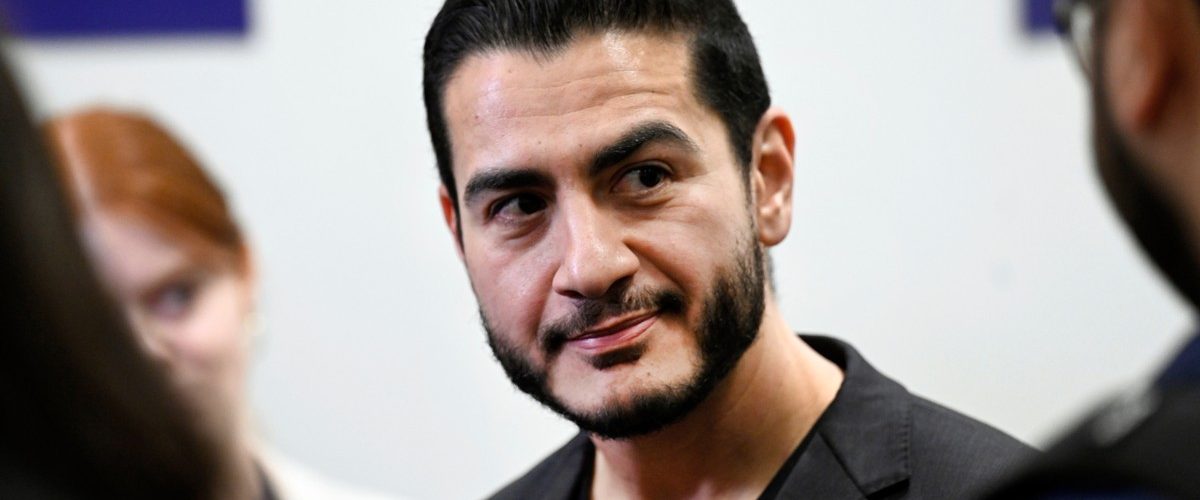
Abdul El-Sayed has been scrambling to repair damage from past remarks as his Senate campaign shifts to the general election, offering apologies and distancing himself from controversial figures while critics call his moves too little, too late.
Campaign drama in Michigan picked up when El-Sayed sought to create distance between himself and controversial streamer Hasan Piker, telling reporters he had no plans to campaign with Piker. That distancing comes after weeks of questions about his judgment and the company he keeps, and it looks aimed at calming worried voters as the general election heats up. Reporters pressed him, and he declined to fully disavow Piker, a stance that left many unconvinced about whether his distancing is sincere or merely tactical.
El-Sayed also faced renewed fallout over a March comment about a synagogue attack near Detroit, when he said “hurt people hurt people.” He later told a Michigan Democratic Jewish Caucus audience, “I made a mistake,” and acknowledged he should have simply condemned the attack. He admitted he had tried to provide “broader context” but that in doing so he “trampled the dignity that that fear and that pain should have been afforded.” He added, “If my statement caused pain, I’m sorry,” he said. “That was not what I intended.”
The apology is intended to close a chapter critics say should have been handled immediately and unequivocally. In the days after his original remark, El-Sayed reportedly defended his approach, telling Punchbowl News that “Leadership is being willing to say the thing if you believe it to be true that nobody else is going to say.” That defense only deepened the concern among voters who felt his original response failed to prioritize victims and condemn the attack plainly.
Five months on, many observers view the apology as political damage control now that El-Sayed is on the statewide ticket. Social media reactions leaned skeptical, with users on X largely unconvinced by the late reversal, though a handful applauded the attempt to make amends. The timing matters: when remarks surface during a primary, candidates can sometimes weather them, but once the general election begins opponents and independents scrutinize every misstep more closely.
Republican opponent Mike Rogers seized on the moment, accusing El-Sayed of trying to “con Michiganders into thinking his beliefs have changed. Let me be clear: they have not.” He added that El-Sayed “had six months to apologize for his incredibly horrific remarks regarding the Temple Israel attack” and called the timing “too little, too late.” Rogers and other GOP voices are casting the apology as an admission that El-Sayed misread the political consequences and are using it to question his character and judgment.
There is a predictable playbook at work: statements create headlines, opponents and social feeds amplify them, and a carefully worded apology arrives later in hopes of defusing the story. Voters in Michigan now face a choice about whether to accept an apology that followed public pressure or to judge the candidate by the original words and the subsequent defense. That tension is exactly what the Rogers campaign intends to exploit as a warning about trust and consistency.
https://x.com/CraigDMauger/status/2093777450849231312?ref_src=twsrc%5Etfw
From a Republican standpoint, this is not just about one comment but about pattern and accountability. When a candidate offers explanations that emphasize context over an immediate, clear condemnation, it raises questions about priorities and instincts. Those are the same instincts voters will expect a senator to show when confronted with threats to communities and civil liberties, and opponents argue El-Sayed’s initial reflexes exposed a gap between words and the leadership many Michiganders want.
How this episode plays out in the months ahead depends on whether the apology is followed by concrete actions and sustained outreach to communities shaken by the attack. For now, skepticism remains strong among many voters who want to see consistency, not just damage control. The political cost will be measured in turnout, fundraising, and how persuadable independents respond to repeated narratives about judgment and accountability.
Updated [6:47 PM Eastern]: Here’s a clip showing El-Sayed’s comment about Piker from Saturday:
Add comment