
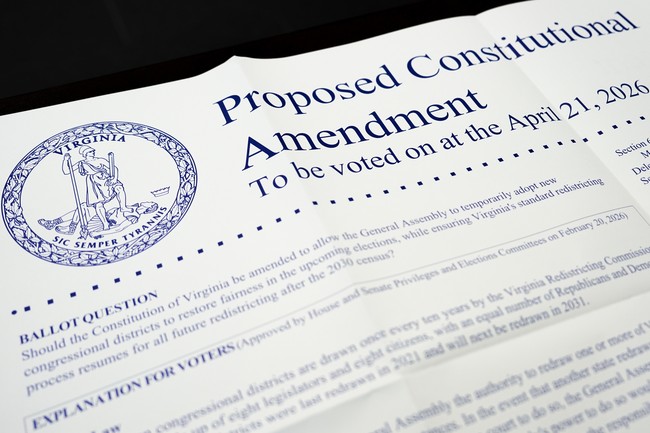
The Virginia Supreme Court tossed a voter-approved redistricting amendment after finding procedural flaws, and Democratic leaders are scrambling through legal and political options — including a controversial proposal to lower justices’ mandatory retirement age and effectively replace the bench to secure a partisan map advantage. The ruling keeps the current congressional map in place, preserves a 6-5 Democratic edge, and blocks an amendment that would have shifted four additional seats to Democrats ahead of the midterms. This article walks through the court’s reasoning, the court-stacking idea under discussion, the tight calendar for any change, and the broader national redistricting implications heading into November.
The court’s 4-3 decision, issued May 8, found that Democrats violated Virginia’s constitutionally required process for placing amendments on the ballot. The justices concluded that the General Assembly must approve a proposed amendment twice with an intervening general election, and that the relevant “general election” period includes early voting. The majority wrote that the constitutional violation “incurably taints the resulting referendum vote and nullifies its legal efficacy.”
That ruling undid a referendum approved by voters 52-48 on April 21, which would have produced a new congressional map favoring Democrats by a 10-1 split instead of the current 6-5 delegation. The decision means the existing map stays in place and no immediate ballot-driven map change will affect the 2026 midterms. For Democrats who saw the referendum as a shortcut to shore up House seats, the court’s move was a sudden and costly setback.
On a Saturday call with Virginia Democrats and national figures, participants reacted with frustration and explored options that range from court appeals to legislative changes. One option that generated attention was a plan to lower the mandatory retirement age for Virginia Supreme Court justices from 73 to 54, the age of the youngest sitting justice. Because the General Assembly appoints justices and Democrats control both chambers, lowering the age would create vacancies the legislature could fill with more sympathetic jurists.
The retirement-age maneuver is dramatic and legally fraught, and even some Democrats expressed concern it would cross a line. Former Rep. James Moran warned the idea might be “just a bridge too far” and could damage the party’s standing. He added, “We do have to keep our credibility,” and “We have to do things that pass the legitimacy test.” Those cautions underscore the political risk of overt court-packing schemes.
Not everyone on the call favored restraint. Rep. Suhas Subramanyam urged urgency and forceful action, telling colleagues, “Everyone has got to have a strong stomach right now; this is a complete disaster waiting to happen if people are timid.” House Minority Leader Hakeem Jeffries framed the moment as high stakes for Democrats nationally, calling it “an all-hands-on-deck moment,” and saying, “We’re not going to step back, we will continue to fight back.” Those quotes show the divide between cautious and aggressive strategies inside the party.
Any attempt to lower the retirement age would need the governor’s signature to become law, and the timetable is tight. Election officials warned that changes after May 12 would greatly increase the risk that the state cannot prepare for the August 4 primary. That gives anyone pursuing legislative fixes only a narrow window to act without imperiling the primary calendar and administrative readiness.
Democratic leaders have also signaled plans to appeal the state ruling to the U.S. Supreme Court, but legal experts note obstacles. Because the Virginia court’s decision rests on state constitutional grounds rather than federal law, the U.S. Supreme Court may lack jurisdiction to review it. That reduces the likelihood of a successful federal appeal and narrows the realistic options available to state Democrats.
The Virginia fight matters beyond the commonwealth because it changes the national redistricting math heading into November. Republicans had already gained ground through redistricting, flipping about 13 House seats in recent cycles against roughly 10 for Democrats, and Virginia’s four potential pickup seats being removed from contention could push the GOP net advantage to around 10 seats going into the midterms. The House balance, currently close, would be affected materially by any shift in those contested districts.
Republican officials welcomed the court’s action, framing it as a win for rule of law and electoral fairness. The Republican National Committee stated bluntly, “Democrats just learned that when you try to rig elections, you lose,” and added, “Today, the Virginia Supreme Court sided with the rule of law and struck down Democrats’ unconstitutional maps.” That reaction highlights how the ruling feeds into broader national narratives about redistricting and partisan tactics.
With time short and options limited, Virginia Democrats face a choice between risky political maneuvers and a legal route that may not reach the federal bench. The coming days will determine whether they pursue dramatic legislative fixes, press an appeal, or accept the state court’s procedural judgment and shift strategies ahead of a consequential midterm season.



Add comment