
The New York Democratic establishment has engineered the conditions that allowed the Democratic Socialists of America to win targeted primaries, and that backfire is now reshaping local and national politics. This piece traces six causes—education, immigration policy, state mismanagement, gerrymandering, anti-Trump obsession, and activist funding networks—and explains how each helped the DSA surge while leaving traditional Democrats exposed. Expect a clear, pointed account of how the party’s own choices produced this insurgency and what it means politically for New York and the GOP.
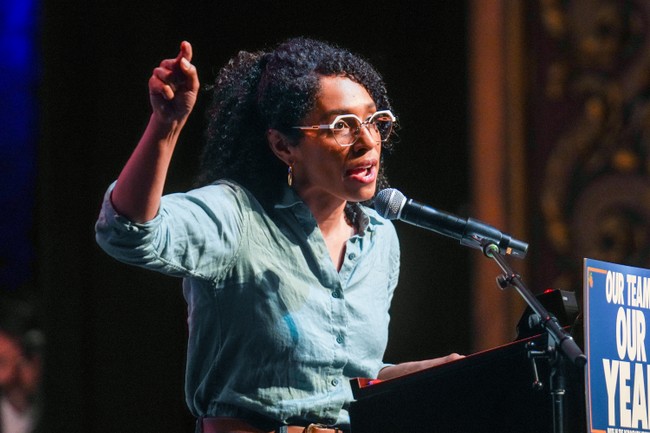
On New York primary night the DSA swept three targeted congressional contests and scored other strong showings, and the reaction at a victory party was brutal. House Minority Leader Hakeem Jeffries reportedly gave a speech “cheering” the results and was met by chants of “you’re next” from activists who view him as insufficiently radical. The spectacle underlined a bitter truth: the party’s institutional leaders are now being punished by the movement their policies helped create.
https://x.com/BillMelugin_/status/2069610243093385250
The first cause is the leftward capture of education at all levels, which the Democratic establishment largely tolerated and even encouraged. Faculty, administrators, and student activists reshaped campuses into recruiting grounds for progressive, and often radical, politics. The low-turnout primary electorate that propelled these insurgents skewed young and ideologically homogeneous—exactly the demographic shaped by those campus ecosystems.
Second, the party’s open-border policies and poor vetting created a new electorate that establishment Democrats believed would cement their advantage. Large immigrant populations in New York now include many who are foreign-born and come from varied political cultures, and some of these communities have been courted aggressively by left-wing organizers. The result is a complex patchwork where turnout, persuasion, and local organization can swing seats to more extreme candidates.
Third, years of Democratic control in Albany and City Hall produced a governance record that critics say is failing, and that failure set the stage for radical challengers. New York has expansive entitlement programs, high public-sector employment, and a massive budget footprint, and that environment fuels frustration among voters who see services strained and taxes high. In this atmosphere, insurgents argue that doubling down on socialist policies will fix systemic problems—an appealing pitch to voters who want dramatic change rather than incremental tweaks.
Fourth, the mid-decade redistricting maneuvers that were supposed to lock in Democratic seats instead sliced and diced communities in ways that weakened many incumbents. By spreading minority voters across more districts, the maps diluted some concentrated strongholds and created openings where activist bases could tip low-turnout primaries. That unintended consequence allowed motivated, niche coalitions—hipster activists, tenant organizers, and nonprofit networks—to displace established elected officials.
Fifth, the party’s obsession with opposing Donald Trump created a tribal intensity that favors purer, more extreme candidates. The decades-long strategy of partisan demonization intensified after 2015, and many party activists now evaluate politics through the lens of anti-Trump fervor. When a base prioritizes maximal opposition over pragmatic governance, it tends to reward the loudest, most uncompromising voices—precisely the people the DSA supplies. This dynamic pushes the party further from the center and narrows its electoral options.
Sixth, coordinated activist funding and nonprofit infrastructure amplified the DSA’s reach and turnout capabilities in ways that mimic a traditional political machine. Progressive non-profits, labor allies, and wealthy donors have built durable field operations that register voters, mobilize volunteers, and support campaigns. Critics allege that some of these relationships blur legal lines and create feedback loops where elected officials funnel resources back into the activist ecosystem that put them in power.
Put together, these six factors explain how a party that sought stability and dominance has instead cultivated a disruptive insurgency. The DSA’s wins are not random flukes but the predictable outcome of political choices that prioritized short-term gains—education influence, voter expansion, and activist alliances—over long-term electoral stability. That creates openings for opponents who can frame themselves as pragmatic alternatives to both the establishment and the radicals.
For Republicans, the situation presents a clear opportunity: when governing narratives collapse and insiders are attacked by their own base, swing voters can be persuaded to consider different leadership. One immediate effect is a more realistic path for GOP statewide candidates who can tie local dysfunction to progressive policy failures and offer fiscal common-sense alternatives.
Whatever happens next, the key lesson is straightforward: political movements tend to grow from the policies and institutions their opponents build. New York’s upheaval shows how a dominant party can sow the seeds of its own disruption, and how insurgent groups exploit openings created by governance choices, demographic shifts, and organized activism. The coming years will test whether the Democratic establishment can recalibrate or whether the insurgents will reshape the party’s identity for a generation.


Add comment