
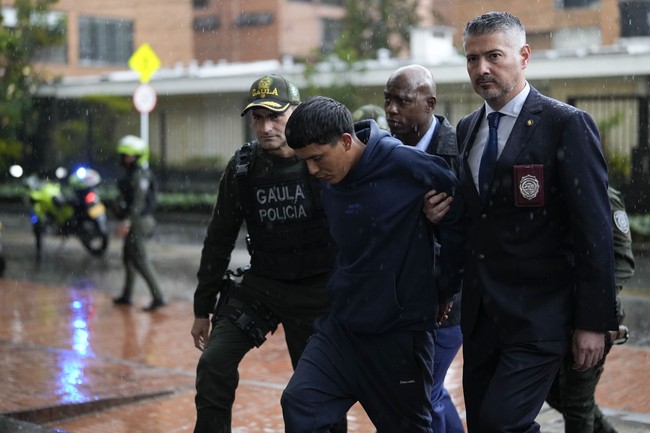
Colombians chose between a law-and-order outsider known as “El Tigre” and a leftist continuation of Gustavo Petro’s project in a runoff that centered on security, cartel power, and the nation’s relationship with the United States.
Voters went to the polls after a surprise first-round result that put Abelardo de la Espriella, a pro-Trump lawyer and businessman, ahead of leftist Sen. Iván Cepeda. The race crystallized around two clear choices: a hard turn toward security, energy development, and closer U.S. ties, or another term of Petro-style reforms and peace negotiations. The campaign spotlighted rising crime, expanding armed groups, and the frustration of citizens who feel abandoned by failed policies.
De la Espriella built his candidacy on restoring order and confronting cartels with tougher tactics. He pledged to halt negotiations with criminal groups, pursue a military-led offensive, and shrink state bureaucracy to stimulate growth. That platform resonated with voters fed up with extortion, record homicides, and the perception that Petro’s “total peace” agenda surrendered ground to violent networks.
Security statistics drove much of the debate, as authorities reported 14,780 homicides last year, the highest figure in recent records. Extortion complaints reached 13,417 in 2025, more than double a decade earlier, signaling that many neighborhoods and businesses now operate under coercion. These numbers framed the election as a referendum on whether the country will tolerate escalating violence or reclaim control.
After clinching first place in round one, de la Espriella told supporters: “We advanced to the runoff thanks to the more than 10 million Colombians who answered the roar. In 21 days, we will make history”
That declaration captured a populist energy and a promise to break from the past. De la Espriella offers policies modeled on decisive, results-driven approaches, including proposals for mega-prisons intended to isolate violent offenders. He cites regional examples where strong action reduced crime, arguing Colombia needs similar, uncompromising measures to protect citizens and restore prosperity.
“We advanced to the runoff thanks to the more than 10 million Colombians who answered the roar. In 21 days, we will make history”
Cepeda, by contrast, insists on extending Petro’s agenda with more social programs, union-backed labor reforms, and continued peace talks with armed groups. His stance is that Petro’s project simply needs more time and investment to address the social roots of conflict. But many voters see that approach as permissive, allowing criminal groups to entrench while the state recedes.
A Bogotá taxi driver backing de la Espriella summed up the mood plainly: “We have to restore security. It’s the only thing that truly guarantees our country’s prosperity or condemns us to misery. I’m afraid that the continuation of Petro’s project will destroy everything.”
“We have to restore security. It’s the only thing that truly guarantees our country’s prosperity or condemns us to misery. I’m afraid that the continuation of Petro’s project will destroy everything.”
The runoff also carries geopolitical stakes, since Colombia is a major coca producer and a key U.S. partner in the hemisphere. De la Espriella’s platform promises tighter cooperation with Washington on counter-narcotics, border security, and pressure on regimes that shelter traffickers. For conservatives watching from the U.S., the prospect of a government focused on law enforcement and energy development is appealing after years of strained relations under Petro.
Petro’s administration defends its record, noting that it has seized significant quantities of cocaine, but critics point to the broader trend of armed groups expanding into drug trafficking and territorial control. Reports show illegal factions still number more than 27,000 members and that disarmament efforts have yielded only limited results so far. Those realities feed skepticism that peace talks alone can dismantle criminal enterprises that profit from chaos.
De la Espriella’s economic pitch complements his security agenda: boost oil and gas production, reduce taxes, and shrink government by as much as 40 percent to free up private sector investment. The idea is straightforward and conservative—unleash market activity, create jobs, and let economic growth undercut criminal recruitment. Opponents warn these moves could harm social safety nets, but supporters argue that prosperity depends on public safety first.
Opinion polling after the first round showed de la Espriella with 44 percent and Cepeda with 41 percent, highlighting how close the contest became and how vulnerable Petro’s movement has become. With more than 41 million eligible voters, turnout and momentum in the final hours would decide whether Colombians choose stability through strong enforcement or double down on a reformist experiment that many perceive as failing. The runoff forced a simple question: will Colombia prioritize security and alliance with the United States, or persist with Petro’s approach despite rising violence?
The outcome will shape Colombia’s immediate path on policing, energy development, and international partnerships. For voters who equate order with opportunity, de la Espriella represented a sharp, pragmatic course correction. For those who still trust in extended social programs and negotiated peace, the choice remained to stick with the long game and hope for gradual improvements.

Add comment