
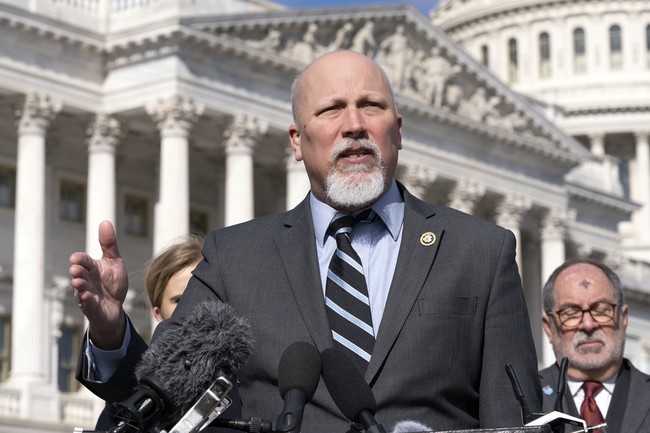
Checklist: identify the problem of entrenched, elderly lawmakers; explain Rep. Chip Roy’s proposal to cut pay and power after 12 years; outline constitutional and procedural context; note timing and likely political fallout.
Many Americans are fed up watching career politicians cling to power well into old age, and that frustration is what Rep. Chip Roy is addressing head-on. Voters expect public service, not lifetime political careers where leaders become more powerful the longer they stay. Roy’s plan targets the incentives that keep members entrenched, aiming to reset the culture in Washington so offices rotate more regularly.
https://x.com/chiproytx/status/2064383284205834346
Roy, the Republican congressman from Texas, has introduced a bill that would stop both pay and power for House and Senate members once they hit 12 years of cumulative service in their respective chambers. The proposal removes taxpayer-funded salaries after the 12-year mark and bars those members from leadership posts, committee chairs, and ranking member roles. The thrust is simple: if you want to serve longer than a dozen years, you can do it, but not at the taxpayers’ expense and not with the perks of concentrated authority.
Embedded near this explanation is visual or social media content that accompanies the reporting and should be kept in place. The bill’s language is precise about eligibility for benefits, and it reads in part as a strict cutoff tied to cumulative service rather than consecutive terms. That specificity matters because it closes a loophole where long service in different stints could otherwise be counted differently.
“A Member of Congress (including a Delegate or Resident Commissioner to the Congress) who has served 12 or more cumulative years in the House of Representatives or in the Senate, as the case may be, may not, on and after the date that the Member reaches 12 years of service in the Member’s respective House of Congress, be eligible for any covered benefit described in subsection (b).”
The bill goes further than pay. It disqualifies long-serving members from holding leadership roles or dominating committee assignments, shifting power away from those who simply outlast challengers. By removing the pathway to higher pay and influence, Roy hopes to make politics less of a career track and more of a temporary duty of citizens willing to serve. That change would alter incentives for reelection and for the cultivation of entrenched networks inside Congress.
Constitutional questions come up because the Constitution gives each chamber the authority to determine its own rules. The bill frames its limits as exercises of that rulemaking power, proposing that each house adopt the provisions as part of its internal rules. It also acknowledges that each chamber retains the constitutional right to change its rules later on, a nod to the practical mechanisms of congressional governance.
“For too long, Washington has rewarded longevity with greater power, higher pay, and deeper entrenchment. If members of Congress want to serve beyond 12 years absent a constitutional amendment limiting them, they should do so without taxpayer-funded salaries and without monopolizing committee chairs and leadership positions. This bill helps ensure that public service remains exactly that: service to the people, not a lifelong career in politics.”
The legislation would take effect with the 129th Congress beginning in 2029, so it is forward-looking rather than retroactive. That timing gives current members clarity about how future rules might reshape leadership competition and committee assignments. It also means the political theater over the bill will play out across the next few election cycles as incumbents and challengers react.
At the founding, Americans expected representatives to serve briefly and then return to private life, living under the laws they helped pass. Elections were supposed to function as the natural limiter, but in practice incumbency advantages and the accumulation of power have overridden that expectation. Roy’s bill seeks to restore the original spirit by codifying a structural barrier to lifelong dominance in Congress.
Who ultimately supports or opposes the measure will expose a lot about current congressional incentives. Some members who value institutional continuity will argue against it, saying experience matters for governance. Others who see the swamp as a broken system will back Roy’s effort as a necessary reform to curb careerism and put fresh minds back into leadership roles.
There are practical questions about how enforcement would work and how chamber rules would be amended, but the principle remains clear: reduce the rewards for staying in office forever and open space for regular turnover. If the goal is to keep public service honest and limited, cutting pay and power after a defined period is a straightforward approach that appeals to voters tired of seeing Washington insiders protected by the system.


Add comment