
California lawmakers are debating a bill, AB 1535, that would add political affiliation to the state’s hate crime statutes after a series of politically motivated attacks, and the proposal has renewed a national conversation about protecting people for their political beliefs while preserving free speech.
The measure, introduced by Assemblywoman Laurie Davies (R-74) on January 5, would amend California’s existing hate crime law to include political affiliation among protected characteristics. Proponents say the change would deter violence aimed at people for their party ties or public stances, and critics warn about unintended consequences that could chill robust political debate. The bill carries a formal title, the Hortman-Kirk Political Violence Prevention Act, and references several high-profile, politically charged attacks that helped spur its creation.
Davies framed the bill as a response to rising threats and physical attacks tied to political differences, saying the aim is to “lower the political temperature.” She emphasized that the proposal is meant to target violent acts, not peaceful speech or debate, and that it would set clear legal boundaries for conduct that crosses into criminal violence. AB 1535 would attach additional penalties when a criminal act is motivated in whole or in part by a victim’s political affiliation.
The proposal responds to incidents where political identity appeared to be a motivating factor, including murders and shootings that shocked local communities. Those events have prompted lawmakers and citizens to ask whether political violence should be treated like other bias-motivated crimes. Supporters say adding political affiliation closes a gap in protection and recognizes how polarized politics increasingly drives dangerous attacks on individuals.
I just want people to realize there was a time when agreeing to disagree with people and their political beliefs or religion or whatever it may be was okay. And we need to bring that back and stop pointing fingers at [each other], and make sure that we have the facts. So when it came time for us looking at legislation this year, I really wanted to do something. That’s why I thought we’ve got to lower the political temperature and we have to have strict penalties for the political violence acts, you know, as more of like a cooling agent. So it sets like clear boundaries that while of course policy debates encourage targeting individuals with physical harm for their beliefs or elected position, it’s a high state criminal offense.
Under current law, California defines a hate crime as a criminal act committed because of characteristics like race, religion, disability, gender, nationality, or sexual orientation. AB 1535 would explicitly add political affiliation to that list, expanding the statute’s reach to include people targeted for their party membership, campaign activities, or public political positions. Davies has indicated she expects pushback from some colleagues but continues to insist the bill protects safety, not speech.
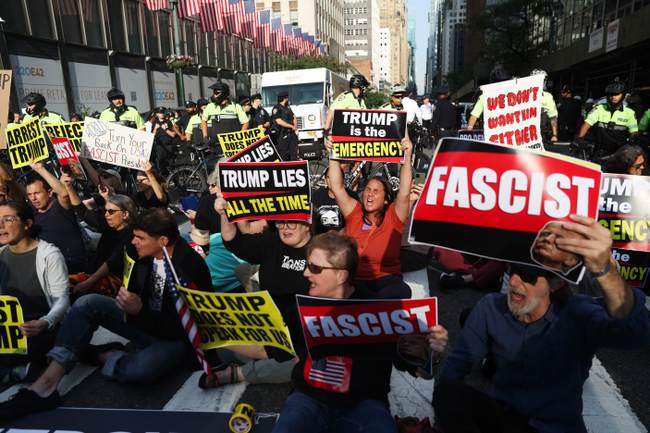
Many conservatives point to everyday examples of intimidation: stolen yard signs, threats tied to bumper stickers, online harassment that becomes physical threats, and a climate where people feel unsafe displaying political symbols. Those concerns are a driving force behind calls to recognize political affiliation as a protected trait, and proponents argue the change would send a firm message that violence for political reasons will be punished severely. Opponents worry about how courts would distinguish protected political expression from targeted harassment that rises to criminal conduct.
Lawmakers considering AB 1535 must balance two priorities: preventing political violence and safeguarding free speech and protest rights. The bill’s language attempts to draw that line by focusing on criminal acts committed because of political affiliation, rather than penalizing rhetorical or nonviolent political expression. How the courts and prosecutors interpret that distinction will shape whether the bill achieves its deterrent aims without chilling protected speech.
There is also a broader debate about whether states should be the sole venue for such protections or whether Congress should consider a federal standard. Supporters suggest that a national approach could avoid patchwork protections and make a clear statement that political violence is unacceptable anywhere in the country. Skeptics argue federal involvement risks politicizing enforcement and complicating First Amendment analysis.
At the community level, the bill taps into a real fear many Americans describe after years of bitter partisan conflict: the worry that a political disagreement could escalate into harassment or physical attack. Lawmakers who back the measure frame it as practical and symbolic, a legal tool and a signal that political targeting will not be tolerated. Whether that will ease tensions or inflame legal battles remains an open question as AB 1535 moves through hearings and debate.
Regardless of the bill’s ultimate fate, the discussion itself highlights a growing consensus that political violence must be addressed in some form. Lawmakers, activists, and ordinary citizens will be watching how California’s proposal is refined, litigated, and applied, with potential implications for how other states and the federal government respond to politically motivated crimes. The conversation about balancing protection and free expression is certain to continue as the legal and political process unfolds.


Add comment