
Checklist: Summarize Bowser’s decision and record; note federal cooperation and crime comments; include her announcement video; highlight potential successors and future questions; keep quoted material intact.
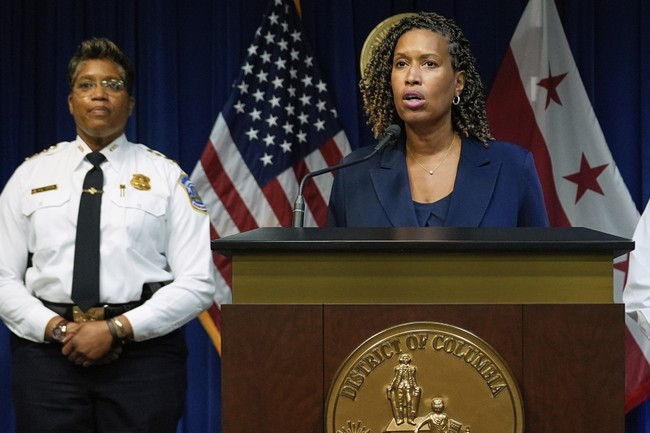
Muriel Bowser announced she will not run for a fourth term as mayor of Washington, D.C., bringing an end to a decade in charge of the city. She first took office in January 2015 and won reelection in 2018 and 2022, overseeing major projects, investments, and controversial moments. Her choice opens a wide political field in a city where local control and federal interaction often collide. The announcement arrived in a brief video on her X account, which she shared publicly.
On Tuesday, Bowser posted the short video announcing her decision not to seek another term. The clip and her statement framed the exit as a capstone to ten years of city-building, while also setting the stage for a competitive mayoral race. For Republicans watching national politics, her remarks about preserving D.C.’s autonomy stood out as a pointed nod to the broader fight over federal power. The timing leaves a full year for prospective candidates to organize and stake out contrasts on crime, housing, and economic policy.
“My fellow Washingtonians, for 10 years, you and I have worked together on an ambitious agenda to restore faith in our government and ensure that every D.C. resident gets the fair shot they deserve. To keep that promise, we took big swings, keeping D.C. teams in D.C., raising enrollment and graduation rates in our schools, and investing more money in housing than any other city or state, creating 36,000 homes.
“We delivered on big projects like McMillan and St. Elizabeth’s, and invested nearly $1 billion in Ward 8, including the brand new, full-service Cedar Hill regional medical center. We drove unemployment to its lowest levels, achieved a AAA bond rating and strong reserves, quadrupled CBE spending, and completed the largest infrastructure project in our city’s history with the Frederick Douglass Memorial Bridge.
“We also brought our city back from the ravages of a global pandemic, and summoned our collective strength to stand tall against bullies who threaten our very autonomy, while preserving home rule. That is our North Star.
“Throughout this remarkable journey, I’ve been honored to serve with countless dedicated city executives and extraordinary front-line workers, the incredible people who keep Washington D.C. thriving every day. For their bold vision, big ideas, personal sacrifices, and relentless pursuit of excellence in service to this city, I am deeply grateful.
“I’ve also had the immense privilege of working alongside all of you, the residents of D.C. Every day, I gain strength from witnessing your hard work, your ingenuity, and your pride in this city. You are the heartbeat of this place.
“Now, looking to the future, I know we’ve laid the groundwork for others to build upon, to reshape and grow D.C.’s economy, establish D.C. as the 51st state, and protect our investments in affordable housing, transportation, public safety, and public schools. And to build a world-class stadium, housing, recreation, and parks at RFK.
“It has been the honor of my life to be your mayor. But today, with a grateful heart, I am announcing that I will not seek a fourth term. When you placed your trust in me 10 years ago, you gave me an extraordinary opportunity to have a positive impact on my hometown. Every day since, I’ve cherished the opportunity and have happily given all my passion and energy to the job that I love.
“Together, you and I have built a legacy of success, of which I’m intensely proud, and for the next 12 months, let’s run through the tape and keep winning for D.C.”
Bowser highlighted tangible achievements: major housing investments, big infrastructure projects, a AAA bond rating, and a drop in unemployment. Those are the kinds of results city leaders point to when defending long tenures. Yet her record will be weighed against persistent concerns about crime, schools, and the cost of living. For conservatives, the most interesting parts of her tenure were how she handled federal resources and the extent to which she welcomed outside help to address violence.
She ultimately acknowledged a degree of cooperation with federal efforts to reduce crime, even after initially resisting them. In August, she admitted the success of the federal crime crackdown, noting she appreciated the surge of officers that “enhance what [the Metropolitan Police Department] has been able to do in this city.”
“Having more federal law enforcement officers on the street — [has led to] having more stops that got to illegal guns,” Bowser said during a prior news conference. “We think that there is more accountability in the system, or at least perceived accountability in the system, that is driving down illegal behavior. We know that we have had fewer gun crimes, fewer homicides, and we have experienced an extreme reduction in carjackings.”
In an interview, Bowser said personal and family reasons informed her decision and framed the move as passing the baton. “It was time for me to pass the baton on to the next set of leaders who are going to take our city to the next level,” she told News4. She also emphasized energy and timing, suggesting she wants to pursue other opportunities while still active and visible.
What comes next is unclear. Bowser’s departure creates a vacuum in local leadership and a scramble among potential successors. Names already being mentioned include D.C. Councilmembers Janeese Lewis George and Kenyan McDuffie, though a crowded field could shift rapidly as fundraising and endorsements take shape.
The politics of D.C. will remain nationalized, because the city’s unique federal relationship keeps its leaders in the spotlight. Bowser leaves office with tangible projects to her name and unresolved debates about public safety and governance. The next mayor will inherit both the assets she touts and the challenges that remain for residents across the District.

Add comment