
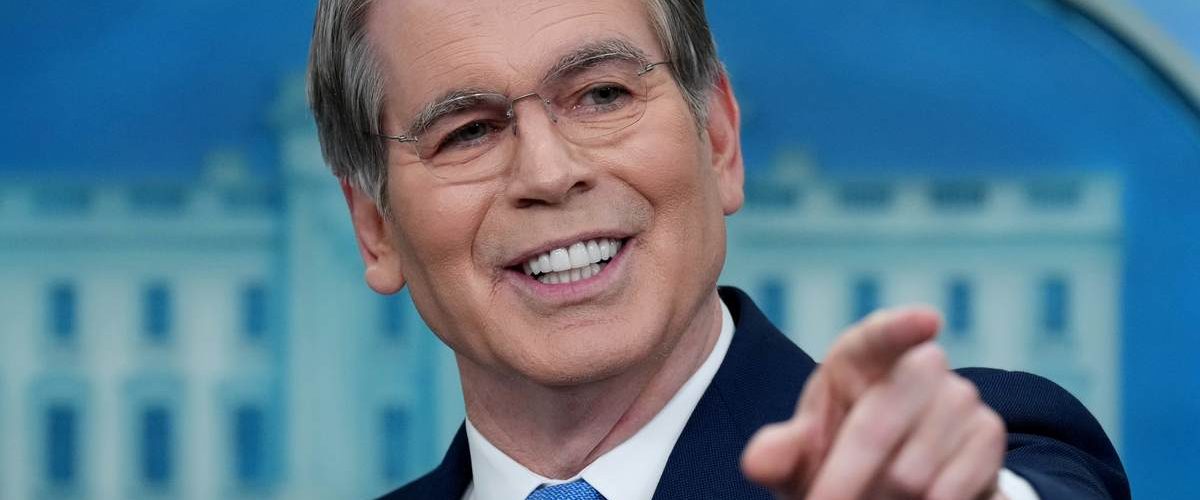
Scott Bessent used the G20 finance ministers meeting to deliver a blunt, hard-nosed message about crippling Iran’s financial networks and exposing hidden assets, laying out a clear strategy to squeeze the regime until it can no longer fund terror or nuclear ambitions.
At Asheville, the Treasury secretary didn’t speak in hedged diplomatic language; he spoke like someone who believes the U.S. can and should apply economic pressure decisively. His tone reflected a Republican appetite for strong measures that target regime survival, not just symbolic gestures. Bessent described tools and coordination with allies that signal a new, sustained campaign. The aim is to deprive Tehran of the cash flows that bankroll proxies and atomic timelines.
Bessent emphasized recent actions that illustrate this strategy in practice, pointing to a Dubai branch of an Egyptian bank that allegedly moved large sums to the regime. He made clear Washington deployed a Patriot Act authority in a way it hadn’t been used before to shut down that channel. That move shows a willingness to use existing statutes aggressively to disrupt illicit finance. It also signals that legal and regulatory levers will be exploited relentlessly.
He did not mince words about naming and shaming, warning banks and facilitators that anonymity is over. “There was a branch of an Egyptian bank in Dubai that had funneled more than $1.8 billion to the regime, and we used a Patriot Act authority that we had not used before, and we are shutting them down,” he explained. That admission is meant to deter third parties that still think they can skirt responsibility. It gives a preview of targeted sanctions and follow-on actions coordinated with partners.
Bessent spelled out a program of rolling actions: a bank sanction one week, another the next, accompanied by allied cooperation. He highlighted broad international backing, naming the EU, the ECB, the UK, the UAE, and Bahrain as participants in the pressure campaign. That level of coordination is essential if sanctions are to bite rather than merely annoy. The approach mirrors the Republican principle of combining American resolve with diplomatic muscle.
https://x.com/EricLDaugh/status/2094786352105570751
He went further and threatened to go after the regime’s shadow finances and overseas lifestyle assets in very public terms. “We know who you are, You know who you are, and we are probably going to announce a bank sanction this week, and we will announce one the week after. We are speaking to our allies here who have all come forward, and we have had a great show of support, whether it’s from the EU, the ECB, the UK, the UAE, the Bahrainians. So we have seen great support around the world, and we have zero tolerance. We are going to economically asphyxiate this regime.” Those sentences telegraph a clear strategic intent more than mere rhetoric.
Bessent also signaled a follow-up: tracking and freezing illicit holdings held in tax havens and trust companies. He described specific targets—accounts, mansions, and trusts—and made a point of threatening enforcement in places like the British Virgin Islands. That kind of targeted asset disruption is designed to cut off safe havens for stolen state money and to increase the political and financial cost of running the regime. It is a direct assault on the kleptocratic side of Tehran’s power structure.
“I will say it on worldwide TV, just so you know, we KNOW WHERE in the British Virgin Islands your accounts are at these trust companies. We know the hundred million dollar houses you have around the world. We are going to freeze those…we are going to close all that down. We are going to go after the regime’s illegitimate assets that they have stolen from the Iranian people.” That declaration moves the conversation from sanctions to seizure and restitution. He made clear those assets could be returned to the Iranian people or directed to victims of terror.
On the security front, Bessent tied economic measures to the goal of denying Iran a nuclear weapon and stopping proxy attacks. He framed the campaign as existential for Tehran: after 47 years of the same behavior, the regime faces an era of sustained pushback. “After 47 years — it is over,” he declared. He warned, “Either you are with us, or against us.” That binary stance appeals to those who prefer a clear policy with real consequences rather than endless negotiations that buy time for bad actors.
He used a striking personal metaphor to underscore the strategy: a childhood memory of dealing with snakes in South Carolina. You had to cut off the head because the venom remained otherwise, he said, and the tail would keep wiggling. “We are burying the head of the Iranian snake,” he asserted. “The snake doesn’t know it’s dead yet — but it will stop wiggling when the sun goes down. And so, the Iranian regime — they are demised. And they will figure it out.”
Those images and blunt statements are meant to make one thing clear: the administration, led on this front by Bessent, plans a sustained, coordinated campaign to strangle Iran’s financial lifelines. The tactics include unusual uses of existing law, public naming of networks, allied sanctions, and targeted seizure of assets. For anyone who doubts the seriousness of this effort, the language and promises from Asheville suggest it will be tested and, if necessary, escalated until it achieves its aims.

Add comment