
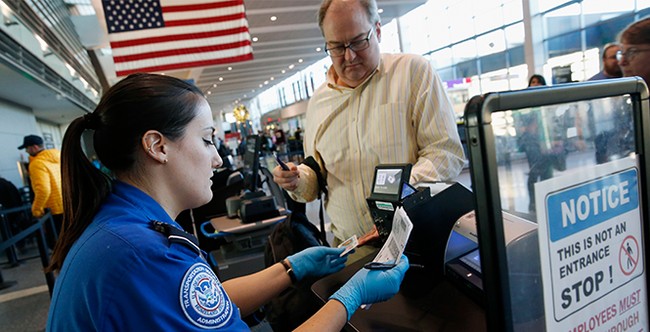
The partial government shutdown has dragged on for nearly a month, straining airport security, disrupting travel, and prompting ten major airline CEOs to publicly demand that Congress fund Homeland Security and stop using air travel as political leverage.
The shutdown has left many federal safety functions in limbo, with Transportation Security Administration officers working without pay and absenteeism already affecting operations at busy airports. Airline leaders warned that unpaid frontline workers, including TSA officers, customs personnel, and air traffic controllers, are bearing the cost while passengers face long lines and uncertainty. The CEOs joined in an open letter urging lawmakers to resolve funding quickly and prevent this from happening again. Their message was blunt: national security and safe travel should not be bargaining chips in political fights.
The CEOs pointed out that tens of thousands of TSA employees have not been paid during the shutdown, which creates stress for families and risks for the traveling public. Absences among TSA officers have already caused disruptions at major hubs during an important travel season, increasing delays and leaving travelers frustrated. Airline executives said long checkpoint lines and slow processing are directly linked to the funding stalemate in Washington. They reminded Congress that aviation and border security depend on steady, predictable funding for those who keep us safe.
The chief executive officers of major U.S. airlines urged Congress on Sunday to move quickly to end a 29-day partial government shutdown that has forced 50,000 airport security officers to work without pay, warning it could further disrupt U.S. air travel.
Absences by Transportation Security Administration officers have already disrupted travel at some major airports over the last week, raising alarm as the busy spring break travel season continues.
“Too many travelers are having to wait in extraordinarily long – and painfully slow – lines at checkpoints,” the CEOs of American Airlines, United Airlines, Delta Air Lines, Southwest Airlines, JetBlue Airways , Alaska Air and others wrote in an open letter to Congress.
Political leaders are trading blame, but the practical consequence is immediate: operations are degraded and frontline workers are forced to choose between duty and financial survival. Democrats have framed the shutdown as resistance to Republican demands, but the letter from the airline CEOs focuses on the real-world effects and urges an end to the impasse. When federal transportation and security staff are unpaid, the safety net weakens and travel becomes less reliable. The CEOs emphasized that the last multiweek shutdown produced widespread flight disruptions and an FAA-ordered flight reduction, and they warned that repeating that harm is unacceptable.
The CEOs also called for structural changes so this kind of disruption cannot recur, arguing for agreements that ensure essential departments remain funded regardless of political fights. They urged leaders to “immediately come together to reach an agreement to fund the Department of Homeland Security” and to take steps so funding lapses do not jeopardize air travel again. Airline executives highlighted that Americans expect consistent security and service, not political brinkmanship that leaves workers unpaid and passengers stranded. The letter was a clear signal that industry and national security concerns intersect and that Congress must prioritize continuity of operations.
“First, leaders should immediately come together to reach an agreement to fund the Department of Homeland Security. Then they need to act so this problem never happens again,” they added.
Last fall, a 43-day government shutdown led to widespread flight disruptions and the FAA ordered a 10% flight cut at major airports. “Once again air travel is the political football amid another government shutdown,” the CEOs wrote.
Critics argue the shutdown reflects misplaced priorities and risky political theater at the expense of public safety. Attacks and other security incidents in recent months underscore the stakes, and undermining DHS funding during tense times is especially dangerous. Republican commentators note that voters should be reminded of which party is blocking solutions and which officials are willing to put national security ahead of political scoring. The airline CEOs’ public plea gives a concrete, apolitical frame to those concerns: when safety and travel are threatened, Congress needs to act.
Unpaid TSA officers and other federal workers are on the front lines, and their livelihoods should not hinge on legislative standoffs. The letter from ten major airline CEOs put lawmakers on notice: resolve the funding gap now and set rules to prevent repetition. The public and industry alike deserve reliable security and consistent service, without the recurring uncertainty that comes from using essential agencies as leverage in policy fights. Ending the shutdown and protecting the workforce should be a basic responsibility of elected leaders.
Editor’s Note: The 2026 Midterms will determine the fate of President Trump’s America First agenda. Republicans must maintain control of both chambers of Congress.

Add comment