
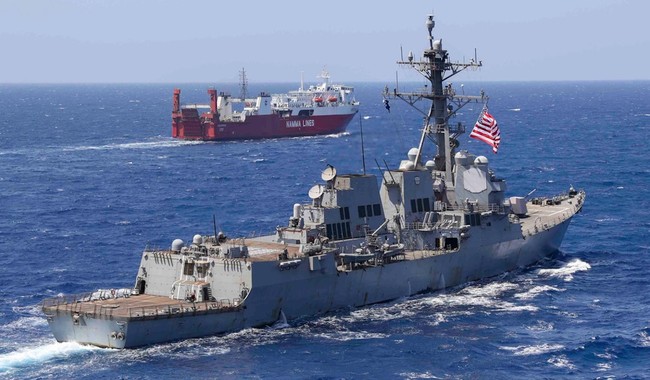
The U.S. Navy has moved decisively into the Strait of Hormuz to clear mines and keep global shipping lanes open, sending two guided-missile destroyers and a mix of surface vessels and undersea drones to establish a safe passage amid tensions with Iran.
The Strait of Hormuz is a vital artery for global commerce, and recent reports confirm that USS Frank E. Peterson (DDG 121) and USS Michael Murphy (DDG 112) transited the waterway and operated in the Arabian Gulf to prepare for minesweeping operations. Central Command has announced the intent to set conditions for clearing mines in the strait, emphasizing the U.S. role in ensuring freedom of navigation. These moves underline an unmistakable message: American forces will protect commercial shipping and resist any attempt to choke off a major trade route.
CENTCOM’s statement makes clear that the operation is about restoring safe passage, not launching new offensive actions across the theater. The command framed the effort as beginning the process of establishing a new passage and indicated they will share that pathway with maritime industry when ready. That language matters; it signals a measured, controlled approach while fully committing U.S. assets to ensure maritime security in one of the world’s most important chokepoints.
Reported details point to a combined approach using both surface ships and unmanned undersea vehicles to detect and remove explosive hazards. Using undersea drones for mine countermeasures is a modern and precise tactic, reducing exposure of crewed vessels to danger while speeding clearance operations. That blend of high-tech capability and traditional naval presence keeps the pressure on any actor that would threaten shipping lanes without escalating into broader offensive operations.
Here is the relevant CENTCOM passage quoted exactly as released:
U.S. Central Command (CENTCOM) forces began setting conditions for clearing mines in the Strait of Hormuz, April 11, as two U.S. Navy guided-missile destroyers conducted operations.
USS Frank E. Peterson (DDG 121) and USS Michael Murphy (DDG 112) transited the Strait of Hormuz and operated in the Arabian Gulf as part of a broader mission to ensure the strait is fully clear of sea mines previously laid by Iran’s Islamic Revolutionary Guards Corps.
“Today, we began the process of establishing a new passage and we will share this safe pathway with the maritime industry soon to encourage the free flow of commerce,” said Adm. Brad Cooper, commander of CENTCOM.
From a strategic standpoint, this operation hits multiple objectives at once: it protects commercial traffic, deters further Iranian coercion, and demonstrates American resolve. The Iranians counted on mines and asymmetric tactics to raise the costs of freedom of navigation, so removing those mines denies them leverage. For U.S. allies and neutral traders alike, a cleared strait prevents economic harm and signals that the United States will act to keep global commerce moving.
Politically, the move is consistent with a doctrine of strength that favors clear, limited actions to secure vital interests without provoking unnecessary escalation. The operation emphasizes operational security, so officials are withholding timing details while making the intent plain. That balance—being transparent about objectives while not telegraphing specific operational dates—sends a practical, disciplined message to both adversaries and partners.
There are broader implications for regional actors watching closely. If the United States demonstrates reliable mine-clearance capability and willingness to protect shipping lanes, it reduces the appeal of aggressive maneuvers by bad actors seeking to exploit ambiguity. It also reassures regional partners that U.S. naval power can and will be used to preserve the international order that their economies rely upon.
On a tactical level, combining destroyers with unmanned systems showcases how modern navies can limit risk to sailors while maintaining effectiveness. Traditional hulls provide command and control and surface presence, while drones do much of the dangerous detection and disposal work. That layered approach not only clears hazards efficiently but also signals technological and operational superiority in maritime security tasks.
Finally, this action sends a straightforward message to Tehran: attempts to weaponize maritime chokepoints will be met with direct countermeasures. The operation is not framed as revenge or escalation but as a defensive necessity to keep trade flowing and to maintain stability. Expect continued U.S. naval activity in the area aimed at deterring disruptions and ensuring that the Strait of Hormuz remains open for legitimate commerce.



God speed U.S. Navy and their complete success!