
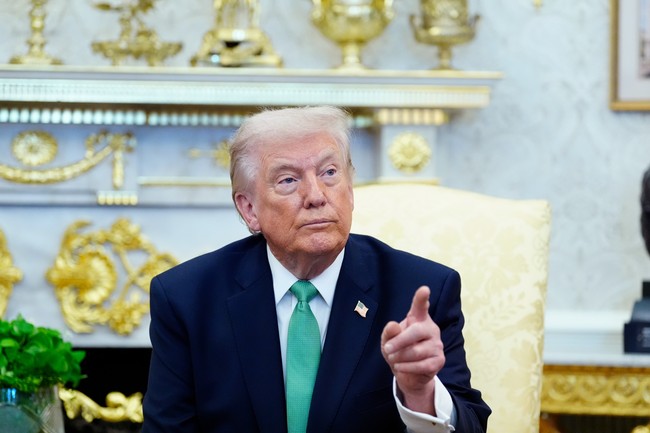
President Donald Trump says he is negotiating with an Iranian leader to halt hostilities, delaying strikes on energy infrastructure for five days while talks proceed, and the person he appears to be dealing with is Iran’s parliament speaker Mohammad Baqher Ghalibaf rather than the elusive “Moqtaba” figure some have joked about; Tehran publicly denies direct talks, but U.S. officials and observers suggest hardline factions there face hard choices as the clock ticks down.
Trump announced a pause in planned retaliation against Iranian-linked power facilities, saying talks were “going well” and giving the other side five days to respond. This move looks like pressure coupled with a genuine opening for negotiation, a posture meant to force decisions rather than drift into endless rhetoric. From a Republican perspective, it’s a strategic squeeze: offer a brief chance to de-escalate or prepare to apply decisive force.
When pressed about whom he was dealing with, Trump was deliberately vague, but he made clear it was not the so-called “Supreme Leader” Moqtaba Khamenei, whom many have joked is an invisible cardboard figure. That line undercuts the idea that Washington is bowing to Iran’s top cleric and shifts attention to other power centers inside Iran. It also signals to Tehran that the U.S. recognizes and is willing to engage with practical decision-makers inside the Iranian system.
“Don’t forget: We’ve wiped out the leadership phase one, phase two, and largely phase three. But we’re dealing with a man who I believe is the most respected and the leader, you know, it’s a little tough, they’ve wiped out — we’ve wiped out everybody,” he added.
Reports now point to Mohammad Baqher Ghalibaf, the speaker of Iran’s parliament, as the “top person” in contact with the Trump team. Ghalibaf is no moderate; he is a hardliner with ties to the Revolutionary Guard, but he also sits in a position that could bridge the regime’s military and political wings. That combination makes him a plausible channel for serious talks: someone who can speak for elements that matter yet also feels the heat politically and personally.
Tehran’s public denials of direct negotiations are predictable and tactical. Iran often masks concessions and backchannel diplomacy with official disclaimers to maintain domestic credibility and international unpredictability. From Washington’s side, a short window of good-faith negotiating time forces Tehran to weigh the risks of continued posturing against the tangible consequences of escalation.
If Ghalibaf is indeed the interlocutor, his background with the Revolutionary Guard gives him leverage to pull disparate Iranian factions toward a deal. That background also makes him vulnerable; officials who have been part of Iran’s aggressive posture may now see retreat as a way to avoid becoming targets themselves. The prospect of more high-value Iranian leaders being removed changes incentives quickly: the regime must decide whether to test escalation or cut losses.
Ghalibaf’s previous threats to strike energy targets across the Gulf raised the stakes, suggesting that Iran could try to widen a conflict by damaging the region’s infrastructure. Such moves would likely provoke coordinated responses from Gulf states and potentially draw Saudi Arabia and the UAE into a more direct role against Tehran. The regional calculus is shifting; Gulf capitals increasingly view Iran as an immediate threat and are prepared to coordinate with the U.S. if necessary.
Giving Iran five days is a clear tactical choice by Trump: it creates a short fuse, stabilizes markets briefly, and puts the onus on Tehran to take meaningful action or face renewed, harsher measures. Markets react to predictable policy, and the promise of potential resolution brought relief, at least temporarily. But the underlying message is simple: diplomacy now or force later.
For Republicans, the move reads as disciplined brinkmanship—offer a narrow path to peace while retaining full freedom to act. That posture flips decades of perceived presidential weakness into a stance of resolve. It sends Tehran a straightforward message: comply and avoid destruction, or refuse and face escalating consequences.
Meanwhile, Iran’s denials and the fog around leadership visibility complicate public assessments, but they don’t change the operational reality. Whoever sits at the table matters less than whether Tehran’s powerbrokers can align behind a credible, enforceable agreement. If Ghalibaf can marshal enough support, a short-term de-escalation might be achievable; if not, the five-day countdown may end in forceful action designed to finish the job.
The situation remains fluid and dangerous, with real risks for the region and for global energy markets. The next few days will show whether Tehran opts for pragmatic negotiation or for a gamble that could invite a far larger confrontation. Either way, the administration has made its posture plain: it will offer a brief chance to negotiate, then act decisively if talks fail.

Add comment