
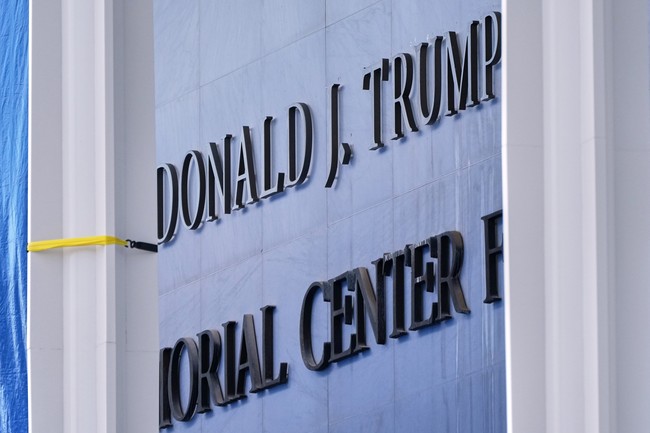
The Kennedy Center’s exterior signage has been updated: court filings and a Justice Department certification say President Donald Trump’s name was removed from the building and grounds by the judge’s extended deadline, and the venue’s appeal says the issue could return to court if the institution wins its case.
The change happened after a federal judge ordered the administration to remove the lettering and gave a short extension because thunderstorms made the work unsafe on Friday night. New filings filed on Saturday confirm the work was completed and the signage was taken down by the noon deadline the court set. For supporters, the timely certification shows the legal process played out as ordered and the government complied with the court’s direction.
The Kennedy Center had asked for more time and argued that removing the letters would disrupt necessary repairs and renovations, claiming safety concerns tied to the building’s condition. The venue’s legal filing framed the situation as a clash between completing structural fixes and complying with the court’s directive. That tension underlies the appeal the Kennedy Center has since pursued, leaving open the possibility that the name could be restored depending on appellate outcomes.
The Justice Department filed a certification in federal court one hour before a judge’s Saturday noon deadline that said President Donald Trump’s name has been “removed” from “all physical signage on the Kennedy Center building and grounds.”
The government asked for a brief extension because thunderstorms had delayed the work and created safety concerns for the crews, and the judge allowed a 12-hour push to noon on June 13 so the removal could be completed without putting workers at risk. Those weather-related considerations are pragmatic and predictable when dealing with outdoor signage and tall scaffolding. Certifying completion close to the deadline kept the court from needing to micromanage hazardous onsite conditions while still enforcing its order.
The government requested “a short extension of time” for 12 hours until noon on June 13, saying the work “has been delayed because of thunderstorms in the District of Columbia that presented safety concerns for workers,” according to the government’s latest filing.
A federal judge in D.C. ordered the Trump administration to certify by noon on Saturday that it has complied with a court order to remove Trump’s name from the granting a brief extension.
The Kennedy Center’s appeal sought to preserve the lettering while it completed renovations, arguing that a complete shutdown would hinder needed structural repairs and could even risk “total collapse” in its starkest phrasing. Those assertions aimed to paint the court order as an overreach that would force the institution to remove and later reinstall costly signage. The center also warned that removing letters now would waste time and money if an appeals court later allowed the name to be returned.
…[T]he Kennedy Center’s leadership argued….that the lower court was interfering with needed renovations.
“The District Court is not allowing us to close in order to properly fix up and repair the Building, including potentially life threatening structural damage like beams and parking garage ceilings that are rusted, and in serious danger of falling onto people below,” according to the appeal. “Indeed, total collapse!”
Those are dramatic claims, and they go to the heart of what the courts must weigh: immediate compliance and public-safety logistics versus the institution’s claim of irreparable operational harm. From a Republican viewpoint, the rule of law matters first; when a court issues an order, the administrative branch and its contractors ought to follow it unless a higher court stays that order. Allowing appeals to be treated as automatic stays would undermine judicial authority and create inconsistent enforcement across cases.
The Kennedy Center has also suggested the name could come back if it prevails on appeal, underscoring that this is not necessarily the end of the fight but one step in a longer legal process. That argument about potentially reinstating signage reflects a larger pattern in litigation where the cost of preliminary compliance can become part of the appellant’s complaint. Still, the court’s ability to insist on compliance while appeals proceed helps prevent temporary loopholes from becoming permanent avoidance of judicial rulings.
For the public, the visible change on the Kennedy Center’s facade is symbolic, and symbols matter in politics and culture. Supporters of the president see the removal as the judicial process working and a corrective to decisions made by institutions; critics view the whole episode as politicized enforcement. Either way, the move to remove the name under court order sets the stage for the appeal to decide whether the change sticks or whether the letters return after further review.
The filings and the DOJ certification make clear the government followed the timeline the court approved, and the Kennedy Center’s appeal will determine the next legal chapter. The matter now moves into standard appellate procedure, where legal arguments about institutional harm, judicial authority, and public interest will be examined. The outcome will hinge on how appellate judges balance immediate compliance against the merits of the center’s claims.



Add comment