
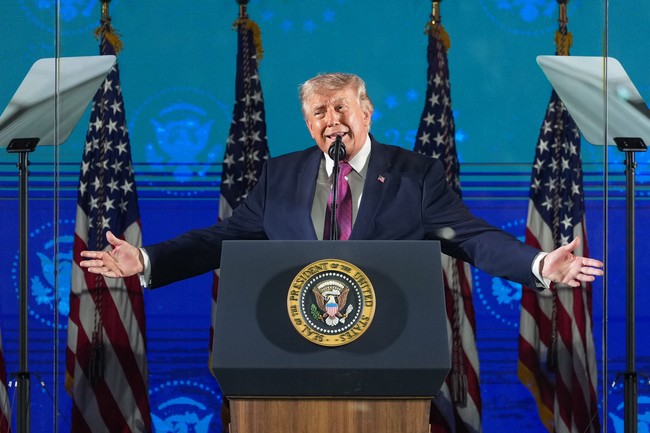
The economy under the Trump administration shows mixed signals: GDP growth slowed to 1.5 percent in Q2, inflation has eased but remains above target, consumer spending and business investment—especially in AI—are bright spots, and the Iran conflict is complicating energy prices and political support ahead of the midterms.
The latest government numbers make clear the country isn’t sprinting, but it isn’t collapsing either. Second-quarter GDP growth came in at 1.5 percent, down from 2.1 percent in the first quarter and below economist expectations of 1.8 percent. That slowdown is an annoyance for Republicans heading into November, yet it comes with important positives beneath the headline figure.
One encouraging sign is consumer strength, which still drives roughly 70 percent of the economy. Consumer spending rose at a 3.2 percent annualized rate in Q2, rebounding from just 0.5 percent in January through March. That kind of spending keeps businesses hiring and production humming even when other components drag on overall growth.
Another area powering parts of the expansion is business investment, particularly in technology tied to artificial intelligence. Business investment, excluding housing, rose at an 8.4 percent pace, a solid showing even if it cooled from the prior quarter’s 10.6 percent. That surge in investment has ripple effects for productivity and long-term growth potential.
The U.S. economy expanded at a sluggish 1.5% pace from April through June as rising imports weighed on growth. But consumer spending rose. And the Federal Reserve’s favored measure of inflation grew more slowly last month, but remained above the central bank’s 2% target.
The Commerce Department reported Thursday that growth in U.S. gross domestic product — the nation’s output of goods and services — decelerated from 2.1% in the first three months of 2026 and came in below economists’ expectations. But consumer spending — which accounts for about 70% of U.S. economic activity — increased at a 3.2% annual clip, up from 0.5% in the January-March period.
Imports played a big role in trimming GDP, and much of that came from shipments of chips and other AI-supporting goods. Because GDP only counts domestic production, a jump in imports subtracts from growth even when it reflects healthy business investment. In this case, a sharp rise in imports shaved roughly 1.5 percentage points off second-quarter growth.
Inflation has been the political pain point for voters, and the numbers show modest improvement. Monthly inflation dipped by 0.1 percent in June, and the annual rate eased to 3.7 percent from 4.1 percent in May. That still sits above the Federal Reserve’s 2 percent goal, leaving room for debate about whether rates should move again.
In a 9-3 vote, Fed officials decided to maintain the federal funds rate within a target range of 3.5% to 3.75%. The three dissenting votes supported raising the rate by 25 basis points.
In its policy statement, the central bank acknowledged that inflation is still running above its long-term target of 2%. Officials pointed to ongoing supply-related disruptions, particularly in the energy sector, as a major contributor to higher prices. […]
Inflation had climbed to an annual rate of 4.2% in May — the highest reading in more than three years — largely because gasoline prices surged during the U.S. conflict with Iran. Although oil and natural gas prices have eased somewhat since then, renewed military activity near the Strait of Hormuz has raised concerns that fuel costs could stay elevated in the months ahead.
The Iran conflict adds an unwelcome variable by pushing energy prices higher and keeping inflation stickier than it otherwise would be. Fuel cost spikes tied to geopolitical instability directly hit household budgets and map onto voter concerns about affordability. If voters link higher prices to the conflict, Republicans risk losing traction despite economic gains in other areas.
But consumer spending — which accounts for about 70% of U.S. economic activity — increased at a 3.2% annual clip, up from 0.5% in the January-March period.
Business investment, excluding housing, rose at an 8.4% pace, down from 10.6% from January through March but strong, reflecting a surge in investment in artificial intelligence.
Imports are subtracted from the economic figures because GDP is only supposed to count what is produced in the United States. Imports rose at an 11.5% pace, partly on a surge in shipments of computer chips and other products that support AI investment. The imports shaved 1.5 percentage off second-quarter GDP growth.
Labor markets remain a relative bright spot, with employment gains better than last year’s malaise. Employers have added an average of 92,000 jobs a month this year, a clear improvement over fewer than 10,000 a month in 2025. That improvement helps explain why consumer spending has held up and why households aren’t retreating despite higher energy costs and pockets of uncertainty.
Higher costs have frustrated Americans ahead of November’s midterm elections, which will determine whether President Donald Trump’s Republicans keep full control of Congress
The American economy has been surprisingly resilient in the face of the Iran war and the spike in energy prices it caused. The job market has bounced back this year from a lackluster 2025, giving consumers the wherewithal to spend. Employers are adding an average 92,000 jobs a month this year, compared with fewer than 10,000 a month in 2025 when high interest rates and President Donald Trump’s erratic use of tariffs discouraged businesses from hiring.
Public opinion is a problem for the administration on the foreign policy front. Recent polling indicates most Americans do not view the Iran conflict as worth the cost, and approval for how the situation is handled has slipped. That political fallout could matter more to election outcomes than the technical GDP number itself.
For Republican policymakers and candidates, the path is clear: point to the economy’s strengths—consumer spending, job gains, and tech investment—while explaining how foreign entanglements raise costs at the pump. The election will hinge on whether voters feel those strengths outweigh the real, immediate pain at their kitchen tables.



Add comment