
The article takes a look at Michigan’s 2026 political landscape, focusing on the high-profile Senate and governor contests, the candidates competing for those offices, and how endorsements from President Donald Trump could shape the outcomes as the state heads into its August primary and the November general election.
Summer in Michigan feels like a sprint this year, and the political calendar is keeping pace. Voters here are preparing for a primary that will help set the stage for a consequential fall. The piece examines who is running, who has backing from national figures, and how those dynamics matter for control of state and federal offices.
One of the marquee races this cycle is the open U.S. Senate seat being vacated after Senator Gary Peters announced he would step down following 12 years in the Senate and previous service in the House. Peters’ departure creates a rare pickup opportunity in a state that is often competitive at the federal level. The discussion revolves around who the major players are and the strengths and weaknesses they bring to a statewide contest.
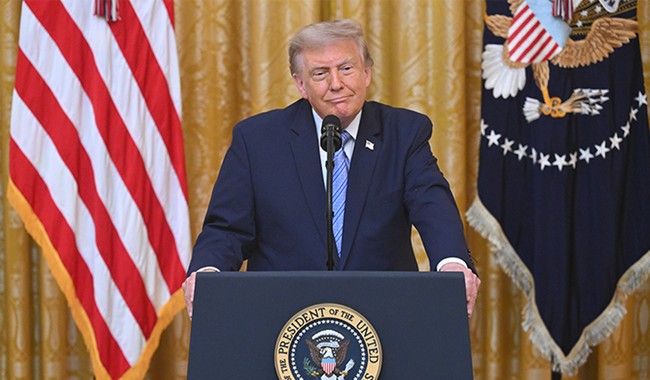
On the Republican side, former Representative Mike Rogers is the clear standard-bearer, and he brings name recognition from his years representing Michigan’s 8th District from 2001 to 2015. Rogers ran for the same seat in 2024 and narrowly lost to then-Representative Elissa Slotkin by a margin of just over 19,000 votes, 48.6 percent to 48.3 percent. President Trump endorsed Rogers early, making the race a clean test of whether national backing helps consolidate support in a statewide GOP primary and beyond.
The Democratic side has been less settled, and that uncertainty could influence the general election matchup. Abdul El-Sayed is among the candidates who has drawn attention for his rhetoric and campaign style, which has prompted pushback within his own party. That internal friction raises questions about how Democrats will coalesce and whether any fallout could make the seat easier for Republicans to contest in November.
Michigan Democratic Senate candidate Abdul El-Sayed is facing backlash from within his own party after using controversial rhetoric to describe the stakes of his victory in a recent donor meeting.
“If I win … well y’all came at me so now I get to come at you, and you know, primarying people like John Fetterman, I have no problem to do that,” he said, according to audio of a Zoom meeting obtained by POLITICO. “Ideally you put one ogre on a pike, and then everyone else gets the message, and all of a sudden starts to sound a lot different,” El-Sayed added later, referencing how he could help propel the progressive moment.
Congresswoman Haley Stevens also seeks the Democratic nomination for Senate, bringing nearly eight years in the House to her bid. Stevens has tried to position herself as a steady, experienced option compared with more outspoken rivals. Her profile offers a conventional path to statewide appeal, but the contest shows how Democrats must balance experience and enthusiasm when picking a nominee in a toss-up state.
On the gubernatorial front, the Democratic field looks settled with Secretary of State Jocelyn Benson as the expected nominee. Benson’s tenure overseeing elections in Michigan has been a focal point, particularly for voters and activists who remain sensitive to the state’s 2020 results. That record is part of the debate over whether the governor’s race will become a referendum on election administration or broader Democratic policies.
The Republican governor’s primary includes Rep. John James and businessman Perry Johnson, the latter of whom previously ran for president and governor. John James secured President Trump’s endorsement in June, a high-profile signal intended to unify GOP voters and boost fundraising and turnout. Even with that nod, the primary has remained competitive, reflecting lingering divisions within the state GOP about what message and candidate will win in a statewide general election.
Local memories of past gubernatorial contests shape how voters view current options, and comparisons to earlier nominees occasionally surface in conversations about electability and policy priorities. That background matters because Michigan’s political environment is often shaped by practical concerns like the economy and infrastructure alongside national culture-war battles. The result is a state where political strategy must blend local instincts with national momentum.
Primary day, scheduled for August 4, becomes a critical waypoint for both parties, offering a chance to narrow fields and for candidates to demonstrate organizational strength. Winning the nomination will require candidates to show they can mobilize voters across urban, suburban, and rural parts of the state. For Republicans hoping to flip one or more statewide offices, the primary is the first major test of whether endorsements and national narratives translate into grassroots energy on the ground.
Michigan remains a competitive political landscape where small margins matter, and candidate selection will be decisive for both parties. The balance of endorsements, campaign messaging, and performance in the August primary will shape how the fall campaign unfolds. Voters and observers will be watching how state races interact with national politics as November approaches.


Add comment