
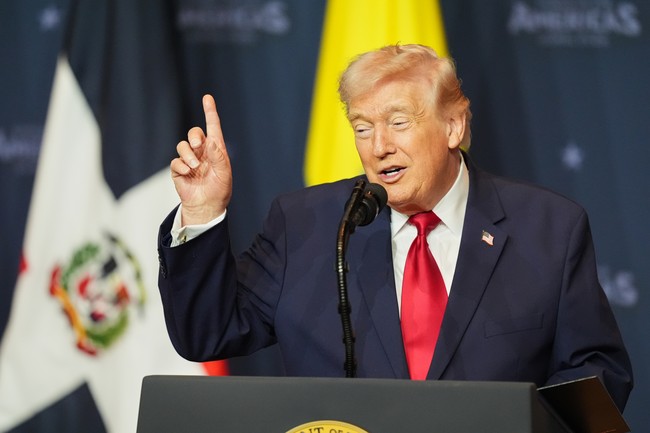
The piece looks at CNN analyst Harry Enten’s recent on-air findings: President Trump’s overall approval stayed steady despite world events, and his support among the MAGA base remains exceptionally strong, a point that unsettles many on the left. It highlights Enten’s data-driven segments, the numbers he presented about public concern over Iran, and the persistence of Trump’s base size and loyalty. The article keeps the original quotes intact and preserves the two embed tokens showing the segments. It frames the coverage from a conservative viewpoint, noting how these numbers clash with liberal expectations.
Harry Enten is known for animated presentations and his Magic Wall, and that showmanship matters when you’re delivering data that undercuts the narratives on the left. Watching him cheery and excited while reporting that Trump’s numbers aren’t budging is oddly satisfying for conservatives who’ve long argued the media misreads political realities. Enten’s segments are data-first moments that force even skeptical viewers to confront the raw numbers.
On Monday, Enten walked through polling that measured how much Americans say they care about the situation in Iran, and the percentage was lower than many pundits expected. The point was simple: public attention and concern aren’t necessarily aligning with the breathless headlines about crisis and catastrophe. That’s political context that matters in an era when media outlets often amplify fear to set the agenda.
“Americans who say they care a lot about the Iranian situation — look at this — it’s just 45%. Just 45% of Americans say they care a lot about the situation going on in Iran.”
Enten emphasized that despite nonstop commentary about looming threats, the polling doesn’t show a big, immediate shift in public opinion that would punish the president. His takeaway was a reminder that media noise does not automatically translate into political fallout. People prioritize a range of issues, and if Iran sits behind others on the list, dramatic coverage won’t change approval numbers overnight.
The data showed Trump’s overall approval rating holding steady at 41%, the same level recorded prior to the recent escalation. That stat matters because it rebuts the assumption that crises necessarily boost or crater presidential approval in predictable ways. From a conservative angle, it speaks to base durability and voter focus on factors beyond cable news panic cycles.
“The president’s overall approval rating is the same. It’s the same. It was 41% before the current war in Iran started, and it is 41% now.”
“So despite again, all the hubbub, despite all the critics of the president of the United States, what we are seeing right now is a president whose approval rating is steady. And this has not been a big deal politically.”
Wednesday’s follow-up dug into the MAGA base itself and delivered the kind of headline liberals hate: the movement is neither collapsing nor shrinking meaningfully. Enten reported that the MAGA share of the electorate sits roughly where it did in November 2024, undercutting narratives about fading enthusiasm. For conservatives, that’s proof that anger from the left and alarm from the press aren’t eroding the coalition that matters most for electoral outcomes.
A social media paraphrase of Enten’s segment captured the core points: the MAGA share was 28% in November 2024 and about 30% now, meaning stability or slight growth rather than decline. That shorthand conveyed the political import: the movement’s size explains the near-unanimous support Trump enjoys among self-identified MAGA voters, and it’s not just an artifact of a shrinking group. In plain terms, Trump’s grip on his base remains unusually tight.
CNN: “In November 2024, 28% were MAGA. It’s basically the SAME, 30%!”
“The MAGA base is not shrinking— it’s the same size! If anything, it’s slightly larger!”
“That 100% that Trump has among MAGA GOP, is not an artifact of MAGA shrinking. It’s just how strong Trump’s grip is on the MAGA base!”
Enten added, “So, you know, I’ve said it before and, you know, the theme of this segment is Tucker Carlson be darned.” That aside, the numbers stand independent of pundit fights and cable show drama. When a mainstream data analyst with a big platform reports stability in approval and base size, pundits on all sides should take note.
For conservatives, these findings reinforce a familiar theme: media-driven panic is not the same as voter movement. Critics will keep yelling about hypotheticals and worst-case scenarios, but the public’s attention and partisan loyalties tell a different story. The numbers suggest political reality is more resilient than some in the newsroom expect, and that has real implications for how campaigns and commentators approach the coming months.



Add comment