
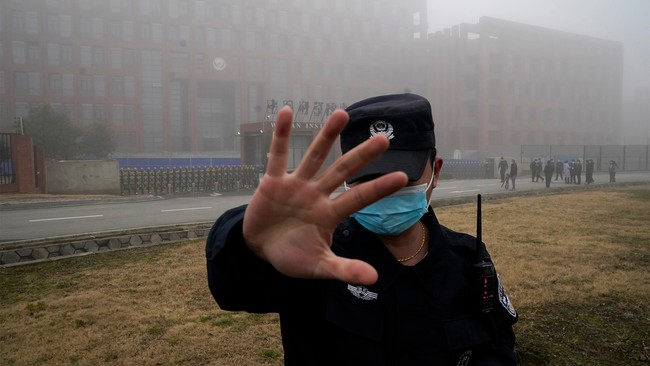
The article reports that the United States has completed its withdrawal from the World Health Organization, presenting the move as a long‑planned step to reclaim American health sovereignty after what critics call WHO failures during the COVID pandemic. It explains the administration’s reasoning, cites official HHS statements about mishandling of COVID and political influence, and argues from a Republican perspective that the U.S. should no longer outsource public health decisions to international bodies. The piece highlights complaints about delayed pandemic declarations, praise of China, and downplaying of transmission risks, while saying the U.S. will pursue direct global health engagement on its own terms.
It’s official: the U.S. has cut ties with the World Health Organization. This is not nostalgia for a rock band; it’s a deliberate foreign policy and public health decision rooted in distrust of WHO’s pandemic response. For many conservatives, the move is overdue and fits a broader push to put America’s interests first and keep decision making at home.
The administration announced the withdrawal as the culmination of a long-standing priority. Officials argued that repeated failures during COVID, combined with an inability to show independence from political pressures, made the organization unreliable for U.S. priorities. That argument resonated with voters who watched restrictive lockdowns, opaque guidance, and shifting narratives during the pandemic and want accountability.
Those who lived through heavy-handed public health mandates, especially in states like California, see the WHO as part of a network of institutions that supported centralizing power in Washington and bureaucracies. Critics point to CDC missteps, confusing guidance from federal health officials, and a perceived tendency to echo foreign government narratives. The political takeaway for Republicans is straightforward: national leaders should answer to American citizens, not international panels.
We’re done, the administration announced Thursday night:
The U.S. Department of Health and Human Services and the U.S. Department of State today announced the United States’ completion of its withdrawal from the World Health Organization (WHO) due to the organization’s mishandling of the COVID-19 pandemic that arose out of Wuhan, China, its failure to adopt urgently needed reforms, and its inability to demonstrate independence from the inappropriate political influence of WHO member states.
That official language hits the key criticisms. The HHS statement accuses WHO of delaying a timely global emergency declaration and of tolerating political interference that undercut transparent reporting. Those claims feed a wider narrative that global institutions sometimes prioritize diplomacy or political expediency over clear, science-driven communication to the public.
Living under pandemic policies shaped by WHO guidance convinced many conservatives that centralized global recommendations can lead to overreach. The experience left families and businesses bearing heavy costs while officials at many levels seemed slow to acknowledge mistakes. From this viewpoint, walking away from WHO signals a refusal to let distant bureaucracies dictate domestic policy.
HHS also blasted WHO for failing to adopt needed reforms and for downplaying some transmission risks, according to the department’s public remarks.
The WHO delayed declaring a global public health emergency and a pandemic during the early stages of COVID-19, costing the world critical weeks as the virus spread. During that period, WHO leadership echoed and praised China’s response despite evidence of early underreporting, suppression of information and delays in confirming human-to-human transmission. The organization also downplayed asymptomatic transmission risks and failed to promptly acknowledge airborne spread.
Those are serious charges, and for many conservatives they confirm what hindsight has suggested: the global response lacked urgency and candor when early containment mattered most. The department also says this pattern eroded public trust by rejecting theories about a lab origin of the virus. That claim factors heavily in calls to distance U.S. policy from the WHO.
Going forward, HHS says the United States will lead global health efforts directly and through partnerships that do not require WHO involvement. The administration promises to work with countries, the private sector, NGOs, and faith-based organizations to protect public health while preserving U.S. control over critical decisions. For Republicans who favor national sovereignty and market-driven solutions, that approach aligns with broader policy goals.
For critics of international institutions, the WHO became another example of politicized global governance that did not serve American interests. Withdrawing is framed not as isolationism but as a reallocation of leadership and resources to channels where the U.S. retains control and accountability. That is the core message policymakers are now selling to a skeptical public.
The decision arrives amid broader debates about globalism, national sovereignty, and how the U.S. engages the world after the pandemic. Supporters say the move restores American decision making and prevents foreign political influence from shaping domestic health policy. Opponents will argue the U.S. loses a seat at a table that coordinates global responses, but for those prioritizing independence, the tradeoff is worth it.

I just came across this amazing way to earn $6,000-$8,000 a m0nth 0nline! No selling, no struggle—just a simple system that anyone can follow. Kelly Richards did it, and so can you! Don’t miss out on this life-changing 0pportunity. check it out by Limited time only – grab it before it’s gone!” .
Here is I started_______ PayAtHome1.Com