
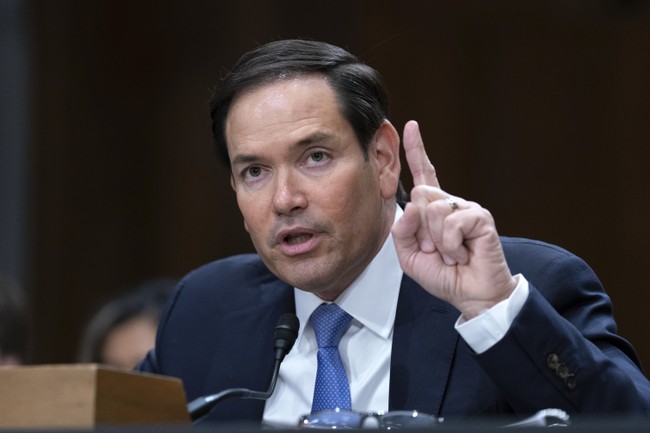
I’ll explain how Marco Rubio framed the U.S. action in Venezuela, why he says the operation wasn’t about oil, how he pushed back on Kamala Harris’s criticism, and what he argues the Biden-Harris team failed to do on enforcement and migration.
Secretary of State Marco Rubio spent Sunday on the talk shows defending the U.S. operation that captured Nicolás Maduro, and he did so with a clear, unapologetic tone. He made the point that the mission answered a strategic problem: foreign adversaries using Venezuelan resources and territory to project influence in the hemisphere. Rubio emphasized the contrast between decisive action and what he described as the previous administration’s empty promises.
On Meet the Press with Kristen Welker Rubio directly challenged the Democratic spin that the operation was driven by a thirst for oil. He said plainly that the United States did not need Venezuela’s oil, but insisted that we cannot allow Venezuela’s energy industry to be controlled by our adversaries. “Why does China need their oil? Why does Russia need their oil? Why does Iran need their oil?” he asked, stressing that hostile powers should not have a base of operations in the region.
Rubio repeatedly argued that the proceeds from Venezuelan oil should benefit Venezuelans, not dictators or foreign regimes that prop up him. He pointed out that the illegitimate Maduro regime has driven more than eight million people from the country, a migration problem that eventually spills into the United States. His line was simple: stability in Venezuela is in America’s interest because chaos produces waves of migration and creates gaps for adversaries to exploit.
The secretary also criticized the Biden-Harris administration for rhetoric without follow-through when it came to Maduro. He noted that the administration had publicly set a $25 million reward for Maduro’s capture but, according to Rubio, did not enforce it or build the resolve to take action. That contrast was central to his message: talkers talk, but leadership acts when necessary to protect American interests.
When Vice President Kamala Harris called the operation illegal and framed it as regime change or oil grabbing, Rubio pushed back sharply on the inconsistency. He mocked the idea that there was no legal basis for taking Maduro into custody after such a public reward and after years of the regime’s crimes and broken promises. His tone was pointed: the administration had set conditions with words but avoided the tough steps that follow them.
“In the Biden administration, they had a $25 million reward for [Maduro’s] capture,” Rubio told NBC News’ Kristen Welker Sunday.
“So, we have a reward for his capture, but we’re not going to enforce it?” the secretary asked, incredulously.
Rubio framed the episode as a lesson about deterrence and credibility. If Washington announces rewards and sanctions but never follows up, adversaries learn how to game the system and innocent people pay the price. He said the United States must be consistent in enforcing its policies to deter bad actors and to protect ordinary citizens from regimes that abuse power.
He also tied the failure to act to broader migration issues, asking whether the Biden-Harris team ever addressed the real root causes driving Venezuelans to flee. Rubio pointed to the dire conditions inside Venezuela under Maduro as a primary driver of displacement and noted that foreign meddling only compounds those pressures. For him, confronting the regime and denying it safe harbor for allies is part of reducing forced migration.
Across the interviews Rubio kept returning to the same set of themes: deny adversaries resources and footholds, make sanctions and rewards mean something, and act to protect people in the hemisphere. He used blunt language to highlight a contrast between action and what he characterized as hollow pledges from the current White House. That framing aimed to reassure conservative audiences that decisive U.S. leadership remains an option.
In the weeks ahead, Rubio implied, the story will be about follow-through: ensuring oil revenues and institutions are redirected to benefit Venezuelans, preventing foreign powers from establishing influence, and stabilizing migration flows into neighboring countries and the United States. His message was both strategic and political, stressing results over rhetoric at a time when voters are watching how the administration handles global threats. The underlying claim is clear: credibility and enforcement matter, and leadership must be willing to back words with action.


Add comment