
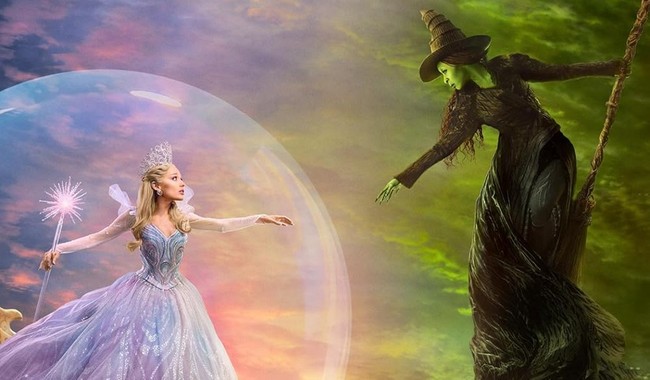
Ric Grenell Calls Out False Reporting Around Wicked Composer and the Trump-Kennedy Center
The media ran with a claim that Stephen Schwartz, the composer behind Wicked and other Broadway hits, canceled a gala appearance at the newly renamed Trump-Kennedy Center, and Ric Grenell publicly labeled the coverage bogus. This article walks through what was reported, what the composer actually said, and why the supposed scandal fell apart under basic scrutiny. It highlights how a few headlines turned into a narrative that didn’t match the facts, and how quick corrections from the Kennedy Center’s interim director exposed sloppy reporting. Below you’ll find the sequence of events, key quotes, and why this matters for public trust in mainstream outlets.
Stephen Schwartz has one of those careers people point to when they talk about Broadway royalty, with credits including Godspell, Pippin, and songs for major animated films. Lately his name has been linked mostly to Wicked, a franchise that’s dominated both stage and screen conversation and drawn intense awards attention. That popularity makes Schwartz an easy target for political noise when anything connected to him intersects with high‑profile civic institutions.
Late last week, certain outlets suggested Schwartz pulled out of a Washington National Opera gala scheduled for May 16, 2026, after the Kennedy Center board voted to rename the venue the Trump-Kennedy Center. The story implied the composer and others objected to the name change and were taking a stand, a narrative that played straight into a familiar headline template. The problem was the claim didn’t line up with what Schwartz actually communicated about the event.
The Rolling Stone piece that kicked this off framed the situation as chaos at the Center, and the line spread fast. That same chain of headlines leaned on a report that the composer’s assistant had emailed saying the Center “no longer represents the apolitical place for free artistic expression it was founded to be,” adding, “There’s no way I would set foot in it now.” Those lines made the rounds as proof of a principled artist pulling back in protest.
“Last year, way before the change of Board and name of the Kennedy Center, I was invited by Francesca Zambello to be part of a Washington National Opera event on May 16, 2026,” Schwartz, 77, said in his email. “But I’ve heard nothing about it since February 2025, so I have assumed it’s no longer happening.”
Ric Grenell, serving as interim executive director at the Kennedy Center, pushed back publicly and called the reporting “woke high school”-level. He pointed out that the thread of reporting mixed assumption with amplification, and that some outlets were effectively plagiarizing one another rather than verifying the facts. That blunt rebuke landed because it exposed the weak sourcing behind a viral claim about a politically charged cultural moment.
Grenell also noted the odd pattern where one unverified claim metastasized into a widely repeated narrative, blaming outlets for treating hearsay as front-page material. He said, “[p]eople are literally plagiarizing a fake @RollingStone story.” That sentence cut to the larger issue: reporters pushing a story because it fits a preferred storyline instead of because it stands up to basic verification.
When you compare the orginal headlines to Schwartz’s explanation, you see a different picture. The composer said he had been invited well before the board changes but had heard nothing about the event for over a year and assumed it was no longer happening. That is not the same as canceling in protest after the name change. It’s an important distinction a responsible news cycle should have noted before generating outrage.
The spread of the misread story shows how quickly cultural controversies can be manufactured and how damaging that can be to institutions trying to manage their operations while navigating politics. It also shows why public figures and institutions need to push back quickly when false narratives take root. Grenell’s swift rebuttal stopped the viral claim in its tracks and forced a recalibration that the original headlines never offered.
Art institutions draw people with a variety of views, and sudden, unverified claims about boycotts or cancellations serve more to inflame partisans than inform readers. In this case, the facts—Schwartz’s account and the lack of confirmation from the event organizers—did not support the sensational framing that spread across social feeds. That mismatch matters, because credibility once lost is hard to recover in a polarized media environment.
At the end of the day, a composer assumed an event was not happening after months of silence, and a few publications turned that into a political stand. The result was a manufactured controversy that a direct reply from the Kennedy Center’s interim leadership exposed for what it was: a story built on shaky sourcing and appetite for outrage rather than on a clear chain of evidence.

Add comment