
The House and Senate voted to push federal funding past the November midterms, avoiding a shutdown before the election and sending a short-term continuing resolution to the President’s desk, a move that both parties framed as practical but also political in its timing and consequences.
Lawmakers opted for a continuing resolution that keeps the government open through December 11, buying time and shifting the real fiscal fight to after the midterms. The decision was framed as a way to sidestep a damaging shutdown before voters hit the polls, with Republicans arguing it preserves momentum for their agenda while Democrats avoided taking the blame for a pre-election shutdown. This stopgap measure does not resolve the major budget disputes, it merely postpones them.
House and Senate minority leaders had spent months suggesting a shutdown might be used as leverage, but those warnings did not materialize into action before the election. With political stakes high, Democratic leaders ultimately stepped back, a choice that some Republicans interpreted as an admission that a shutdown would have been a losing strategy for Democrats. The tactical retreat shifted the spotlight onto who will control Congress after November and what priorities will survive.
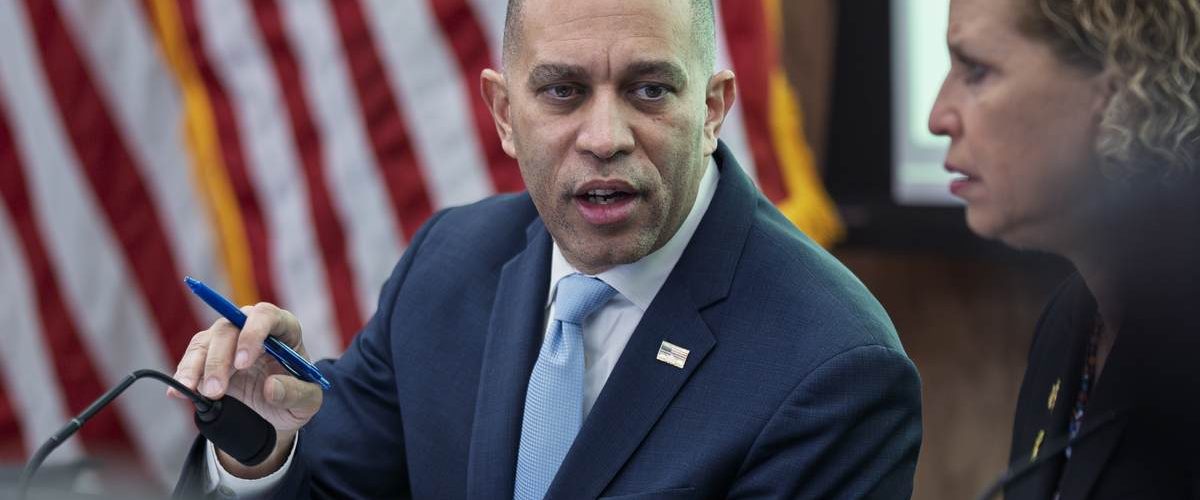
House Democrats relented to Republicans in their quest to prevent a government shutdown after spending months raising the possibility ahead of the crucial midterm elections.
Tuesday’s successful vote in the House, the second such attempt since July, means that lawmakers have officially punted funding the government until after the November election and are sending the short-term funding patch, known as a continuing resolution (CR), to President Donald Trump’s desk.
It also marks the end of months of concerns that House Minority Leader Hakeem Jeffries, D-N.Y., and Senate Minority Leader Chuck Schumer, D-N.Y., would again shut the government down for political gain as they vie for control of Congress.
That paragraph of the quote makes the political calculation clear: a pre-election shutdown would have handed Republicans a blunt political weapon. The leadership on both sides weighed the optics and the potential consequences and chose to avoid a showdown that could decisively shift voter sentiment. Still, the CR leaves the broader budgeting and policy fights unresolved and guarantees a squeeze on lawmakers after the election.
Not everyone on the Republican right embraced the CR. Some conservatives criticized specific provisions tucked into the stopgap, like changes to hemp regulation and grant rules, arguing that the package diluted policy priorities in exchange for short-term stability. Those concerns reflect an ongoing tension: principled objections versus the strategic aim of holding or winning congressional majorities in November.
House Freedom Caucus Chairman Andy Harris, R-Md., and members of Johnson’s right flank have criticized the CR over the hemp ban delay and grant rule change, a sentiment shared by Republicans in the Senate.
“The Senate did violence to our bill,” Rep. Keith Self, R-Texas, told Fox News Digital. “Hemp and the grants are the two big ones…and frankly, I just don’t think CRs ought to be on suspension…when you put it on suspension, you’re not asking for my vote, okay, you’re going to get Democrats.”
Those objections are about more than policy details; they reflect a posture toward governance and negotiation. Some rank-and-file conservatives worry that short-term fixes erode Republican priorities and empower political opponents, especially if the party loses control of either chamber. Leadership, however, argues that maintaining control matters first because it allows long-term priorities to be salvaged and advanced.
The stakes cited by GOP leaders include immigration enforcement, military rebuilding, and recovering funds lost to fraud, all of which they say could be jeopardized if Republicans lose one or both chambers. The political math is clear: winning the midterms matters not just for messaging but for preserving the policy gains claimed since January 2025. That calculation underpinned the decision to pass the CR and avoid a potentially catastrophic pre-election shutdown.
Senate Republican leadership framed the vote as responsible governance, stressing bipartisan support and the need to finish appropriations on time for fiscal year 2027.
The Senator writes:
https://x.com/LeaderJohnThune/status/2094853926801580520?ref_src=twsrc%5Etfw
I’m glad that congressional Republicans not only prioritized removing the threat of another dangerous government shutdown, but we did our job weeks before the deadline and with bipartisan support. While funding the government is one of our most basic responsibilities, my hope is that this effort proves that government shutdowns serve no one, and we should quickly complete our work on the fiscal year 2027 appropriations process.
That statement emphasizes practicality and a desire to move back to regular order, while critics on the right want tougher posture on specific rules and riders. With the CR now law, attention turns to whether leaders will use the breathing room to build durable agreements or simply postpone conflict until after the election. The coming weeks will reveal which path they choose and how voters respond at the ballot box.



Add comment