
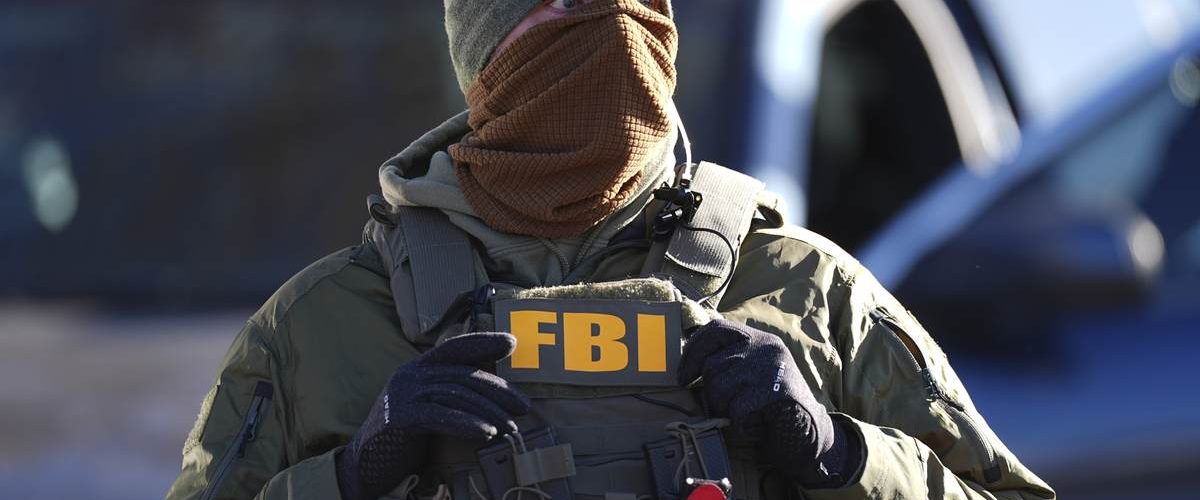
The FBI tracked down a long-fugitive accused of a brutal 2000 crime in Honduras and brought him back to the United States, highlighting a renewed focus on extraditions and law enforcement under the current administration.
The case centers on Alexis Flores, a fugitive linked to the abduction, rape, and murder of a 5-year-old in 2000. After a quarter century on the run, Flores was located and taken into custody in Honduras, then extradited to face charges in Philadelphia. The capture reflects years of investigative work and cooperation between U.S. law enforcement and Central American partners.
FBI leadership made the arrest a point of emphasis for the agency’s renewed priorities. The bureau framed the operation as evidence that violent offenders cannot evade justice simply by fleeing across borders. Officials highlighted a spike in extradition activity in recent months, underlining a concerted effort to bring violent fugitives home.
The investigation traced Flores to a mountainous area of Lepaera, Lempira, where local authorities and U.S. teams coordinated his arrest on February 11. Authorities say Flores used multiple aliases and spent long stretches hiding in remote terrain. Assistance from Honduras’ Technical Agency of Criminal Investigation played a key role in locating and detaining him.
Officials described the arrest as part of an expanded Transnational Anti-Gang Task Force effort that has ramped up operations across the region. The FBI’s recent run of extraditions—dozens since early summer—was presented as evidence that law-enforcement reach now extends deep into places fugitives once considered safe. The message was blunt: crossing a border no longer guarantees escape from accountability.
https://x.com/FBIDirectorKash/status/2094809167072485440
The alleged crimes in this case were especially brutal, and authorities warned the public about disturbing details tied to the 2000 homicide. Reporting emphasized the horror of the offenses and the long wait for justice by the victim’s family. For many observers, the arrest offered relief that a violent accused offender is finally facing U.S. courts after decades in hiding.
FBI Director Kash Patel made the arrest announcement publicly and framed it as emblematic of broader priorities. He stated, “25 years on the run. Not anymore.” Patel stressed the cooperative work that led to Flores’ capture and the extradition process back to Philadelphia. That same statement listed the case facts and celebrated the operational results.
25 years on the run. Not anymore.
Alexis Flores — a former FBI Ten Most Wanted fugitive accused of the horrific 2000 kidnapping, rape, and murder of 5-year-old Iriana DeJesus — is now back on American soil to face justice.
This FBI tracked Flores to Honduras, worked with our international partners to capture him, and brought this high-value target back to Philadelphia.
🔺 More than 25 years on the run
🔺 Former FBI Ten Most Wanted fugitive
🔺 Captured in Honduras
🔺 Extradited back to the United States
FBI has had almost 90 extraditions since the start of June and 62% more extraditions than this time last year.
Our message to violent fugitives hiding overseas is simple:
You can run. You can cross borders. You can hide for decades.
We’re still coming.
Outstanding work by our FBI personnel, @FBIPhiladelphia, our international partners, and everyone who never stopped fighting for justice for Iriana and her family.
The arrest marks a shift from earlier diplomatic refusals to extradite, which had kept Flores off the FBI’s Ten Most Wanted list for a period. Changes in Honduran cooperation reportedly opened the door for renewed action and transfer to U.S. custody. Prosecutors now plan to proceed with charges and present the case to judges in the appropriate jurisdictions.
The operation was touted as a sign that the bureau has returned to core duties: tracking violent offenders and securing public safety. That message fits within a broader law-and-order posture promoted by the current administration, which has made extraditions and cross-border enforcement a priority. Supporters say this focus sends a deterrent signal to criminals who think they can evade U.S. justice indefinitely.
Law-enforcement officials emphasized that sustained pressure, diplomatic engagement, and field work combined to make the arrest possible. Task-force members, international partners, and investigative units are being credited for piecing together years of leads. The Flores case was presented as an example of how patient, coordinated investigations can finally close cold chapters for victims’ families.
The public reaction to the extradition has been shaped by the severity of the alleged crime and the long gap between the offense and arrest. Many commentators framed the moment as evidence that the justice system, when resourced and committed, can still reach those who flee overseas. For grieving relatives, the return of the accused to American custody has renewed hopes for a legal reckoning.
Legal proceedings will now move forward in U.S. courts, where prosecutors will present evidence and the accused will have the right to mount a defense. The extradition does not resolve guilt or innocence, but it does ensure the matter will be litigated under U.S. legal standards. Observers will watch the upcoming proceedings for how they handle decades-old allegations and cross-border investigative records.
Editor’s Note: The American people overwhelmingly support President Trump’s law and order agenda.

Add comment