
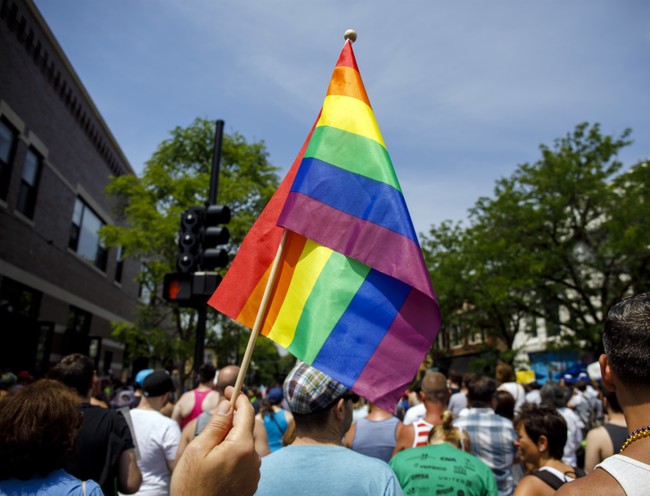
This piece examines a recent push by two economists arguing that the discipline of economics should prioritize LGBTQ+ representation, and it pushes back hard on that idea from a conservative, skeptical angle while preserving key quoted claims from the original proponents.
‘Queering Economics’: Professors Call for LGBTQ+ Economists — Because Even Markets Need an Identity
The headline reads like satire, but this is a real argument on the table: some academics want to “queer” economics by encouraging more LGBTQ+ economists and research focused on queer populations. That proposal is presented as a remedy for what they describe as shrinking space for queer scholarship under the current administration. The claim sets identity group membership as a corrective for supposed gaps in the field.
It is fair to critique the idea without mocking the people involved; but this debate is not merely academic syntax. When scholars recommend reshaping a discipline around identity categories, they are demanding the field adopt a new agenda and funding priorities. That raises practical questions about data, methodology, and whether policy research should be steered by identity-based missions rather than by neutral economic inquiry.
Things won’t get better on their own and the current headwinds are strong. LGBTQ+ economists and economists committed to doing research empowering LGBTQ+ individuals are under attack. For many decades, barriers to working on LGBTQ+ economics were implicit. It has been difficult to emulate the natural sciences with scarce data on queer individuals, and grant administrators have been reluctant to fund our research.
Just as these implicit barriers were lowering, the Trump administration and its allies in power are trying to silence queer research. They are defunding our few grants and erasing us from federal data. These efforts are gathering steam. New explicit barriers are emerging every day. For example, Texas Tech recently announced a ban on researching LGBTQ+ topics throughout its ranks. The time to respond is now.
That passage frames the issue as one of censorship and structural bias, but the framing raises red flags for conservatives worried about politicized scholarship. Claiming that a particular administration is systematically erasing groups from federal data is a large allegation that demands precise evidence, not rhetorical flourish. In healthy scholarship, accusations of political interference require clear documentation and careful analysis, not broad generalities that further polarize readers.
Economics thrives on shared methods and replicable data, not identity signaling. If researchers lack data on specific populations, the response should be rigorous data collection and transparent methodology. Insisting that scholars be chosen or promoted primarily for their identities risks turning universities into advocacy shops rather than places that prize intellectual rigor. That is a real concern for anyone who cares about the integrity of economic research.
The essay’s authors promise that communities of sympathetic economists are already forming and that progress “will not continue, however, without intention and hard work.” That is a call to arms, and it reveals the underlying strategy: build institutional momentum until an academic agenda becomes institutional orthodoxy. Conservatives should be alert to the consequences when ideological campaigns cross into the governance of scholarly disciplines.
These attacks may delay the project of queering economics, but they will not derail it. The communities of economists committed to building a more inclusive, diverse, and useful discipline have already formed and are strong. Progress will not continue, however, without intention and hard work.
[…]
[S]ome of the affirming research we need will be inherently messy. The world we live in is messy. We can make sense of the messiness together, with all of us. And when the economics discipline includes everyone, our economies can promote prosperity for everyone.
Those words paint inclusivity as an unquestioned public good, and who could object to inclusivity in the abstract? The issue is how inclusivity is defined and implemented. When “inclusion” becomes a code word for privileging certain research agendas or shutting out dissenting approaches, it becomes exclusionary in practice. That is the paradox conservatives see: inclusion by ideology, exclusion by method.
There is also a real policy debate hidden beneath the rhetoric. Should government and universities reallocate scarce research funding toward identity-driven projects when many pressing economic questions remain unresolved for broad swaths of the population? Voters and taxpayers deserve to know how priorities are set and whether scholarship serves objective inquiry or political aims. That trade-off matters, and it should not be evaded with slogans.
Finally, pushing identity into the core of disciplines risks fragmenting professional standards. Economics is valuable because it offers frameworks for analyzing incentives, markets, labor, and growth. Those frameworks can and should be applied to diverse populations, but turning identity into the disciplinary mission tends to narrow discourse and invite politicized enforcement of intellectual conformity. That outcome should concern anyone who values open debate and robust, evidence-driven research.


Add comment