
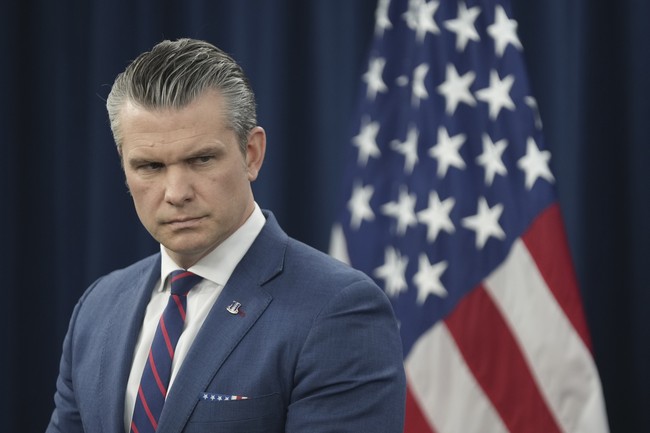
Sec. of War: Pentagon Now Led by Warriors, Not Washington Bureaucrats
The Pentagon has shifted from career bureaucracy to leadership shaped by combat-tested veterans and private-sector builders, and that change came through loud and clear during recent Senate testimony. Secretary Pete Hegseth presented a case that America’s defense posture now prioritizes rapid technological investment, readiness, and a warrior mindset. His remarks laid out why leaders with battlefield experience and business discipline matter for national security. This article walks through the main claims, the tone of the hearing, and what it signals for future defense priorities.
Watching a secretary who talks like a deployed officer is a jolt of clarity for anyone who has served or cares about strength. Secretary Hegseth’s presence at the hearing felt deliberate: he spoke plainly about priorities and risk, not process. That no-nonsense approach resonated in a committee room where frustration with past neglect was obvious.
Here are some key points from that testimony. In the first, Secretary Hegseth assures the Committee that the Pentagon has seen a long-overdue change of .
https://x.com/DOWResponse/status/2079648924546039969
Secretary Hegseth (SECWAR) said:
Under President Trump, we have built a different type of department. The Pentagon is no longer run by bureaucrats. Instead, it’s run by combat-tested veterans and world-class business leaders, who are running the department like a business. And tech titans, who are bringing lethal innovation to the battlefield. We’re also at a different moment, and we cannot afford inaction. If we don’t make critical investments right now, in tech, in compute, in AI, in autonomy, in space, our adversaries, who are already making these types of investments, could outpace us. Without these funds, we face critical shortfalls that threaten our ability to also simply pay our service members, rapidly replenish equipment and munitions, and sustain vital operations without disruption.
Hegseth emphasized urgency, arguing that buying time with talk is no substitute for funding and prioritization. He framed modern warfare as a contest of investment in tech and logistics, not paperwork or committee reviews. That flips the script away from the old Pentagon habit of deferring hard choices in favor of zip codes and regulations.
On regional threats, Hegseth was blunt about Iran’s present state and the damage already done to its military capacity. He described how kinetic and nonkinetic operations have weakened Tehran’s conventional reach and degraded missile stockpiles. That assessment signaled confidence in recent operations while warning against complacency.
SECWAR continues:
Iran is in the weakest point, militarily, that it has ever been in, in the past decade. Certainly, maybe in 47 years, as they’ve gathered, effectively, a terror army. And that terror army was built to try to create conventional capability to defend… a pursuit of nuclear weapons. Which meant thousands of ballistic missiles. Many of which we have destroyed. Others in which they have put inside facilities and hidden in underground facilities as what terror regimes would do. So, I acknowledge that they still have capabilities. No doubt. But the amount of damage that we’ve done to them over the course of these series of operations has put them in the worst place they’ve ever been.
That passage underscored a strategic point conservatives have long made: strength deters and shapes adversary behavior. Hegseth refused to sugarcoat remaining risks, but his tone suggested operations and policy should be forward-leaning. For lawmakers who prefer clear recommendations over hedged analysis, his testimony provided both moral clarity and practical steps.
He also called out past neglect in critical programs and technologies, contrasting the current leadership team with the previous administration’s approach. The secretary named hypersonics and other advanced fields as examples where Republican-led focus has accelerated efforts. Calling out bureaucratic stagnation by name was intended to justify rapid resource shifts toward modernization and lethality.
SECWAR took aim at past indifference:
I mean, the Biden administration ignored hypersonics. They just decided to pretend that technology didn’t exist, and we shouldn’t invest in it. There are things… I don’t know what Lloyd Austin did for four years. I really don’t. The amount of neglect, stale thinking, and bureaucracy, it was staggering when we took over.
The hearing atmosphere itself was telling: interruptions from opponents were met with measured firmness rather than conciliatory tones. Hegseth kept steering the conversation back to capability and readiness, demonstrating the kind of command presence voters expect from national defense leaders. That posture pleased veterans and service families who want decisive stewardship of the force.
On the protest side, familiar activist groups showed up but had limited impact, because the hearing’s focus stayed on funding, munitions, and replenishment. The message was clear: the department will prioritize operations and the needs of service members over performative objections. That pragmatic, mission-first stance is central to the secretary’s argument for restoring a warrior ethos in the ranks.
You can watch the entire hearing .
Finally, SECWAR takes a .



Add comment