

I’ll lay out what happened, why the claim matters, and the legal and political problems it raises, including the exact words posted and the public reaction, while keeping the focus on the failed Minneapolis mayoral candidate Omar Fateh and his declaration about Cedar-Riverside.
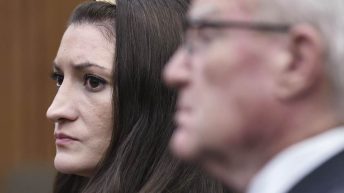
The city of Minneapolis has been a battleground for debates over law, order, and community control, and a recent post by state senator Omar Fateh added fuel to that fight. Fateh, who recently lost a mayoral bid, posted an image of himself and companions in the Cedar-Riverside neighborhood with a short, provocative message. The post called the Somali-populated neighborhood “a no-go zone for white supremacists,” a phrase that drew immediate attention and sharp criticism across political lines. That declaration raises questions about public access, equal protection, and who gets to define safety in public spaces.
Fateh’s image and caption were shared on the social platform X, where he wrote: “Cedar Strong. White Supremacists aren’t welcome here. We protect our own.” That exact wording framed the neighborhood as a protected community zone, implicitly excluding a class of people by political or racial identity. When confronted by a journalist, the exchange escalated into a short back-and-forth that underlines the tension between community defense and civil liberties. The interaction is notable not just for its content but for what it suggests about how some local leaders view public rights.
When the journalist pressed him with the constitutional point that public spaces cannot be restricted this way, Fateh replied directly: “This is a No-Go zone for white supremacists.” That line, repeated in the public post and again in the reply, is the crux of the controversy and remains quoted verbatim here. Declaring that anyone fitting a broad political or ideological label is unwelcome in a public neighborhood risks chilling the constitutional right to travel and to free expression. A neighborhood cannot lawfully bar entry to law-abiding citizens based on their beliefs or appearance.
From a Republican viewpoint, such a proclamation is disturbing on principle and dangerous in practice. It treats public rights as privileges granted or denied by private groups acting like gatekeepers. If a local official endorses exclusionary rules, even rhetorically, it undermines the rule of law and sets a precedent that could be applied against other groups. Public spaces belong to everyone, and the government has an obligation to protect access, not to normalize exclusionary zones that hinge on ideological or racial categories.
There are practical concerns too. Labeling a neighborhood a no-go zone invites escalation and miscalculation. That kind of rhetoric can inflame tensions between residents, activists, and law enforcement, and it risks provoking the exact incidents community leaders claim to want to prevent. If one side sees itself declared unwelcome, actors on both sides may interpret that as a green light to test boundaries—sometimes with violent results. Responsible leadership should defuse conflict, not announce exclusion.
Legal scholars would note the straightforward constitutional limits here: neither private citizens nor public officials can lawfully deny access to a public place to people who are otherwise entitled to be there. The right to travel within the United States is well established, and public sidewalks and streets are classic public forums where expression and movement are protected. Rhetorical assertions of exclusion are one thing, but when a public official endorses them, they invite legal scrutiny and potential lawsuits for violating civil rights.
The rhetorical move to brand critics as “white supremacists” is also politically charged. The phrase can be used narrowly to describe specific extremist groups, but it is often broadened into a catch-all label for political opponents. When that label is applied in a way that justifies exclusion, it blurs the line between condemning violent hate groups and silencing ordinary citizens with differing views. That slippery slope is a real concern for anyone who values free expression and equal treatment under the law.
For residents of Cedar-Riverside and the wider Minneapolis community, the immediate effect is reputational and practical. Neighborhoods thrive when they can attract business, visitors, and diverse neighbors; any suggestion that parts of a city are off-limits on ideological grounds harms commerce and community cohesion. The statement may have been intended as a gesture of solidarity, but its public form reads as a territorial claim over a public space, which turns solidarity into exclusion.
Officials and community leaders should focus on protecting safety and rights without resorting to divisive proclamations that could undermine those goals. Public policy and policing are the proper tools to address threats and harassment, not unilateral declarations that tell some Americans they are not welcome. Words from elected figures matter, and reckless language from a public official, even a state senator, has consequences for law, trust, and civic stability.
Cedar Strong. White Supremacists aren’t welcome here. We protect our own.
This is a No-Go zone for white supremacists.

Add comment