

The Supreme Court’s recent flurry of decisions set the national conversation ablaze this week, and amid high-profile rulings on sports eligibility and immigration, public radio found itself at the center of an embarrassing media stumble when NPR’s Nina Totenberg appeared to announce Justice Samuel Alito’s retirement prematurely. This piece walks through the courtroom outcomes that mattered, the awkward NPR retraction, the reaction across the media landscape, and why conservatives see this as another example of bias and wishful reporting.
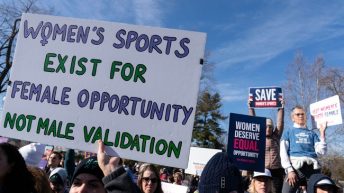
The Court issued several consequential opinions that shifted the political and legal terrain. One ruling clarified that “girls’ and women’s sports may be restricted to girls and women,” a decision the majority framed as preserving sex-based eligibility for female athletic programs. The opinion included the line: “[C]onsistent with Title IX and the Equal Protection Clause, we hold that the States may maintain women’s and girls’ sports for biological females. They may determine eligibility for women’s and girls’ sports based on biological sex,” Justice Brett Kavanaugh wrote. “The Constitution and Title IX do not require an overhaul of women’s and girls’ sports throughout America.”
Another high-profile case on birthright citizenship did not produce the outcome President Trump wanted, but he pushed back publicly and looked toward Congress for a legislative fix. He wrote that “we can easily make it up in Congress through Legislation, with the support of the President, that has now been determined during this process.” That statement signals a continuing legislative strategy rather than immediate change from the bench.
Amid that legal activity, an internal mishap at NPR became a major distraction. The network’s veteran correspondent Nina Totenberg apparently published — or triggered the publication of — a piece about Justice Alito stepping down before the story was confirmed. NPR then issued an account that described the incident as a misunderstanding connected to an unfinished pre-write, and Totenberg reportedly reached out to Justice Alito to apologize.
The premature item set off predictable waves across the media. CNN’s Brian Stelter characterized the episode as an accidental release of a prewritten piece, a narrative he would likely condemn if the roles were reversed and a conservative outlet had made the error. That symmetry is precisely why conservatives note a double standard in how similar mistakes are treated depending on the outlet and the ideological tilt involved.
Within newsrooms and on social platforms, commentators debated whether the Totenberg episode was simple human error, an editorial lapse, or something more partisan. NPR’s statement, relayed by its media correspondent, used the term “misunderstanding” and said the reporter took steps to make amends. Even with that language, the optics were poor: a prominent, long-tenured reporter appeared to have been caught pushing a narrative that had not been solidly confirmed.
On X, people speculated about motives and timing. Some argued the story represented wishful thinking after a left-leaning reporter hoped for an outcome that would be politically useful. Others suggested the piece was merely scheduled too early and would be corrected once the facts were straight. The debate quickly turned into a proxy fight over media credibility and the long-standing concern about confirmation bias in political reporting.
https://x.com/JoeChalfant/status/2071977045198770471
For conservatives watching the cascade of rulings, the NPR flap felt less like an isolated newsroom error and more like evidence of entrenched bias. The combination of aggressive reporting, a high-profile retraction, and the immediate chorus of commentary from center-left media outlets reinforced a familiar narrative: that mainstream outlets often act on assumptions that align with their politics and only reluctantly own up to mistakes when they are forced to.
These developments mattered beyond headlines because they shaped public understanding of both the Court’s decisions and the trustworthiness of news institutions. When a major outlet falters on a story about a Supreme Court justice, it feeds skepticism about whether newsrooms are more interested in shaping outcomes than in sober reporting. That suspicion is especially strong among conservatives who already believe the media tilts left.
The week’s mix of legal rulings and media missteps will linger in public discourse. The Court’s decisions will affect policy and politics for years, and the NPR incident will be referenced whenever media reliability comes up in conversations about the press and the judiciary. Expect sharper scrutiny of how big outlets prepare and publish sensitive reporting going forward.


Add comment