
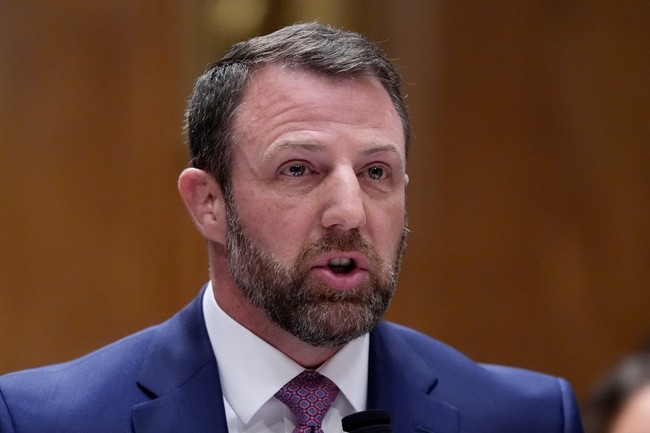
Secretary of Homeland Security Markwayne Mullin has put sanctuary cities on notice: if Democrat-run cities insist on limiting local immigration enforcement while still relying on federal customs officers at their international airports, DHS may pull or reprioritize customs processing there. This piece explains the stakes, the logic behind Mullin’s warning, how customs staffing affects airports, and the real choices sanctuary leaders now face.
Mullin made his point in a Fox News interview, arguing that cities cannot simultaneously demand federal protection at the front door and refuse to enforce laws once people move inside. From a Republican perspective, this is straightforward accountability: local leaders who reject immigration enforcement should not expect full federal services to remain untouched. The secretary framed the issue as one of priorities and fairness in a time when DHS faces political pressure and budget fights.
“I believe sanctuary cities is not lawful. I don’t think they’re able to do that. And so we’re going to take a hard look at this.
This one area we may take a hard look at is some of these cities have international airports. If they’re sanctuary cities, should they really be processing customs into their city?
Seriously, if they’re a sanctuary city and they’re receiving international flights, and we’re asking them to partner with us at the airport, but once they walk out of the airport, they’re not going to enforce immigration policy, maybe we need to have a really hard look at that, because we need to focus on cities that want to work with us.”
That plainspoken quote captures the policy choice Mullin is proposing: prioritize federal resources for jurisdictions that cooperate rather than subsidize political stances that undermine enforcement. He also tied the decision to funding fights in Washington, pointing out the irony of Democrats pushing to defund Customs and Border Patrol while expecting customs operations at their airports to continue uninterrupted. The secretary warned this mismatch will force tough decisions about where DHS places its people and attention.
“I’m saying we’re going to have to start prioritizing things at some point. Right now, remember, the Democrats are wanting to defund Customs and Border Patrol. Well, who processes those individuals and walk off the plane? So, I’m going to have to be forced to make hard decisions. Who’s willing to work with us and partner with us?”
The practical effects of deprioritizing customs staffing are immediate and concrete. Customs processing requires federal officers, and airports depend on that staffing to admit international travelers smoothly. Fewer officers or lower priority assignments would translate into longer lines, slower inspections, and possibly rerouted flights or reduced service at affected airports. That is not an abstract threat; it is a lever of influence that can make sanctuary policy costly to sustain.
From the administration’s view, there’s a logic of reciprocity: if federal agents are expected to staff customs and protect the public health and safety at the point of entry, local governments should not be allowed to nullify federal immigration law once people disperse. Sanctuary policies that limit local enforcement undercut federal responsibilities and create enforcement gaps. Mullin’s proposal forces a choice: cooperate on enforcement or accept reduced federal support.
Politically, the move plays to core Republican themes: law and order, accountability, and protecting national borders. Holding sanctuary cities to a standard of cooperation aligns federal resources with jurisdictions that back enforcement. It also reframes the narrative that sanctuary leaders can have it both ways—get the benefits of federal processing while resisting the obligations that come with it. That contradiction is now a bargaining point in budget and staffing discussions.
Cities that promote sanctuary status have defended their policies as humane or safeguarding immigrant communities, but those defenses collide with practical realities at international airports. Airports are hubs of commerce and travel that rely on federal vetting to keep flights moving and passengers safe. If customs operations are scaled back, the local political calculus changes quickly because residents and businesses notice delays and disruptions long before policy debates make headlines.
Making customs access conditional on cooperation would not be a mere rhetorical flourish; it would be an operational shift with measurable consequences. DHS can reassign officers, alter mission priorities, or limit certain services where partnerships fail. Those are tools an administration can use to incentivize compliance without writing new laws, and Mullin is signaling a willingness to use them if necessary.
Ultimately, this approach forces a policy test for sanctuary jurisdictions: will they accept federal enforcement arriving at their gates but refuse to enforce laws inside their borders, or will they work with federal partners and keep the system functioning as intended? Republicans will argue that governance requires consistent application of the law, and that federal resources should support jurisdictions that uphold their side of the bargain.
The debate over sanctuary cities and customs staffing is now more than ideological; it’s operational and financial. As budget fights and enforcement priorities collide, the pressure on Democrats who run sanctuary jurisdictions will grow. Mullin’s warning isn’t a threat for its own sake—it’s a strategic lever in the larger fight over immigration policy and resource allocation.


Surprising! I’ve been making 100 Dollars an hour since I started freelance on the Internet six months ago. I work long hours a day from home and do the basic work that I get from the business I met online. share this work for you opportunity This is definitely the best job I have ever done…
just use the info on this page .====> PayAtHome1.Com