
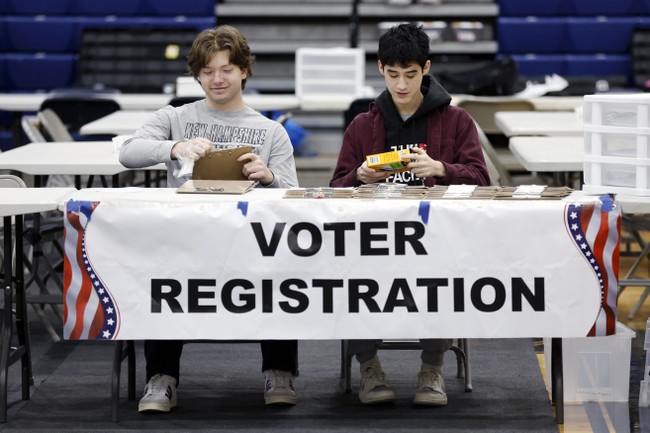
This article looks at Minnesota’s same-day voter registration vouching rule, reactions from Assistant Attorney General Harmeet Dhillon and activist Scott Presler, documented examples and historical concerns, and why critics say the system invites abuse while officials argue it serves voters without ID.
Assistant Attorney General Harmeet Dhillon sharply criticized Minnesota’s same-day voter registration vouching practice after conservative activist Scott Presler drew attention to how the rule operates. Presler described a scenario in which a single registered voter can vouch for up to eight others at the polls, and Dhillon responded bluntly, writing, “This is corrupt AF.”
Presler laid out the mechanics in a short post, noting how a registered voter could escort friends without identification and sign an oath confirming their residency. He wrote, “Here’s how it works: Let’s say that Shukran is a registered voter in Minnesota. It’s Election Day & Shukran brings 8 friends (with) him to vote,” and then quoted the poll worker exchange: “Shukran: ‘My 8 friends that live in our neighborhood don’t have IDs.’ Election Day Worker: ‘Sign this form to vouch for them.'” He capped the sketchy-sounding scenario with the blunt tally, “+8 votes.”
The vouching rule is real and set out in Minnesota election materials, which explain that a registered voter from your precinct can accompany you and sign an oath confirming your address. The official language makes clear a single registered voter may vouch for up to eight people and that someone who was vouched for cannot turn around and vouch for others.
Registered voter who can confirm your address
Registered voter who can confirm your addressA registered voter from your precinct can go with you to the polling place to sign an oath confirming your address. This is known as ‘vouching.’ A registered voter can vouch for up to eight voters. You cannot vouch for others if someone vouched for you.
That wording is a clear articulation of how vouching works, and it helps explain why critics are alarmed. Even if the rule was intended to be a safety net for people who genuinely lack ID temporarily, the critics argue the absence of photo ID and the ability to vouch for multiple people opens the door to mistakes or deliberate exploitation.
Presler’s post drew fast reactions across social media and from conservative commentators, with some treating the policy as evidence that Minnesota’s system prioritizes convenience over safeguards. Opponents point to past cases where noncitizens or ineligible individuals were discovered voting, and they say the combination of same-day registration and vouching exacerbates the risk.
Supporters of vouching contend it protects eligible voters who might otherwise be disenfranchised by strict ID rules or bureaucratic hurdles on Election Day. They argue the oath and poll-worker oversight are safeguards and that widespread, systematic fraud has not been proven in connection with vouching alone. Those defenders say access and inclusion should weigh heavily in decisions about election procedures.
Still, the concern is not merely hypothetical. Critics point to examples where vouching coincided with votes cast by noncitizens or where administrative failures left voter rolls out of date. Research and databases that track election irregularities include several instances tied to same-day registration systems, and those cases are cited whenever debates over reform flare up.
Beyond anecdotes, there have been legal challenges and federal actions focused on election integrity and voter roll maintenance. The Justice Department has taken steps in recent years to press states on how they manage voter lists, arguing that clean records protect citizens and the legitimacy of elections. That enforcement picture informs the current conversation about vouching and same-day registration.
State-level scrutiny has also increased, with legislators and party officials pushing for audits, better verification, and changes to how registration and residency claims are confirmed at polling places. These debates split along expected lines: advocates for stricter checks say they defend the franchise by preventing fraud, while voting access advocates say more requirements risk excluding legitimate voters who lack immediate documentation.
Presler praised Dhillon for highlighting the issue, and the exchange has magnified attention on Minnesota’s rules ahead of upcoming election cycles. The dispute now sits at the intersection of access and security, and each side frames the choice as a question of protecting voters versus preserving an orderly, defensible election process.

That whole idea screams fraud! If a person has 4 years to obtain proper ID, why should they be excused from having one? Try vouching for 8 additional purchasers at the liquor store and see how far you get.