
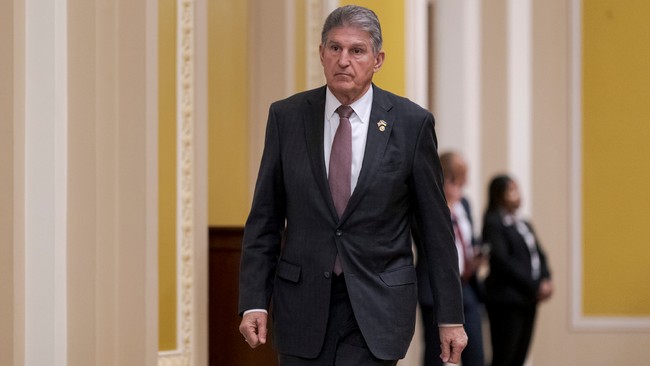
I’ll explain what Joe Manchin said on Face the Nation, quote the key exchange exactly, describe why his critique of democratic socialism matters, outline the practical barrier of ballot access for third-party bids, and note the broader implications for the 2028 Democratic field.
Joe Manchin sat down on Face the Nation with his daughter and confronted the rising influence of democratic socialism in plain terms. He rejected the movement’s more radical proposals and warned they would dismantle pillars of American governance. That blunt assessment matters because it comes from someone who once occupied the center-left space and now sees practical danger in the party’s lurch leftward. His comments cut against the grain of headline-friendly progressivism and resonate with voters who worry about stability and order.
https://x.com/SteveGuest/status/2083951483658047942
In the interview Manchin made a point of separating good ideas from extreme prescriptions, and he did not mince words about what he called the “crazy stuff.” He argued that some proposals go well beyond policy differences and aim to eliminate institutions fundamental to our constitutional system. For many voters, the idea of scrapping the Senate or gutting law enforcement looks less like reform and more like chaos. His remarks highlight an internal Democratic split that could determine who controls the direction of the party.
MARGARET BRENNAN: Heather, could you ever support a self-described socialist candidate?
HEATHER MANCHIN: No.
FORMER SEN. MANCHIN: No way. My God, no.
MARGARET BRENNAN: No? Even if they had some good ideas?
HEATHER MANCHIN: And it surprises- and it–
FORMER SEN. MANCHIN: I support the good ideas, but how could you support some of the crazy stuff they’re for? Have you seen their platform? They’re for just dismantling everything that we know, whether it be the- whether it be the structure of government, Congress itself, or the Senate, they want to get rid of. And then they start talking about all the crazy things. No police, no this, no this, no that. Are you crazy? We want- we want a crime-free area. We have to have police for that.
That exchange is worth pausing on because it captures both tone and substance: the Manchins were unequivocal. Those words sit awkwardly next to vocal calls from the left to abolish institutions and policies most Americans still rely on. From a Republican perspective, this is the political opening conservatives should be sharpening now. It frames the choice in the simplest terms: stability and normal institutions versus experiments that could upend public safety and governance.
The interview also touched on a separate, practical problem that trips up anyone considering a third-party run: ballot access. Manchin explained why a 2024 independent bid was out of reach, not for lack of interest but because of the mechanics of getting on every state ballot. That problem is structural, not rhetorical, and it keeps the two-party system firmly in place. For would-be moderates, the hurdles make a national insurgency effectively impossible under current rules.
MARGARET BRENNAN: Well, when you were talking about why you did not run in 2024 for president, you said you didn’t want to be a spoiler.
FORMER SEN. MANCHIN: I couldn’t get on all 50 ballots. You put me on 50 ballots, then I have a platform, I can speak.
MARGARET BRENNAN: Well it–
FORMER SEN. MANCHIN: But I have no chance of winning because I’m only on 16 ballots or 20 ballots statewide, nation- national wide.
MARGARET BRENNAN: So, it was really ballot access–
FORMER SEN. MANCHIN: It’s ballot access.
Ballot access explains why independents and moderates rarely change outcomes in presidential contests. Even sincere efforts can unintentionally hand the election to the opposing major party by splitting the vote. For conservatives watching the map, that is both a cautionary tale and a reminder to keep the base motivated. It also underscores why debates about reforming ballot rules are not just academic; they alter real political math.
Beyond the mechanics, Manchin’s warnings are a political signal directed at both parties. Republicans can use his critique to highlight where Democrats are moving and to paint that movement as out of step with mainstream American priorities. Meanwhile, Democrats who share Manchin’s concerns face a choice: either confront their progressive wing or accept a path that could alienate moderate voters. That choice will shape how both parties position themselves heading into 2028.
The face-off shown on Sunday makes clear that internal battles in the Democratic coalition are not merely intra-party noise. They present a real electoral vulnerability and a policy contrast that resonates with voters worried about crime, institutions, and order. For conservatives, taking advantage of that contrast means keeping the argument focused on clear outcomes and practical consequences. The conversation Manchin started on that show is likely to echo through the coming election cycles.



Add comment