
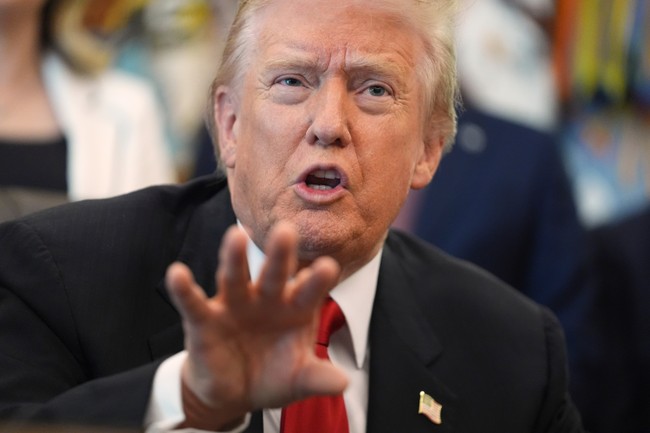
The latest flap over the Epstein files landed with a predictable political thud: Democrats tried to make a case about a photo involving President Trump, the Department of Justice pulled an image, and the story collapsed into a mix of old Getty photos, redactions, and accusations about timing and motive.
For months Democrats pushed for release of the Epstein materials after years of inattention, suddenly treating the files as a political weapon. The timing looked convenient: release a trove of documents now, highlight anything that could embarrass President Trump, and frame the narrative as a scandal. That strategy ran into immediate problems when documents and images that surfaced didn’t support the dramatic spin Democrats hoped for.
As details leaked about the Epstein estate and what the Department of Justice held, inconvenient facts emerged for those who wanted a tidy political narrative. Names and pictures tied to many public figures showed up, but they read more like a list of people Epstein met than proof of coordinated wrongdoing. Some of the images were decades old or already public, undercutting claims of some new explosive revelation.
When a set of photos hit the feeds and the DOJ later pulled one image, Democrats quickly leaned into the moment and suggested censorship or concealment. The controversy centered on whether the pulled photo actually showed President Trump and whether the DOJ was hiding something. That claim didn’t hold together once reporters and historians started digging into the provenance of the images.
Journalist Byron York stepped in with a reality check, pointing out the plain facts about the image origins and how this was not a smoking gun. The picture in question, it turns out, is widely known and decades old, and it has been part of public archives for years. The sudden outrage felt less like a discovery and more like a political playbook in motion, seeking to amplify any apparent connection to Trump.
There’s a higher pile of photos that reads exactly like Epstein’s scrapbook of encounters with notable people rather than a dossier of illicit behavior. Pictures of the Pope, Bill Clinton, and other public figures were among the items on the desk in the released material, and that context makes the “gotcha” framing shaky. The images offer evidence of meetings and events, not proof of criminal involvement.
Deputy Attorney General Todd Blanche pushed back on the partisan claims and explained the practical reason for pulling the image: concerns about identifiable women in photographs. He emphasized caution and the desire not to expose anyone who might be a victim, regardless of political fallout. That explanation reframes the action as protective redaction, not partisan suppression.
“You can see in that photo there’s photographs of women,” Blanche said. “And so we learned after releasing that photograph that there were concerns about those women and the fact that we had put that photo up. So we pulled that photo down. It has nothing to do with President Trump.”
Blanche also noted that President Trump has never denied he knew Jeffrey Epstein, a point Democrats seemed to treat as damning yet also trivial in terms of proving criminality. The argument that the DOJ removed a single image because it featured Trump simply does not line up with the effort to protect women’s identities. The DOJ’s approach, by his account, was to redact and restore, not to selectively erase only photos of political opponents.
The broader political critique from the Justice Department was pointed: where was the outrage when Democrats held power and these files sat idle? That charge landed on lawmakers like Chuck Schumer, accused of sudden interest once the files might harm a political foe. The inconsistency in timing fueled skepticism about motives and whether the whole episode was less about truth than theater.
“The Epstein Files existed for years and years and years and you did not hear a peep out of a single Democrat… We’re supposed to believe that lo and behold, all of a sudden, out of the blue, Schumer suddenly cares about the Epstein Files? That’s the hoax.”
In short, the episode exposed how easy it is to mistake old images and loose associations for proof of a scheme, and how partisan instincts can push shallow narratives into the public square. The media cycle moved fast, but the underlying documents did not change to meet the political hype. What remains is a messy mix of public photos, legitimate privacy concerns, and predictable partisan theater.


Add comment