
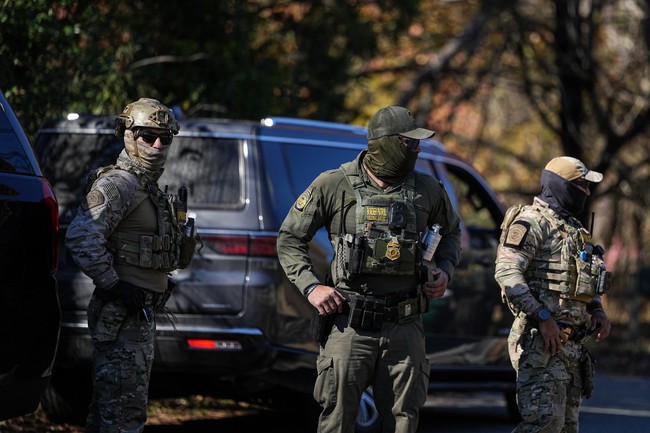
North Carolina’s judiciary is under fresh scrutiny after Senior Associate Justice Anita Earls publicly condemned a recent Customs and Border Patrol operation, and a conservative colleague fired back, arguing judges should stay neutral rather than weigh in as political commentators.
Judges are expected to be neutral arbiters, yet public statements from the bench that mirror partisan talking points keep popping up. When a justice speaks like an activist, it raises real questions about fairness and whether parties getting a hearing will face a level playing field. That tension is exactly what unfolded in North Carolina this week.
The controversy centers on Operation Charlotte’s Web, a CBP enforcement action that drew criticism from some local leaders and activists. Earls labeled the operation a “violation of constitutional rights” and suggested it distracted federal resources from other crimes like sex trafficking and child abuse. Those claims came despite officials noting more than 300 arrests tied to the sweeps.
Taken at face value, Earls’ statement reads like a political rallying cry, not a judicial assessment grounded in court records or pending cases. For a justice facing re-election in 2026, public outrage directed at an active enforcement program is a convenient way to energize a base. That kind of posturing risks turning a courtroom into a campaign stage.
Towards the end of her statement, Earls accused the Trump administration, without evidence, of using “immigrants” as “scapegoats.” “This type of political stunt further erodes the public’s trust in the already broken justice system,” Earls also wrote in perhaps one of the least self-aware statements ever made in modern judicial history.
Her conservative colleague, Associate Justice Phil Berger, Jr., did not let the remarks pass without response and publicly stressed the danger of judges stepping into overtly political roles. He highlighted the growing problem when judicial figures speak without the facts of a case or parties before them. Those comments underscore a worry many have: if judges act as activists, they’re blurring the lines between law and politics.
“What undermines public confidence is not lawful enforcement activity, but the growing trend of judges asserting their personal opinions and positions without facts, without parties before them, and without the neutrality their office demands. Judges are not political commentators, and we are not supposed to be advocates. When we speak as if we are, we blur boundaries.”
The current composition of the North Carolina Supreme Court is 5-2 in favor of the GOP, a margin that Democrats are eager to flip in upcoming cycles. Party control matters here because the 2026 and 2028 elections could influence maps after the 2030 Census and the inevitable redistricting that follows. That political reality helps explain why judicial speech is scrutinized so closely in a state where control of the courts carries big consequences.
Critics of Earls point out she has faced ethics questions before over partisan comments, which only amplifies concern when she weighs in on controversial law enforcement moves. For voters and litigants alike, the worry is practical: will a justice who openly criticizes an enforcement action be impartial if a related legal challenge lands before the court? Perception matters, and perceived partisanship erodes confidence.
Public debate over immigration enforcement is fierce across neighborhoods and online platforms, and strong reactions are expected on both sides. Still, the expectation that judges remain above the political fray exists for a reason—so litigants can trust procedures and outcomes are determined by law, not by who speaks loudest in public. When that expectation cracks, it colors every case that follows.
For those watching North Carolina’s political calendar, this episode is another sign that the judiciary will be a prime battleground in the years ahead. The clash between a justice’s public posture and a colleague’s rebuke shines a spotlight on how fragile judicial credibility can be when faith in neutrality is shaken. The stakes are high, and the fallout from this exchange will likely be part of the conversation through the next election cycles.
Add comment