
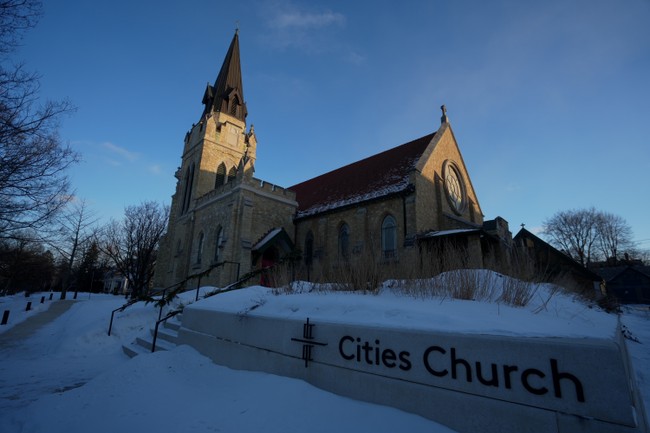
The FBI and Homeland Security agents have arrested leaders accused of organizing the takeover of Cities Church in St. Paul, Minnesota, marking a major federal move after a high-profile disruption of a worship service; Attorney General Pam Bondi announced the arrests, naming Nekima Levy Armstrong and Chauntyll Louisa Allen, and officials say more actions may follow as investigations continue.
The arrests reported by federal authorities represent a clear message that attacks on houses of worship will be met with force from the federal government. Attorney General Pam Bondi is quoted announcing the operation, and officials emphasize that coordination between the FBI and Homeland Security Investigations made the detentions possible. This enforcement step follows weeks of public outrage and increased scrutiny of the groups involved in the incident at Cities Church.
Minutes ago at my direction, @HSI_HQ and @FBI agents executed an arrest in Minnesota.
So far, we have arrested Nekima Levy Armstrong, who allegedly played a key role in organizing the coordinated attack on Cities Church in St. Paul, Minnesota.
We will share more updates as they become available.
Listen loud and clear: WE DO NOT TOLERATE ATTACKS ON PLACES OF WORSHIP.
Authorities say Nekima Levy Armstrong was a central organizer in the operation that targeted Cities Church, and her arrest is being presented as the first in a wider enforcement effort. Chauntyll Louisa Allen has also been taken into custody, according to Bondi, and officials suggest further arrests could be imminent. Federal prosecutors are reviewing actions that allegedly crossed the line from protest into criminal conduct against worshippers and a place of worship.
Eyewitnesses and reporting placed Allen and Armstrong on the scene as organizers who rallied protesters and directed the disruptive action inside the church. One report identified Allen as a longtime community organizer and youth activist who has held leadership roles in local groups. The federal response indicates that organizers who coordinate disruptions that threaten public safety or target places of worship can expect a coordinated legal response.
The incident at Cities Church drew national attention after livestreams and interviews captured the buildup and the moment protesters entered the service. Armstrong was interviewed on camera prior to the takeover, openly describing plans to “disrupt business as usual” by appearing at unexpected locations. Her remarks to a livestream host made it clear that the action was intended as a deliberate, planned disruption rather than a spontaneous demonstration.
Armstrong was recorded saying, “We show up somewhere that’s a key location – they don’t expect us to come there. And then we disrupt business as usual. That’s what we’re about to go do right now.” Those words were widely circulated and became a focal point for criticism of the organizers’ tactics. Law enforcement and officials say that kind of admitted planning is relevant to assessing whether federal statutes were violated.
The arrests follow public statements by other officials who framed the episode as a clash between protest rights and the right to worship without intimidation. Minnesota’s political leadership drew fire from critics for comments they say gave de facto cover to disruptive groups, and those critiques fed a broader narrative about political bias protecting agitators. From a law-and-order perspective, the federal action seeks to reassert the rule that civil liberties do not include the right to invade and occupy sacred spaces.
Supporters of the enforcement action argue that protecting places of worship is a nonpartisan necessity, and that anyone who organizes or leads an operation that deliberately targets congregations should face consequences. Critics of the arrested leaders point to the recordings and public statements as proof of malicious intent rather than mere protest. Federal authorities now must build cases that show the organizers crossed legal lines, and they appear intent on doing so.
The situation remains fluid, with more developments expected as investigators sort through evidence and decide whether to press additional charges. Church members and community leaders are watching closely as arrests unfold and as investigators sift through communications, livestream footage, and witness accounts. The case will test how federal law is applied when protest activity collides directly with people attending religious services.


Add comment