
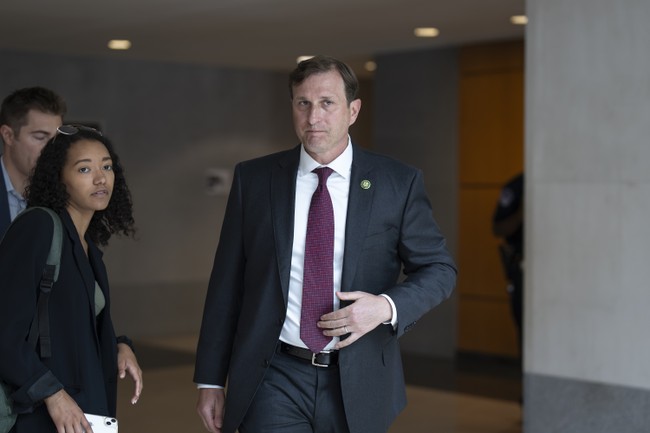
New York politics and culture clashed this week when a Brooklyn coffee shop publicly shamed Rep. Dan Goldman for stopping in, prompting a federal civil-rights inquiry and a pile-on from critics. The incident ties into broader local tensions over Mayor Zohran Mamdani’s rise, primary fights backed by his allies, and a charged debate about antisemitism and public accommodation in the city. What started as a social-media post from Poetica Coffee turned into a DOJ investigation and a warning about potential illegal discrimination. This piece lays out the sequence, the response, and the fallout unfolding across social platforms and local politics.
The backdrop matters: the mayor of New York City, Zohran Mamdani, won a narrow majority in 2025 and has since been linked to a more radical wing of the local Democratic Party. That faction has supported primary challengers who criticize Israel aggressively, and those endorsements have already shifted the dynamics in several House races. Brad Lander, a progressive challenger in one district, has been portrayed by opponents as cozying up to the pro-Hamas wing of the party, which has intensified debates about where elected Democrats stand on the Israel-Hamas war. Those disputes help explain why tensions in New York feel louder and more personal than usual.
On Sunday, the Williamsburg location of Poetica Coffee published a message aimed at Rep. Dan Goldman after he placed an order there. The shop’s post left no doubt about its position and included a pointed, insulting refusal of service. The statement read exactly: “Hey Congressman Dan Goldman, we see that you stopped by our shop today for a coffee. Do you see how it doesn’t taste like genocide juice? Or are you still having a hard time telling the difference?”
See, here at Poetica, we don’t serve racists, fascists, homophobes, genocide enablers, or anyone in between. Too bad we didn’t recognize you right away, or we would have turned you away. We issued you a refund—we don’t need your money (it’s probably coming from AIPAC anyways). Enjoy your loss on Tuesday. Don’t ever come to Poetica.
Goldman responded calmly, noting that he and his 7-year-old daughter were treated courteously by the barista and expressing regret that a public post sought to exclude them. He also said he hoped the barista would be allowed to keep the tip he left.
The reaction escalated quickly when Harmeet Dhillon, serving as Assistant Attorney General for Civil Rights, announced that the Civil Rights Division had opened an investigation. Her statement was shared publicly and warned that federal law prohibits public accommodations from discriminating on the basis of protected characteristics. That statement appeared exactly as released: “The @CivilRights is aware of the denial of service taunts to @danielsgoldman by Poetica Coffee in Brooklyn. Federal law prohibits public accommodations such as coffee shops from discriminating against patrons based on their race, religion, or national origin. These actions are not only reprehensible, they’re potentially illegal. The Civil Rights Division has opened an investigation, and will bring an enforcement action if warranted. If you have been denied service at a public accommodation on the basis of a protected characteristic, we at @TheJusticeDept want to know!”
Once the DOJ flagged the incident, the backlash intensified. Poetica’s social-media presence crumbled as critics scrubbed, reviewed, and called out the shop across platforms. Reports circulated that the shop’s Instagram account was removed, Yelp reviews began to flood in, and comments on other pages turned overwhelmingly negative. The swift consumer response shows how a local decision can trigger national scrutiny when it intersects with hot-button political fights.
The episode also sits at the intersection of law, politics, and reputation. Coffee shops and other public accommodations operate under civil-rights statutes that bar denial of service for protected traits, and the DOJ move signals a willingness to enforce those rules when political bias crosses into exclusion. At the same time, the story feeds into a larger Republican argument about permissive attitudes toward antisemitism in certain Democratic circles and the consequences of public officials and influencers endorsing divisive rhetoric.
Local electoral stakes only sharpen the controversy. Mamdani-backed candidates have shown strength in primaries, and progressive challenges to incumbents like Dan Goldman have ratcheted up intra-party pressure in the city. That environment makes moments like the Poetica post more than a baked-in neighborhood spat; they become symbols of how cultural battles play out in small business interactions and public enforcement decisions. Voters and officials alike are watching how law and politics respond.
https://x.com/LevineJonathan/status/2069056080567509385
For now, the DOJ inquiry is the key development to watch. If the Civil Rights Division finds that Poetica engaged in unlawful discrimination, it could open enforcement actions that reverberate beyond Williamsburg. Meanwhile, the reputational costs for the coffee shop have already been significant, and the episode offers a reminder that public businesses operate in politically charged spaces where actions quickly draw legal scrutiny and public outrage.

Add comment